

13 Neutrinos Oscillate and Hence They Weigh
101
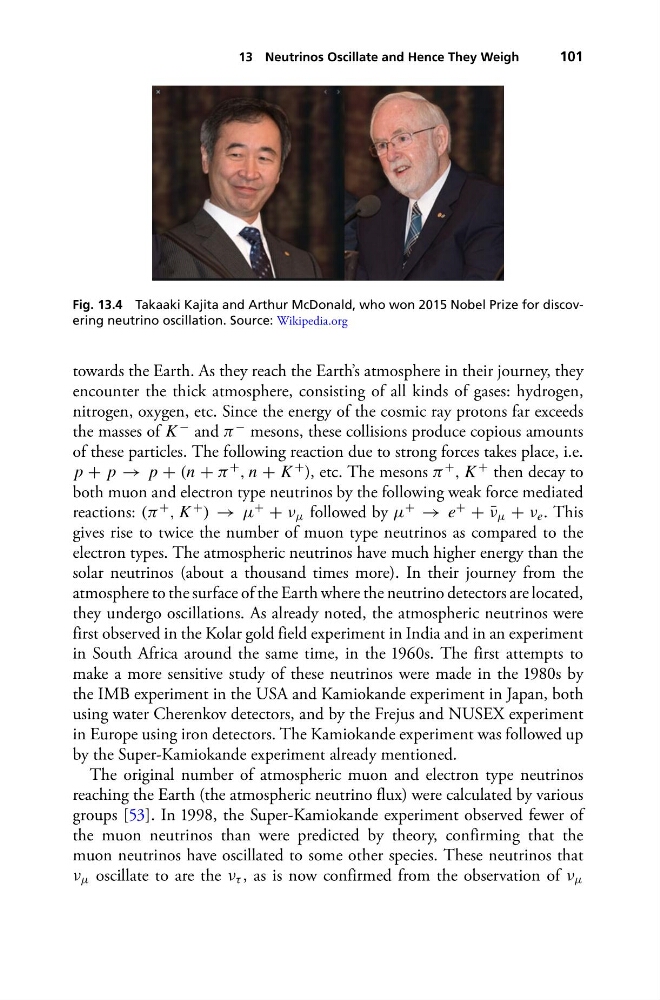
Fig. 13.4 Takaaki Kajita and Arthur McDonald, who won 2015 Nobel Prize for discovering neutrino oscillation. Source: Wikipedia.org
towards the Earth. As they reach the Earth’s atmosphere in their journey, they
encounter the thick atmosphere, consisting of all kinds of gases: hydrogen,
nitrogen, oxygen, etc. Since the energy of the cosmic ray protons far exceeds
the masses of K
− and π
− mesons, these collisions produce copious amounts
of these particles. The following reaction due to strong forces takes place, i.e.
p + p → p + (n + π
+ , n + K
+ ), etc. The mesons π
+ , K
+ then decay to
both muon and electron type neutrinos by the following weak force mediated
reactions: (π
+ , K
+ ) → μ
+
+ ν μ followed by μ
+
→ e
+
+ ¯
ν μ + ν e . This
gives rise to twice the number of muon type neutrinos as compared to the
electron types. The atmospheric neutrinos have much higher energy than the
solar neutrinos (about a thousand times more). In their journey from the
atmosphere to the surface of the Earth where the neutrino detectors are located,
they undergo oscillations. As already noted, the atmospheric neutrinos were
first observed in the Kolar gold field experiment in India and in an experiment
in South Africa around the same time, in the 1960s. The first attempts to
make a more sensitive study of these neutrinos were made in the 1980s by
the IMB experiment in the USA and Kamiokande experiment in Japan, both
using water Cherenkov detectors, and by the Frejus and NUSEX experiment
in Europe using iron detectors. The Kamiokande experiment was followed up
by the Super-Kamiokande experiment already mentioned.
The original number of atmospheric muon and electron type neutrinos
reaching the Earth (the atmospheric neutrino flux) were calculated by various
groups [53]. In 1998, the Super-Kamiokande experiment observed fewer of
the muon neutrinos than were predicted by theory, confirming that the
muon neutrinos have oscillated to some other species. These neutrinos that
ν μ oscillate to are the ν τ , as is now confirmed from the observation of ν μ
101
Fig. 13.4 Takaaki Kajita and Arthur McDonald, who won 2015 Nobel Prize for discovering neutrino oscillation. Source: Wikipedia.org
towards the Earth. As they reach the Earth’s atmosphere in their journey, they
encounter the thick atmosphere, consisting of all kinds of gases: hydrogen,
nitrogen, oxygen, etc. Since the energy of the cosmic ray protons far exceeds
the masses of K
− and π
− mesons, these collisions produce copious amounts
of these particles. The following reaction due to strong forces takes place, i.e.
p + p → p + (n + π
+ , n + K
+ ), etc. The mesons π
+ , K
+ then decay to
both muon and electron type neutrinos by the following weak force mediated
reactions: (π
+ , K
+ ) → μ
+
+ ν μ followed by μ
+
→ e
+
+ ¯
ν μ + ν e . This
gives rise to twice the number of muon type neutrinos as compared to the
electron types. The atmospheric neutrinos have much higher energy than the
solar neutrinos (about a thousand times more). In their journey from the
atmosphere to the surface of the Earth where the neutrino detectors are located,
they undergo oscillations. As already noted, the atmospheric neutrinos were
first observed in the Kolar gold field experiment in India and in an experiment
in South Africa around the same time, in the 1960s. The first attempts to
make a more sensitive study of these neutrinos were made in the 1980s by
the IMB experiment in the USA and Kamiokande experiment in Japan, both
using water Cherenkov detectors, and by the Frejus and NUSEX experiment
in Europe using iron detectors. The Kamiokande experiment was followed up
by the Super-Kamiokande experiment already mentioned.
The original number of atmospheric muon and electron type neutrinos
reaching the Earth (the atmospheric neutrino flux) were calculated by various
groups [53]. In 1998, the Super-Kamiokande experiment observed fewer of
the muon neutrinos than were predicted by theory, confirming that the
muon neutrinos have oscillated to some other species. These neutrinos that
ν μ oscillate to are the ν τ , as is now confirmed from the observation of ν μ