

66
STEREOCHEMISTRY
Relative energy
0
42 kJ mol −1
21
27
chair
chair
boat
twist-boat
twist-boat
half-chair
half-chair
conformations of cyclohexane
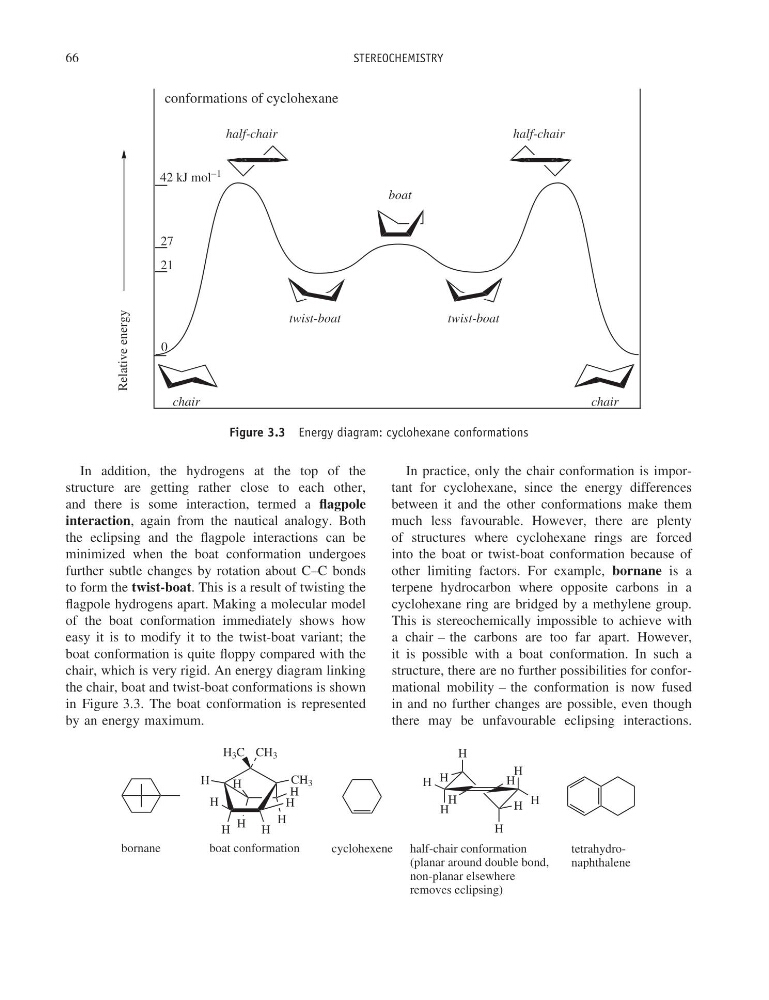
Figure 3.3 Energy diagram: cyclohexane conformations
In addition, the hydrogens at the top of the
structure are getting rather close to each other,
and there is some interaction, termed a flagpole
interaction, again from the nautical analogy. Both
the eclipsing and the flagpole interactions can be
minimized when the boat conformation undergoes
further subtle changes by rotation about C–C bonds
to form the twist-boat. This is a result of twisting the
flagpole hydrogens apart. Making a molecular model
of the boat conformation immediately shows how
easy it is to modify it to the twist-boat variant; the
boat conformation is quite floppy compared with the
chair, which is very rigid. An energy diagram linking
the chair, boat and twist-boat conformations is shown
in Figure 3.3. The boat conformation is represented
by an energy maximum.
In practice, only the chair conformation is important for cyclohexane, since the energy differences
between it and the other conformations make them
much less favourable. However, there are plenty
of structures where cyclohexane rings are forced
into the boat or twist-boat conformation because of
other limiting factors. For example, bornane is a
terpene hydrocarbon where opposite carbons in a
cyclohexane ring are bridged by a methylene group.
This is stereochemically impossible to achieve with
a chair – the carbons are too far apart. However,
it is possible with a boat conformation. In such a
structure, there are no further possibilities for conformational mobility – the conformation is now fused
in and no further changes are possible, even though
there may be unfavourable eclipsing interactions.
H
H
H
H
H
H H
H
H
H
H
H
H
H
CH 3
H
H
H
CH 3
H 3 C
H
H
boat conformation
half-chair conformation
(planar around double bond,
non-planar elsewhere
removes eclipsing)
bornane
cyclohexene
tetrahydronaphthalene
STEREOCHEMISTRY
Relative energy
0
42 kJ mol −1
21
27
chair
chair
boat
twist-boat
twist-boat
half-chair
half-chair
conformations of cyclohexane
Figure 3.3 Energy diagram: cyclohexane conformations
In addition, the hydrogens at the top of the
structure are getting rather close to each other,
and there is some interaction, termed a flagpole
interaction, again from the nautical analogy. Both
the eclipsing and the flagpole interactions can be
minimized when the boat conformation undergoes
further subtle changes by rotation about C–C bonds
to form the twist-boat. This is a result of twisting the
flagpole hydrogens apart. Making a molecular model
of the boat conformation immediately shows how
easy it is to modify it to the twist-boat variant; the
boat conformation is quite floppy compared with the
chair, which is very rigid. An energy diagram linking
the chair, boat and twist-boat conformations is shown
in Figure 3.3. The boat conformation is represented
by an energy maximum.
In practice, only the chair conformation is important for cyclohexane, since the energy differences
between it and the other conformations make them
much less favourable. However, there are plenty
of structures where cyclohexane rings are forced
into the boat or twist-boat conformation because of
other limiting factors. For example, bornane is a
terpene hydrocarbon where opposite carbons in a
cyclohexane ring are bridged by a methylene group.
This is stereochemically impossible to achieve with
a chair – the carbons are too far apart. However,
it is possible with a boat conformation. In such a
structure, there are no further possibilities for conformational mobility – the conformation is now fused
in and no further changes are possible, even though
there may be unfavourable eclipsing interactions.
H
H
H
H
H
H H
H
H
H
H
H
H
H
CH 3
H
H
H
CH 3
H 3 C
H
H
boat conformation
half-chair conformation
(planar around double bond,
non-planar elsewhere
removes eclipsing)
bornane
cyclohexene
tetrahydronaphthalene