

ELECTROPHILIC ADDITION TO UNSATURATED CARBON
293
R
H
H
R
H
H
HBr
not
R
H
H
H
H
Br
R
Br
HBr
H
Br
R
H
H
H
Br
Br
R
H
H
H
Br
Br
R
H
H
H
resonance stabilization
from bromine lone pair
secondary
vinyl cation
primary vinyl
cation
main product is
geminal dibromide
H
H
Br
R
HBr
H
H
R
H
H
Br
primary carbocation
not favourable
Br
R
H
H
H
inductive effect destabilizes
tertiary carbocation
H
H
π bond
R
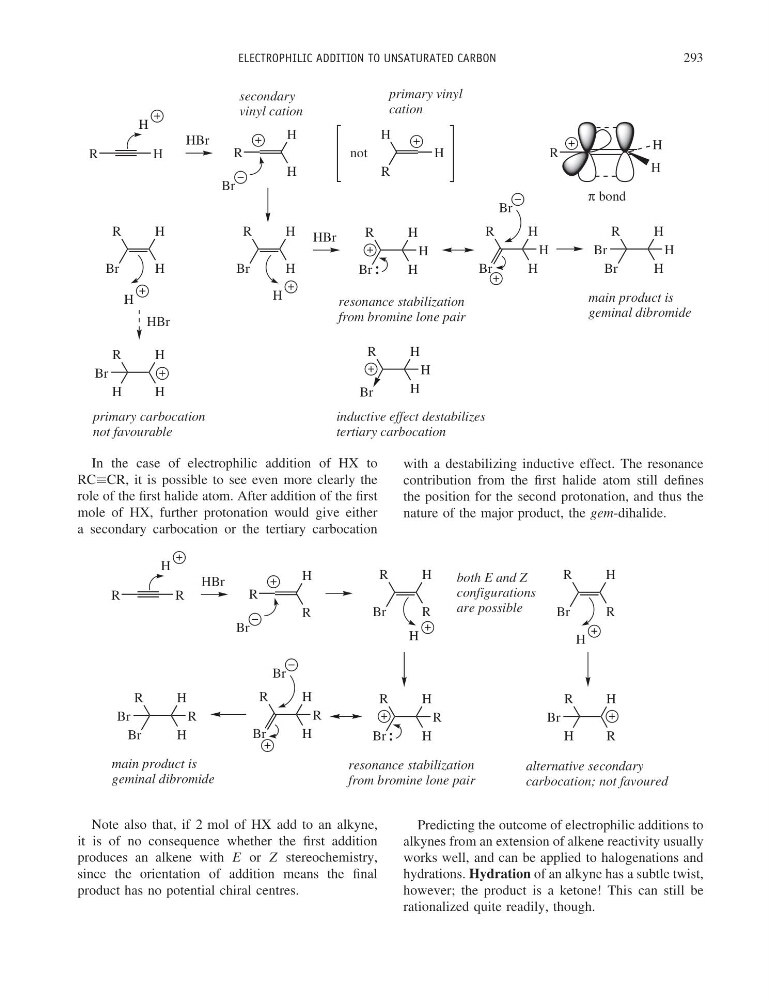
In the case of electrophilic addition of HX to
RC≡CR, it is possible to see even more clearly the
role of the first halide atom. After addition of the first
mole of HX, further protonation would give either
a secondary carbocation or the tertiary carbocation
with a destabilizing inductive effect. The resonance
contribution from the first halide atom still defines
the position for the second protonation, and thus the
nature of the major product, the gem-dihalide.
R
R
H
R
R
H
HBr
R
H
Br
R
Br
H
Br
R
H
H
R
Br
Br
R
H
H
R
Br
R
H
H
R
Br
main product is
geminal dibromide
both E and Z
configurations
are possible
R
H
Br
R
H
H
R
R
H
Br
alternative secondary
carbocation; not favoured
resonance stabilization
from bromine lone pair
Note also that, if 2 mol of HX add to an alkyne,
it is of no consequence whether the first addition
produces an alkene with E or Z stereochemistry,
since the orientation of addition means the final
product has no potential chiral centres.
Predicting the outcome of electrophilic additions to
alkynes from an extension of alkene reactivity usually
works well, and can be applied to halogenations and
hydrations. Hydration of an alkyne has a subtle twist,
however; the product is a ketone! This can still be
rationalized quite readily, though.
293
R
H
H
R
H
H
HBr
not
R
H
H
H
H
Br
R
Br
HBr
H
Br
R
H
H
H
Br
Br
R
H
H
H
Br
Br
R
H
H
H
resonance stabilization
from bromine lone pair
secondary
vinyl cation
primary vinyl
cation
main product is
geminal dibromide
H
H
Br
R
HBr
H
H
R
H
H
Br
primary carbocation
not favourable
Br
R
H
H
H
inductive effect destabilizes
tertiary carbocation
H
H
π bond
R
In the case of electrophilic addition of HX to
RC≡CR, it is possible to see even more clearly the
role of the first halide atom. After addition of the first
mole of HX, further protonation would give either
a secondary carbocation or the tertiary carbocation
with a destabilizing inductive effect. The resonance
contribution from the first halide atom still defines
the position for the second protonation, and thus the
nature of the major product, the gem-dihalide.
R
R
H
R
R
H
HBr
R
H
Br
R
Br
H
Br
R
H
H
R
Br
Br
R
H
H
R
Br
R
H
H
R
Br
main product is
geminal dibromide
both E and Z
configurations
are possible
R
H
Br
R
H
H
R
R
H
Br
alternative secondary
carbocation; not favoured
resonance stabilization
from bromine lone pair
Note also that, if 2 mol of HX add to an alkyne,
it is of no consequence whether the first addition
produces an alkene with E or Z stereochemistry,
since the orientation of addition means the final
product has no potential chiral centres.
Predicting the outcome of electrophilic additions to
alkynes from an extension of alkene reactivity usually
works well, and can be applied to halogenations and
hydrations. Hydration of an alkyne has a subtle twist,
however; the product is a ketone! This can still be
rationalized quite readily, though.