

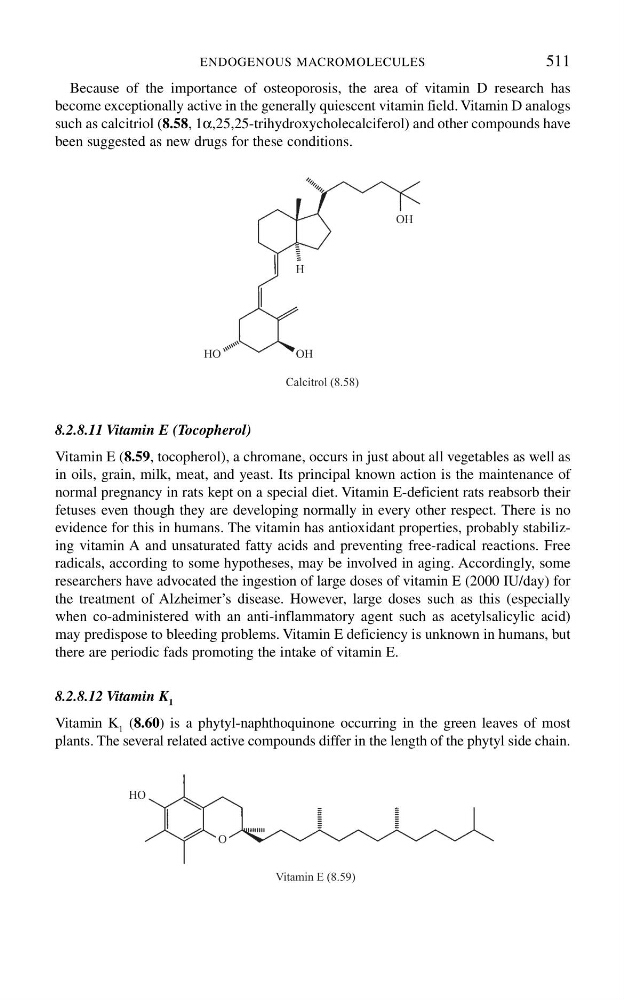
Because of the importance of osteoporosis, the area of vitamin D research has
become exceptionally active in the generally quiescent vitamin field. Vitamin D analogs
such as calcitriol (8.58, 1α,25,25-trihydroxycholecalciferol) and other compounds have
been suggested as new drugs for these conditions.
8.2.8.11 Vitamin E (Tocopherol)
Vitamin E (8.59, tocopherol), a chromane, occurs in just about all vegetables as well as
in oils, grain, milk, meat, and yeast. Its principal known action is the maintenance of
normal pregnancy in rats kept on a special diet. Vitamin E-deficient rats reabsorb their
fetuses even though they are developing normally in every other respect. There is no
evidence for this in humans. The vitamin has antioxidant properties, probably stabilizing vitamin A and unsaturated fatty acids and preventing free-radical reactions. Free
radicals, according to some hypotheses, may be involved in aging. Accordingly, some
researchers have advocated the ingestion of large doses of vitamin E (2000 IU/day) for
the treatment of Alzheimer’s disease. However, large doses such as this (especially
when co-administered with an anti-inflammatory agent such as acetylsalicylic acid)
may predispose to bleeding problems. Vitamin E deficiency is unknown in humans, but
there are periodic fads promoting the intake of vitamin E.
8.2.8.12 Vitamin K 1
Vitamin K 1 (8.60) is a phytyl-naphthoquinone occurring in the green leaves of most
plants. The several related active compounds differ in the length of the phytyl side chain.
ENDOGENOUS MACROMOLECULES
511