

and include collagens (tendons, connective tissue), elastins (ligaments, blood vessels),
keratins (fingernails), and myosins (muscle tissue). Functional proteins are typically
globular proteins (soluble, compactly coiled, roughly spherical in shape) and include
hemoglobin (involved in oxygen transport), immunoglobulins (involved in immune
responses), and insulin (involved in glucose metabolism). Catalytic proteins, also
called enzymes, function by bringing reactant molecules together, positioning them
in a favorable orientation for reactivity, and furnishing any required acidic or basic
sites.
ENDOGENOUS MACROMOLECULES
467
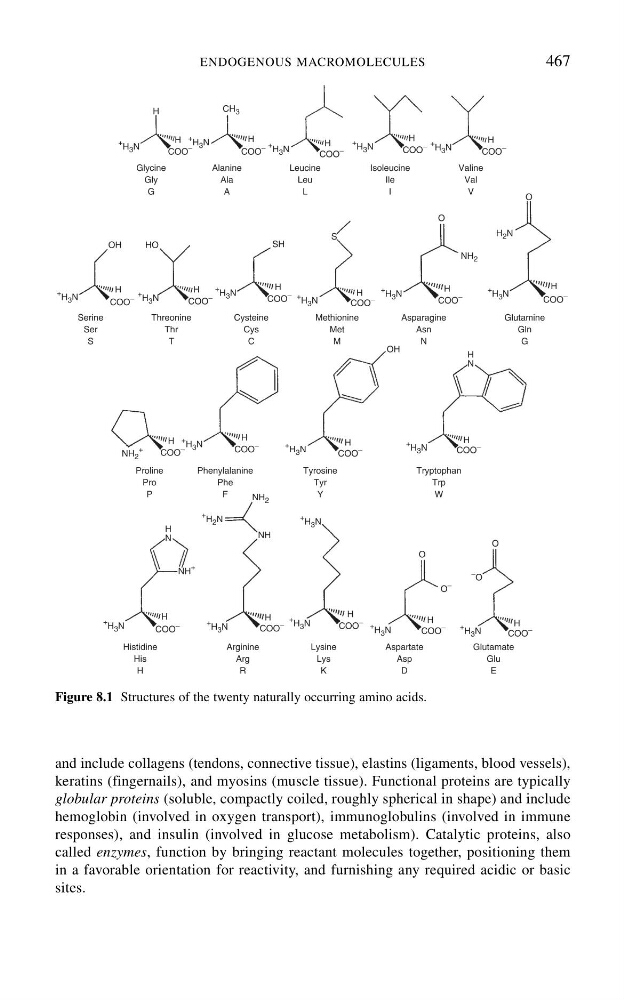
Figure 8.1 Structures of the twenty naturally occurring amino acids.
keratins (fingernails), and myosins (muscle tissue). Functional proteins are typically
globular proteins (soluble, compactly coiled, roughly spherical in shape) and include
hemoglobin (involved in oxygen transport), immunoglobulins (involved in immune
responses), and insulin (involved in glucose metabolism). Catalytic proteins, also
called enzymes, function by bringing reactant molecules together, positioning them
in a favorable orientation for reactivity, and furnishing any required acidic or basic
sites.
ENDOGENOUS MACROMOLECULES
467
Figure 8.1 Structures of the twenty naturally occurring amino acids.