

arrangement of atoms in a drug molecule that are responsible for the metabolic
properties. Since functional groups are responsible not only for drug–receptor interactions but also for metabolic properties, the metabophore and the pharmacophore tend to
be inextricably overlapped. Nevertheless, from the viewpoint of drug design, it is sometimes possible to manipulate the structure of either the pharmacophore or the molecular baggage portions of the drug molecule to achieve a metabophore that overcomes
problems with liver-mediated first pass effects or that either hastens or delays renal
excretion (see figure 1.4).
20
MEDICINAL CHEMISTRY
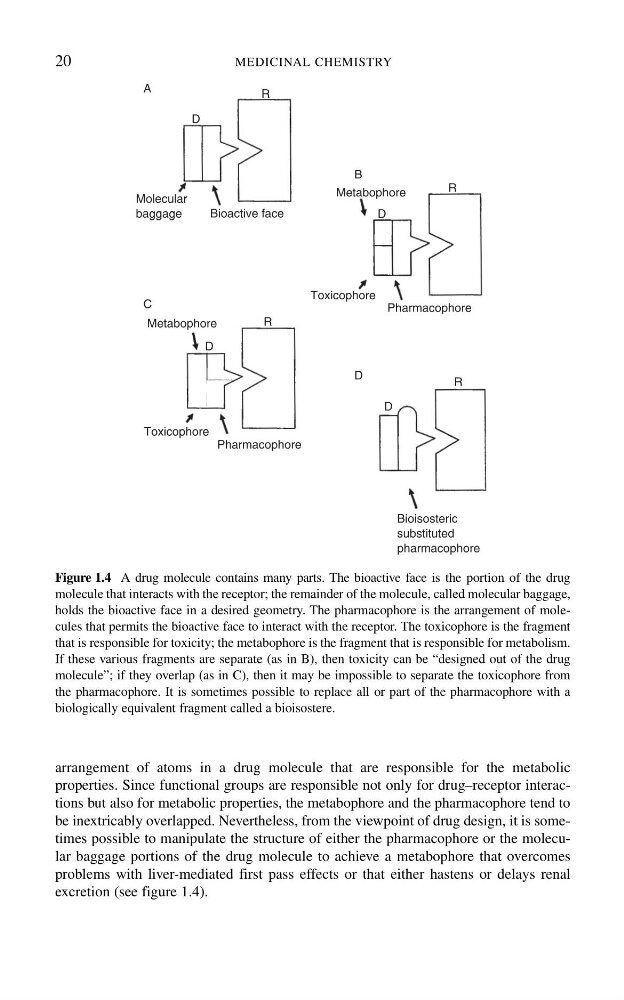
Figure 1.4 A drug molecule contains many parts. The bioactive face is the portion of the drug
molecule that interacts with the receptor; the remainder of the molecule, called molecular baggage,
holds the bioactive face in a desired geometry. The pharmacophore is the arrangement of molecules that permits the bioactive face to interact with the receptor. The toxicophore is the fragment
that is responsible for toxicity; the metabophore is the fragment that is responsible for metabolism.
If these various fragments are separate (as in B), then toxicity can be “designed out of the drug
molecule”; if they overlap (as in C), then it may be impossible to separate the toxicophore from
the pharmacophore. It is sometimes possible to replace all or part of the pharmacophore with a
biologically equivalent fragment called a bioisostere.
properties. Since functional groups are responsible not only for drug–receptor interactions but also for metabolic properties, the metabophore and the pharmacophore tend to
be inextricably overlapped. Nevertheless, from the viewpoint of drug design, it is sometimes possible to manipulate the structure of either the pharmacophore or the molecular baggage portions of the drug molecule to achieve a metabophore that overcomes
problems with liver-mediated first pass effects or that either hastens or delays renal
excretion (see figure 1.4).
20
MEDICINAL CHEMISTRY
Figure 1.4 A drug molecule contains many parts. The bioactive face is the portion of the drug
molecule that interacts with the receptor; the remainder of the molecule, called molecular baggage,
holds the bioactive face in a desired geometry. The pharmacophore is the arrangement of molecules that permits the bioactive face to interact with the receptor. The toxicophore is the fragment
that is responsible for toxicity; the metabophore is the fragment that is responsible for metabolism.
If these various fragments are separate (as in B), then toxicity can be “designed out of the drug
molecule”; if they overlap (as in C), then it may be impossible to separate the toxicophore from
the pharmacophore. It is sometimes possible to replace all or part of the pharmacophore with a
biologically equivalent fragment called a bioisostere.