

nervous system–endocrine system linkage. The thyroid gland, located in the neck,
secretes thyroxine as its messenger hormone; by means of this messenger molecule, the
thyroid gland stimulates oxygen consumption at a cellular level, helps to regulate lipid
and carbohydrate metabolism, maintains metabolic levels, and influences growth and
maturation. The parathyroid glands, located on either side of the thyroid, secrete
parathyroid hormone, which is involved in the control of calcium metabolism and bone
physiology. The pancreas is located in the upper abdomen near the duodenum; unique
clusters of cells within the pancreas, called islets of Langerhans, secrete the polypeptide hormones, glucagon and insulin, which regulate metabolism of proteins, lipids, and
carbohydrates. The adrenal glands, located above each kidney, secrete a variety of
steroid hormones (e.g., glucocorticoids, mineralocorticoids, sex hormones) and are
important to the endocrine system–immune system linkage. The kidneys are themselves
endocrine organs, producing renin, a hormonal messenger involved in the regulation of
sodium and fluid volumes within the body. The gonads secrete gender-specific steroidal
sex hormones and are, of course, involved in the development and functioning of the
reproductive system. Even the heart has an endocrine function, producing natriuretic
peptides as hormones. Superimposed upon this classification of endocrine organs and
classical hormones are the neuropeptides, which may have neurotransmitter and/or
neurohormonal effects. The existence of these peptide neurohormones makes the brain
a partial endocrine organ as well as a neural organ. The various endocrine organs
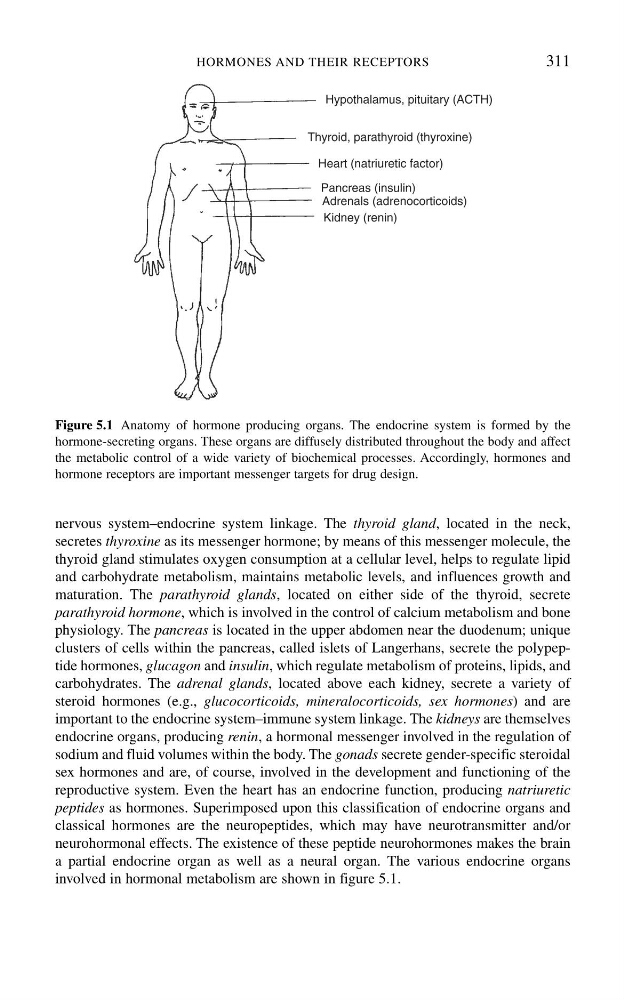
involved in hormonal metabolism are shown in figure 5.1.
HORMONES AND THEIR RECEPTORS
311
Figure 5.1 Anatomy of hormone producing organs. The endocrine system is formed by the
hormone-secreting organs. These organs are diffusely distributed throughout the body and affect
the metabolic control of a wide variety of biochemical processes. Accordingly, hormones and
hormone receptors are important messenger targets for drug design.
secretes thyroxine as its messenger hormone; by means of this messenger molecule, the
thyroid gland stimulates oxygen consumption at a cellular level, helps to regulate lipid
and carbohydrate metabolism, maintains metabolic levels, and influences growth and
maturation. The parathyroid glands, located on either side of the thyroid, secrete
parathyroid hormone, which is involved in the control of calcium metabolism and bone
physiology. The pancreas is located in the upper abdomen near the duodenum; unique
clusters of cells within the pancreas, called islets of Langerhans, secrete the polypeptide hormones, glucagon and insulin, which regulate metabolism of proteins, lipids, and
carbohydrates. The adrenal glands, located above each kidney, secrete a variety of
steroid hormones (e.g., glucocorticoids, mineralocorticoids, sex hormones) and are
important to the endocrine system–immune system linkage. The kidneys are themselves
endocrine organs, producing renin, a hormonal messenger involved in the regulation of
sodium and fluid volumes within the body. The gonads secrete gender-specific steroidal
sex hormones and are, of course, involved in the development and functioning of the
reproductive system. Even the heart has an endocrine function, producing natriuretic
peptides as hormones. Superimposed upon this classification of endocrine organs and
classical hormones are the neuropeptides, which may have neurotransmitter and/or
neurohormonal effects. The existence of these peptide neurohormones makes the brain
a partial endocrine organ as well as a neural organ. The various endocrine organs
involved in hormonal metabolism are shown in figure 5.1.
HORMONES AND THEIR RECEPTORS
311
Figure 5.1 Anatomy of hormone producing organs. The endocrine system is formed by the
hormone-secreting organs. These organs are diffusely distributed throughout the body and affect
the metabolic control of a wide variety of biochemical processes. Accordingly, hormones and
hormone receptors are important messenger targets for drug design.