

4.1.1 The Neuron
The human brain is composed of more than 100 billion neurons with widely differing
molecular properties. Neurons are highly specialized cells that trigger and conduct
bioelectric impulses, communicate with each other through intricate networks, and
regulate all tissues and organs within the body. The membrane of the nerve cell is
“excitable” because it can undergo changes in its permeability, mediated by transmembrane ion channel proteins and triggered by small, endogenous neurotransmitter
molecules.
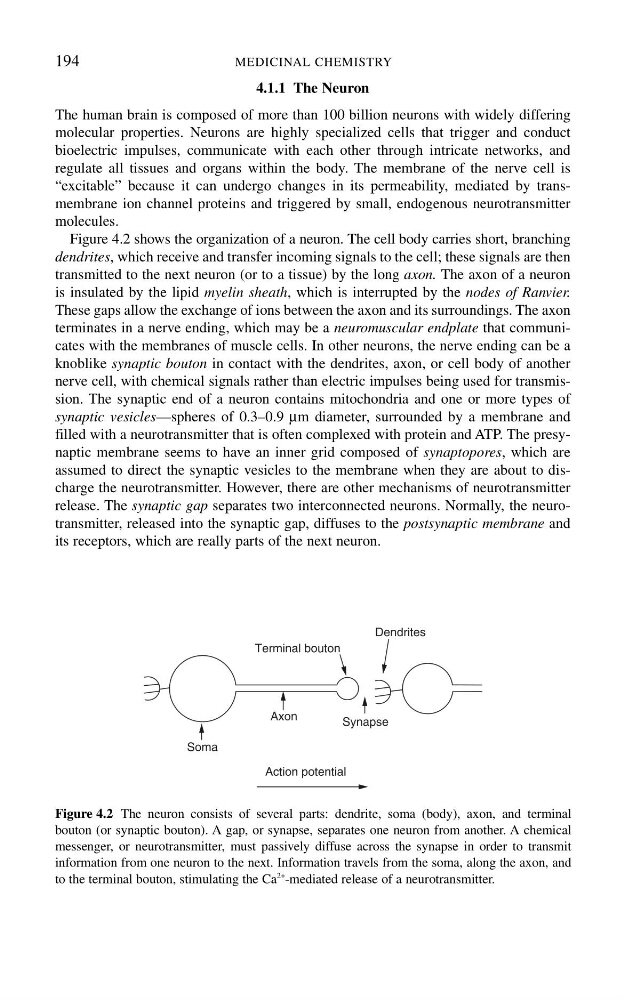
Figure 4.2 shows the organization of a neuron. The cell body carries short, branching
dendrites, which receive and transfer incoming signals to the cell; these signals are then
transmitted to the next neuron (or to a tissue) by the long axon. The axon of a neuron
is insulated by the lipid myelin sheath, which is interrupted by the nodes of Ranvier.
These gaps allow the exchange of ions between the axon and its surroundings. The axon
terminates in a nerve ending, which may be a neuromuscular endplate that communicates with the membranes of muscle cells. In other neurons, the nerve ending can be a
knoblike synaptic bouton in contact with the dendrites, axon, or cell body of another
nerve cell, with chemical signals rather than electric impulses being used for transmission. The synaptic end of a neuron contains mitochondria and one or more types of
synaptic vesicles—spheres of 0.3–0.9 µm diameter, surrounded by a membrane and
filled with a neurotransmitter that is often complexed with protein and ATP. The presynaptic membrane seems to have an inner grid composed of synaptopores, which are
assumed to direct the synaptic vesicles to the membrane when they are about to discharge the neurotransmitter. However, there are other mechanisms of neurotransmitter
release. The synaptic gap separates two interconnected neurons. Normally, the neurotransmitter, released into the synaptic gap, diffuses to the postsynaptic membrane and
its receptors, which are really parts of the next neuron.
194
MEDICINAL CHEMISTRY
Figure 4.2 The neuron consists of several parts: dendrite, soma (body), axon, and terminal
bouton (or synaptic bouton). A gap, or synapse, separates one neuron from another. A chemical
messenger, or neurotransmitter, must passively diffuse across the synapse in order to transmit
information from one neuron to the next. Information travels from the soma, along the axon, and
to the terminal bouton, stimulating the Ca
2+
-mediated release of a neurotransmitter.
The human brain is composed of more than 100 billion neurons with widely differing
molecular properties. Neurons are highly specialized cells that trigger and conduct
bioelectric impulses, communicate with each other through intricate networks, and
regulate all tissues and organs within the body. The membrane of the nerve cell is
“excitable” because it can undergo changes in its permeability, mediated by transmembrane ion channel proteins and triggered by small, endogenous neurotransmitter
molecules.
Figure 4.2 shows the organization of a neuron. The cell body carries short, branching
dendrites, which receive and transfer incoming signals to the cell; these signals are then
transmitted to the next neuron (or to a tissue) by the long axon. The axon of a neuron
is insulated by the lipid myelin sheath, which is interrupted by the nodes of Ranvier.
These gaps allow the exchange of ions between the axon and its surroundings. The axon
terminates in a nerve ending, which may be a neuromuscular endplate that communicates with the membranes of muscle cells. In other neurons, the nerve ending can be a
knoblike synaptic bouton in contact with the dendrites, axon, or cell body of another
nerve cell, with chemical signals rather than electric impulses being used for transmission. The synaptic end of a neuron contains mitochondria and one or more types of
synaptic vesicles—spheres of 0.3–0.9 µm diameter, surrounded by a membrane and
filled with a neurotransmitter that is often complexed with protein and ATP. The presynaptic membrane seems to have an inner grid composed of synaptopores, which are
assumed to direct the synaptic vesicles to the membrane when they are about to discharge the neurotransmitter. However, there are other mechanisms of neurotransmitter
release. The synaptic gap separates two interconnected neurons. Normally, the neurotransmitter, released into the synaptic gap, diffuses to the postsynaptic membrane and
its receptors, which are really parts of the next neuron.
194
MEDICINAL CHEMISTRY
Figure 4.2 The neuron consists of several parts: dendrite, soma (body), axon, and terminal
bouton (or synaptic bouton). A gap, or synapse, separates one neuron from another. A chemical
messenger, or neurotransmitter, must passively diffuse across the synapse in order to transmit
information from one neuron to the next. Information travels from the soma, along the axon, and
to the terminal bouton, stimulating the Ca
2+
-mediated release of a neurotransmitter.