

produces confusion and hallucination in elderly patients. Overdoses of
atropine can be fatal. The antidote of atropine poisoning is physostigmine
or pilocarpine.
Cocaine Cocaine, molecular weight C 17 H 21 NO 4 , is a white crystalline
tropane alkaloid found mainly in coca plant. It is a potent central nervous
system (CNS) stimulant and appetite suppressant. For its euphoretic
effect, cocaine is often used recreationally, and it is one of the most
common drugs of abuse and addiction. Cocaine is also used as a topical
anaesthetic in eye, throat and nose surgery. Possession, cultivation and
distribution of cocaine is illegal for non-medicinal and non-government
sanctioned purposes virtually all over the world. The side-effects of
cocaine include twitching, paranoia and impotence, which usually
increase with frequent usage. With excessive dosage it produces hallucinations, paranoid delusions, tachycardia, itching and formication. Cocaine
overdose leads to tachyarrhythmias and elevated blood pressure, and can
be fatal.
Quinoline alkaloids
The chemistry of the quinoline heterocycle has already been discussed in
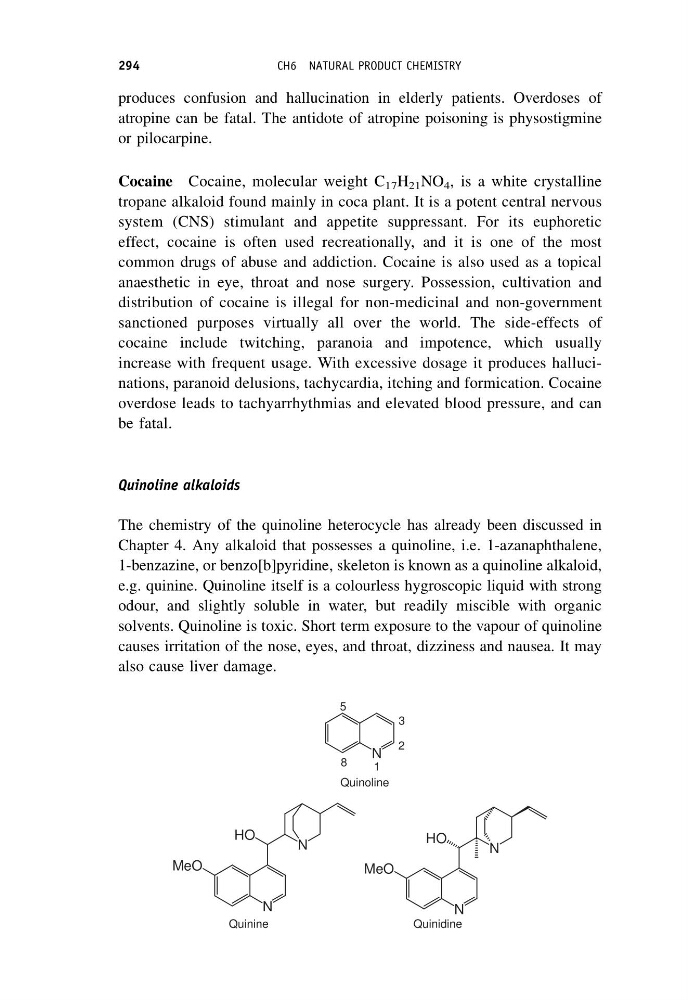
Chapter 4. Any alkaloid that possesses a quinoline, i.e. 1-azanaphthalene,
1-benzazine, or benzo[b]pyridine, skeleton is known as a quinoline alkaloid,
e.g. quinine. Quinoline itself is a colourless hygroscopic liquid with strong
odour, and slightly soluble in water, but readily miscible with organic
solvents. Quinoline is toxic. Short term exposure to the vapour of quinoline
causes irritation of the nose, eyes, and throat, dizziness and nausea. It may
also cause liver damage.
N
Quinoline
1
2
3
5
8
N
MeO
O
H
N
Quinine
N
MeO
O
H
N
Quinidine
294
CH6 NATURAL PRODUCT CHEMISTRY
atropine can be fatal. The antidote of atropine poisoning is physostigmine
or pilocarpine.
Cocaine Cocaine, molecular weight C 17 H 21 NO 4 , is a white crystalline
tropane alkaloid found mainly in coca plant. It is a potent central nervous
system (CNS) stimulant and appetite suppressant. For its euphoretic
effect, cocaine is often used recreationally, and it is one of the most
common drugs of abuse and addiction. Cocaine is also used as a topical
anaesthetic in eye, throat and nose surgery. Possession, cultivation and
distribution of cocaine is illegal for non-medicinal and non-government
sanctioned purposes virtually all over the world. The side-effects of
cocaine include twitching, paranoia and impotence, which usually
increase with frequent usage. With excessive dosage it produces hallucinations, paranoid delusions, tachycardia, itching and formication. Cocaine
overdose leads to tachyarrhythmias and elevated blood pressure, and can
be fatal.
Quinoline alkaloids
The chemistry of the quinoline heterocycle has already been discussed in
Chapter 4. Any alkaloid that possesses a quinoline, i.e. 1-azanaphthalene,
1-benzazine, or benzo[b]pyridine, skeleton is known as a quinoline alkaloid,
e.g. quinine. Quinoline itself is a colourless hygroscopic liquid with strong
odour, and slightly soluble in water, but readily miscible with organic
solvents. Quinoline is toxic. Short term exposure to the vapour of quinoline
causes irritation of the nose, eyes, and throat, dizziness and nausea. It may
also cause liver damage.
N
Quinoline
1
2
3
5
8
N
MeO
O
H
N
Quinine
N
MeO
O
H
N
Quinidine
294
CH6 NATURAL PRODUCT CHEMISTRY