

Problems A
305
PROBLEMS
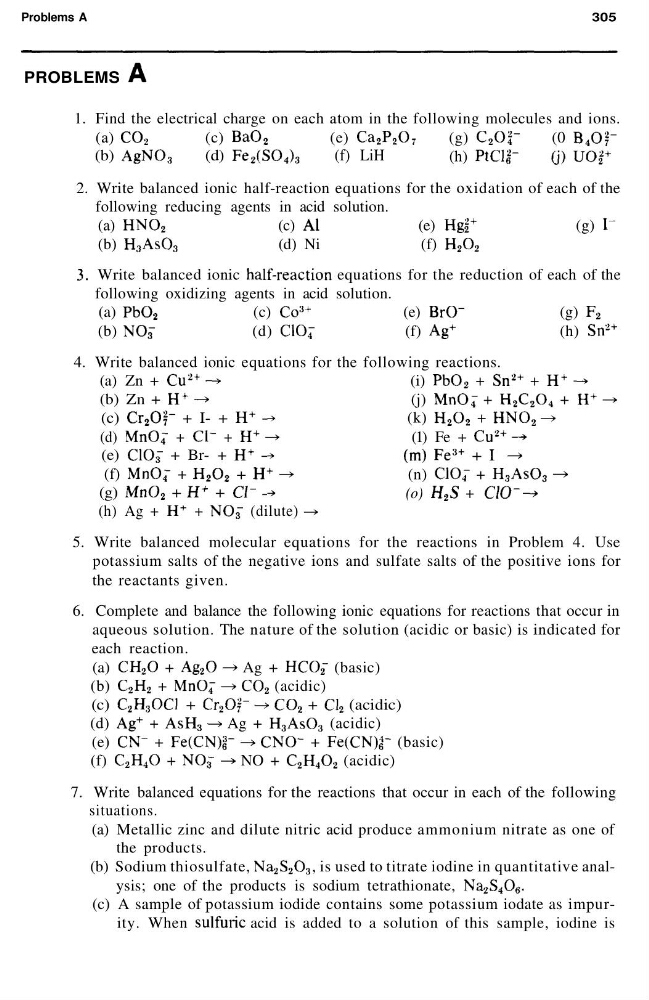
1. Find the electrical charge on each atom in the following molecules and ions.
(a) CO 2
(c) BaO 2
(e) Ca 2 P 2 O 7
(g) C 2 Or
(0 B 4 Of(b) AgNO 3
(d) Fe 2 (SO 4 ) 3
(f) LiH
(h) PtClf
(j)
2. Write balanced ionic half-reaction equations for the oxidation of each of the
following reducing agents in acid solution.
(a) HNO 2
(c) Al
(e) Hg|
+
(g) T
(b) H 3 AsO 3
(d) Ni
(f) H 2 O 2
3. Write balanced ionic half- reaction equations for the reduction of each of the
following oxidizing agents in acid solution.
(a) PbO 2
(c) Co
3+
(e) BrCT
(g) F 2
(b) N0 3 -
(d) C10 4 -
(f) Ag
+
(h) Sn
2+
4. Write balanced ionic equations for the following reactions.
(a) Zn + Cu
2+ ->
(b) Zn + H
+ ->
(c) Cr 2 0 7
2 - + I- +
(d) MnO 4 - + Cl~ +
(e) C10 3 - + Br- +
(f) MnO 4 - + H 2 O 2
(g) Mn0 2 + H
+ +
H
+ -
H
+
H
+ -
+ H
C/~ -
(i) PbO 2 + Sn
2+ + H
+
(j) MnOf + H 2 C 2 O 4 +
(k) H 2 O 2 + HNO 2 -H>
(1) Fe + Cu
2+ -»
(m) Fe
3+ + I ->
(n) C1O 4 ~ + H 3 AsO 3 -H>
(o) H 2 S + CIO~ ->
H
+
(h) Ag + H
+ + NO 3 - (dilute)
5. Write balanced molecular equations for the reactions in Problem 4. Use
potassium salts of the negative ions and sulfate salts of the positive ions for
the reactants given.
6. Complete and balance the following ionic equations for reactions that occur in
aqueous solution. The nature of the solution (acidic or basic) is indicated for
each reaction.
(a) CH 2 O + Ag 2 O -^ Ag + HCO 2 - (basic)
(b) C 2 H 2 + MnO 4 - -> CO 2 (acidic)
(c) C 2 H 3 OC1 + Cr 2 O|- -> CO 2 + C1 2 (acidic)
(d) Ag
+ + AsH 3 -^ Ag + H 3 AsO 3 (acidic)
(e) CN- + Fe(CN) 6
3 - -^ CNO" + Fe(CN) 6
4 - (basic)
(f) C 2 H 4 0 + N0 3 - -^ NO + C 2 H 4 O 2 (acidic)
7. Write balanced equations for the reactions that occur in each of the following
situations.
(a) Metallic zinc and dilute nitric acid produce ammonium nitrate as one of
the products.
(b) Sodium thiosulfate, Na 2 S 2 O 3 , is used to titrate iodine in quantitative analysis; one of the products is sodium tetrathionate, Na 2 S 4 O 6 .
(c) A sample of potassium iodide contains some potassium iodate as impurity. When sulfuric acid is added to a solution of this sample, iodine is
305
PROBLEMS
1. Find the electrical charge on each atom in the following molecules and ions.
(a) CO 2
(c) BaO 2
(e) Ca 2 P 2 O 7
(g) C 2 Or
(0 B 4 Of(b) AgNO 3
(d) Fe 2 (SO 4 ) 3
(f) LiH
(h) PtClf
(j)
2. Write balanced ionic half-reaction equations for the oxidation of each of the
following reducing agents in acid solution.
(a) HNO 2
(c) Al
(e) Hg|
+
(g) T
(b) H 3 AsO 3
(d) Ni
(f) H 2 O 2
3. Write balanced ionic half- reaction equations for the reduction of each of the
following oxidizing agents in acid solution.
(a) PbO 2
(c) Co
3+
(e) BrCT
(g) F 2
(b) N0 3 -
(d) C10 4 -
(f) Ag
+
(h) Sn
2+
4. Write balanced ionic equations for the following reactions.
(a) Zn + Cu
2+ ->
(b) Zn + H
+ ->
(c) Cr 2 0 7
2 - + I- +
(d) MnO 4 - + Cl~ +
(e) C10 3 - + Br- +
(f) MnO 4 - + H 2 O 2
(g) Mn0 2 + H
+ +
H
+ -
H
+
H
+ -
+ H
C/~ -
(i) PbO 2 + Sn
2+ + H
+
(j) MnOf + H 2 C 2 O 4 +
(k) H 2 O 2 + HNO 2 -H>
(1) Fe + Cu
2+ -»
(m) Fe
3+ + I ->
(n) C1O 4 ~ + H 3 AsO 3 -H>
(o) H 2 S + CIO~ ->
H
+
(h) Ag + H
+ + NO 3 - (dilute)
5. Write balanced molecular equations for the reactions in Problem 4. Use
potassium salts of the negative ions and sulfate salts of the positive ions for
the reactants given.
6. Complete and balance the following ionic equations for reactions that occur in
aqueous solution. The nature of the solution (acidic or basic) is indicated for
each reaction.
(a) CH 2 O + Ag 2 O -^ Ag + HCO 2 - (basic)
(b) C 2 H 2 + MnO 4 - -> CO 2 (acidic)
(c) C 2 H 3 OC1 + Cr 2 O|- -> CO 2 + C1 2 (acidic)
(d) Ag
+ + AsH 3 -^ Ag + H 3 AsO 3 (acidic)
(e) CN- + Fe(CN) 6
3 - -^ CNO" + Fe(CN) 6
4 - (basic)
(f) C 2 H 4 0 + N0 3 - -^ NO + C 2 H 4 O 2 (acidic)
7. Write balanced equations for the reactions that occur in each of the following
situations.
(a) Metallic zinc and dilute nitric acid produce ammonium nitrate as one of
the products.
(b) Sodium thiosulfate, Na 2 S 2 O 3 , is used to titrate iodine in quantitative analysis; one of the products is sodium tetrathionate, Na 2 S 4 O 6 .
(c) A sample of potassium iodide contains some potassium iodate as impurity. When sulfuric acid is added to a solution of this sample, iodine is