

Part II: The Answers
172
Answers
101–200
129.
cos x
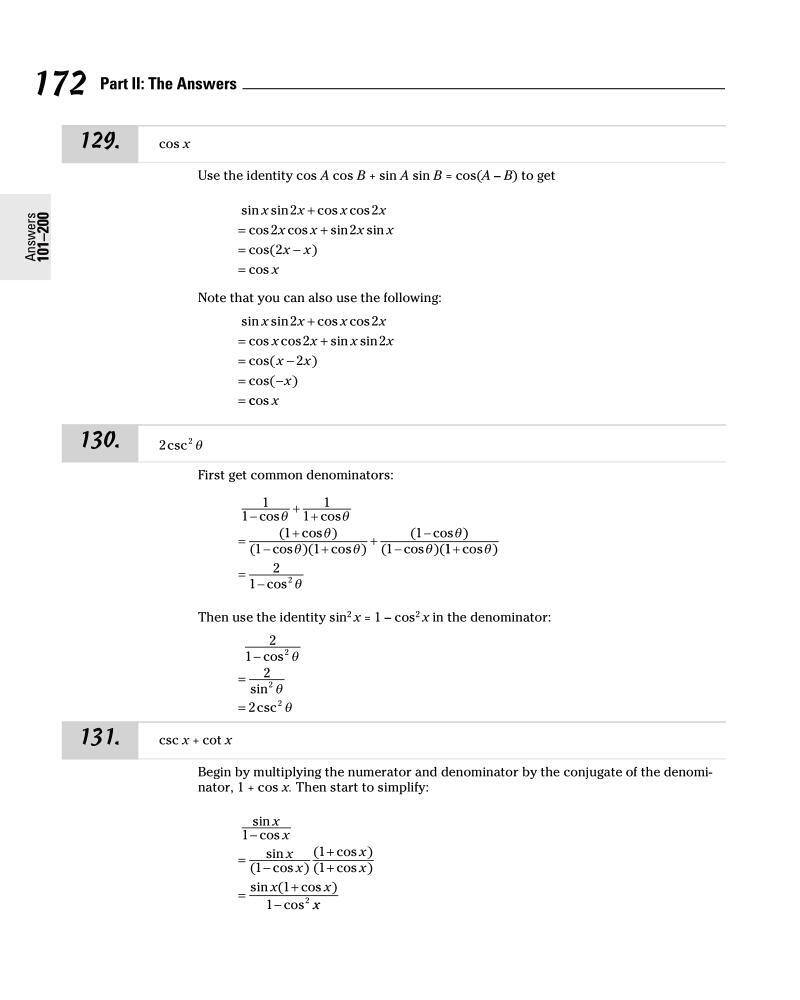
Use the identity cos A cos B + sin A sin B = cos(A – B) to get
sin sin
cos cos
cos cos
sin sin
cos(
)
cos
x
x
x
x
x
x
x
x
x x
x
2
2
2
2
2
+
=
+
=
−
=
Note that you can also use the following:
sin sin
cos cos
cos cos
sin sin
cos(
)
cos( )
x
x
x
x
x
x
x
x
x
x
x
2
2
2
2
2
+
=
+
=
−
=
−
= c cos x
130.
2
2
csc θ
First get common denominators:
1
1
1
1
1
1
1
1
1
−
+ +
=
+
−
+
+
−
−
cos
c os
( cos )
( cos )( cos )
( cos )
( cos )(
θ
θ
θ
θ
θ
θ
θ 1 1
2
1
2
+
= −
cos )
cos
θ
θ
Then use the identity sin
2
x = 1 – cos
2
x in the denominator:
2
1
2
2
2
2
2
−
=
=
cos
sin
csc
θ
θ
θ
131.
csc x + cot x
Begin by multiplying the numerator and denominator by the conjugate of the denominator, 1 + cos x. Then start to simplify:
sin
cos
sin
( cos )
( cos )
( cos )
sin ( cos )
cos
x
x
x
x
x
x
x
x
1
1
1
1
1
1
2
−
= −
+
+
=
+
−
x x
172
Answers
101–200
129.
cos x
Use the identity cos A cos B + sin A sin B = cos(A – B) to get
sin sin
cos cos
cos cos
sin sin
cos(
)
cos
x
x
x
x
x
x
x
x
x x
x
2
2
2
2
2
+
=
+
=
−
=
Note that you can also use the following:
sin sin
cos cos
cos cos
sin sin
cos(
)
cos( )
x
x
x
x
x
x
x
x
x
x
x
2
2
2
2
2
+
=
+
=
−
=
−
= c cos x
130.
2
2
csc θ
First get common denominators:
1
1
1
1
1
1
1
1
1
−
+ +
=
+
−
+
+
−
−
cos
c os
( cos )
( cos )( cos )
( cos )
( cos )(
θ
θ
θ
θ
θ
θ
θ 1 1
2
1
2
+
= −
cos )
cos
θ
θ
Then use the identity sin
2
x = 1 – cos
2
x in the denominator:
2
1
2
2
2
2
2
−
=
=
cos
sin
csc
θ
θ
θ
131.
csc x + cot x
Begin by multiplying the numerator and denominator by the conjugate of the denominator, 1 + cos x. Then start to simplify:
sin
cos
sin
( cos )
( cos )
( cos )
sin ( cos )
cos
x
x
x
x
x
x
x
x
1
1
1
1
1
1
2
−
= −
+
+
=
+
−
x x