

Chu
362
In addition to the hypervisor/container, NFV requires special functions to support
the network data plane. Open vSwitch (OVS) [19] is an open‐source implementation of
software‐based switching capabilities based on SDN and is the most commonly
deployed virtual switching implementation, according to Openstack user surveys. FD.io
[20] is an alternative way of supporting a high‐performance network data plane.
The networking data plane puts an extreme demand on packet movement (I/O) and
processing to the underlying servers. The kernel TCP/IP stacks (and drivers) known
to many software developers are often inadequate due to performance and other limitations. DPDK [21] is an open‐source SDK that can improve, dramatically in some use
cases, the data‐packet movement and processing performance by taking advantage of
special features in the processors. DPDK is developed by Intel® for Xeon processors.
Similarly, ODP [22] (Open Data Plane) is an open‐source project aiming to provide a
cross‐platform data plane SDK for SoCs and servers. The performance improvement
levels of DPDK and ODP are particularly pronounced when we look at smaller packet
sizes or packet‐per‐second measurements [23]. These smaller packets can be common
in telecommunications networks for voice, media and others, as compared to IT and
database applications in enterprises. In addition, packet‐process latency or latency
variation (jitter) can also be important considerations. More importantly, we also
start to see that the narrow focus on SDK for performance may not be sufficient. A
system’s approach, where we develop a general framework that takes into account
cluster management, reliability, programmability, and other system level issues, may
hold more promise [24].
The data plane is the fundamental component of the fabric, for security or any
networking functionality. One prominent feature of NFV is virtual network on demand.
This network level isolation, in topology by layer 2 or layer 3 means, in virtual addressing, NAT, and security rules applied to the virtual network domains lay the bedrock for
NFV security.
This connector means roughly
“one of several choices” .
Keystone
Backends
KVM
OVS
DPDK
LXD
Open-O
OpenBaton
Openstack
Keystone
Nova
Neutron
Opendaylight
ONOS
Cepf
Other storage
Backends
Cinder
Swift
Glance
FD.IO
ODP
Opencontrail
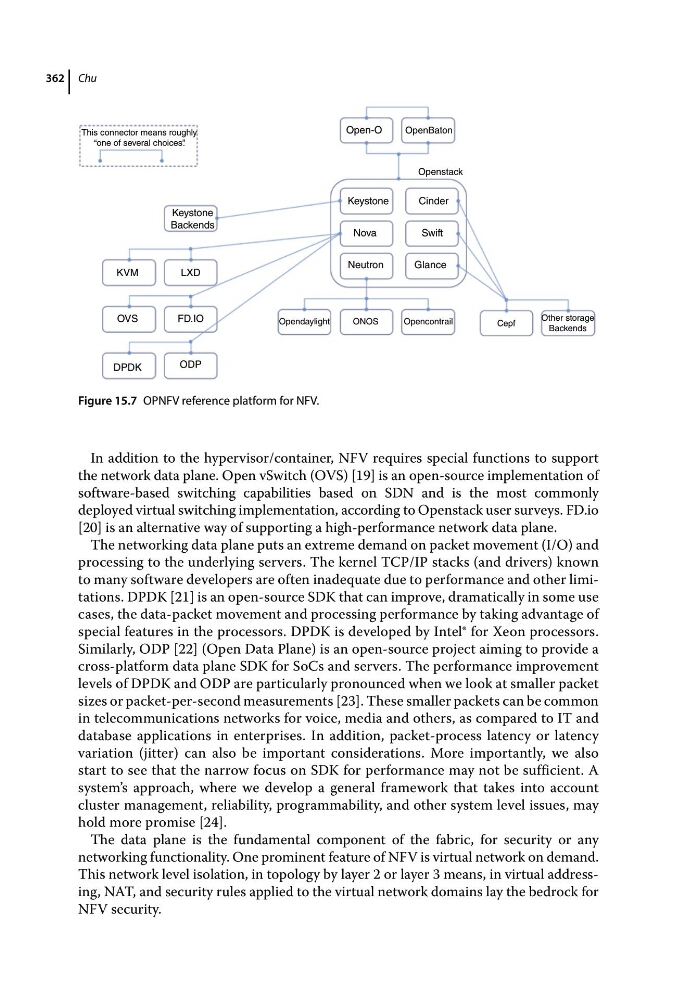
Figure 15.7 OPNFV reference platform for NFV.
362
In addition to the hypervisor/container, NFV requires special functions to support
the network data plane. Open vSwitch (OVS) [19] is an open‐source implementation of
software‐based switching capabilities based on SDN and is the most commonly
deployed virtual switching implementation, according to Openstack user surveys. FD.io
[20] is an alternative way of supporting a high‐performance network data plane.
The networking data plane puts an extreme demand on packet movement (I/O) and
processing to the underlying servers. The kernel TCP/IP stacks (and drivers) known
to many software developers are often inadequate due to performance and other limitations. DPDK [21] is an open‐source SDK that can improve, dramatically in some use
cases, the data‐packet movement and processing performance by taking advantage of
special features in the processors. DPDK is developed by Intel® for Xeon processors.
Similarly, ODP [22] (Open Data Plane) is an open‐source project aiming to provide a
cross‐platform data plane SDK for SoCs and servers. The performance improvement
levels of DPDK and ODP are particularly pronounced when we look at smaller packet
sizes or packet‐per‐second measurements [23]. These smaller packets can be common
in telecommunications networks for voice, media and others, as compared to IT and
database applications in enterprises. In addition, packet‐process latency or latency
variation (jitter) can also be important considerations. More importantly, we also
start to see that the narrow focus on SDK for performance may not be sufficient. A
system’s approach, where we develop a general framework that takes into account
cluster management, reliability, programmability, and other system level issues, may
hold more promise [24].
The data plane is the fundamental component of the fabric, for security or any
networking functionality. One prominent feature of NFV is virtual network on demand.
This network level isolation, in topology by layer 2 or layer 3 means, in virtual addressing, NAT, and security rules applied to the virtual network domains lay the bedrock for
NFV security.
This connector means roughly
“one of several choices” .
Keystone
Backends
KVM
OVS
DPDK
LXD
Open-O
OpenBaton
Openstack
Keystone
Nova
Neutron
Opendaylight
ONOS
Cepf
Other storage
Backends
Cinder
Swift
Glance
FD.IO
ODP
Opencontrail
Figure 15.7 OPNFV reference platform for NFV.