

Lohan, Alén-Savikko, Chen, Järvinen, Leppäkoski, Kuusniemi, and Korpisaari
282
The motivation of addressing the security and privacy aspects in the 5G positioning
comes from the fact that a secure and privacy‐preserving positioning architecture can
lead to many other applications, which are now not possible because of the lack of
appropriate security and privacy mechanisms. All actors in the positioning chain, for
example the end users, the network operators, the location service providers and so on,
can benefit from the availability of new security and privacy solutions. If the security
and privacy of current positioning systems can be increased, this will also enhance the
usability of location as a security parameter for digital interactions in more general contexts, for example, social media, wellbeing/health monitoring or surveillance systems.
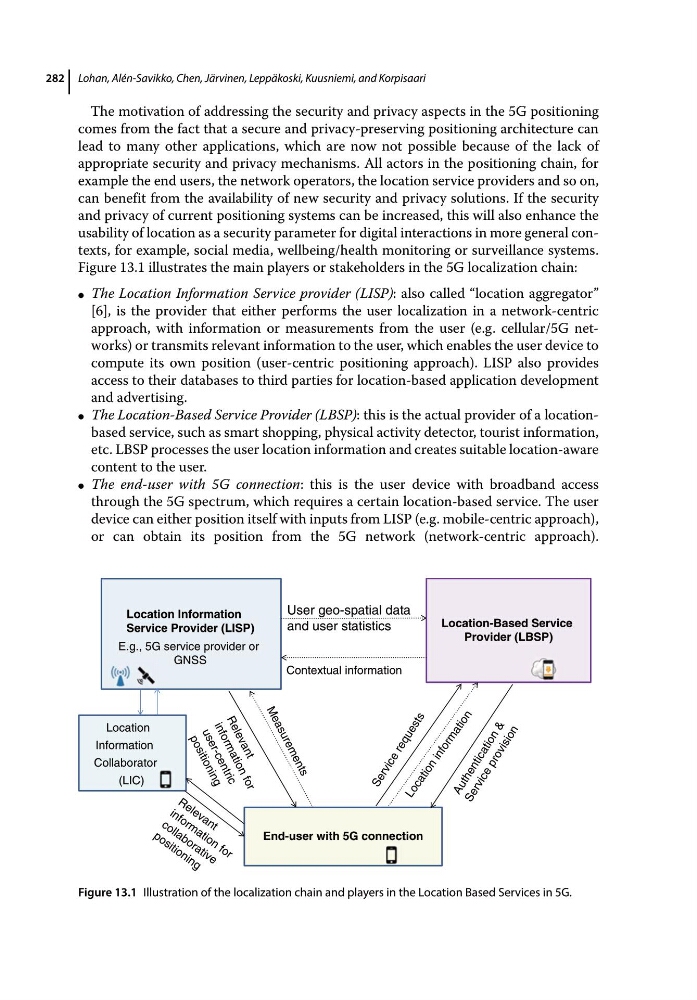
Figure 13.1 illustrates the main players or stakeholders in the 5G localization chain:
● The Location Information Service provider (LISP): also called “location aggregator”
[6], is the provider that either performs the user localization in a network‐centric
approach, with information or measurements from the user (e.g. cellular/5G networks) or transmits relevant information to the user, which enables the user device to
compute its own position (user‐centric positioning approach). LISP also provides
access to their databases to third parties for location‐based application development
and advertising.
● The Location‐Based Service Provider (LBSP): this is the actual provider of a location‐
based service, such as smart shopping, physical activity detector, tourist information,
etc. LBSP processes the user location information and creates suitable location‐aware
content to the user.
● The end‐user with 5G connection: this is the user device with broadband access
through the 5G spectrum, which requires a certain location‐based service. The user
device can either position itself with inputs from LISP (e.g. mobile‐centric approach),
or can obtain its position from the 5G network (network‐centric approach).
Location Information
Service Provider (LISP)
End-user with 5G connection
Location-Based Service
Provider (LBSP)
Contextual information
S e r v ic e r e q u e s t s
L o c a t i o n i n f o r m a t i o n
A u t h e n t ic a t io n &
S e r v ic e p r o v is io n
M
e
a
s
u
r
e
m
e
n
t
s
R
e
le
v
a
n
t
in
f
o
r
m
a
t
io
n
f
o
r
u
s
e
r
-
c
e
n
t
r
ic
p
o
s
it
io
n
in
g
R e l e v a n t
i n f o r m a t i o n f o r
c o l l a b o r a t i v e
p o s i t i o n i n g
User geo-spatial data
and user statistics
Location
Information
Collaborator
(LIC)
E.g., 5G service provider or
GNSS
Figure 13.1 Illustration of the localization chain and players in the Location Based Services in 5G.
282
The motivation of addressing the security and privacy aspects in the 5G positioning
comes from the fact that a secure and privacy‐preserving positioning architecture can
lead to many other applications, which are now not possible because of the lack of
appropriate security and privacy mechanisms. All actors in the positioning chain, for
example the end users, the network operators, the location service providers and so on,
can benefit from the availability of new security and privacy solutions. If the security
and privacy of current positioning systems can be increased, this will also enhance the
usability of location as a security parameter for digital interactions in more general contexts, for example, social media, wellbeing/health monitoring or surveillance systems.
Figure 13.1 illustrates the main players or stakeholders in the 5G localization chain:
● The Location Information Service provider (LISP): also called “location aggregator”
[6], is the provider that either performs the user localization in a network‐centric
approach, with information or measurements from the user (e.g. cellular/5G networks) or transmits relevant information to the user, which enables the user device to
compute its own position (user‐centric positioning approach). LISP also provides
access to their databases to third parties for location‐based application development
and advertising.
● The Location‐Based Service Provider (LBSP): this is the actual provider of a location‐
based service, such as smart shopping, physical activity detector, tourist information,
etc. LBSP processes the user location information and creates suitable location‐aware
content to the user.
● The end‐user with 5G connection: this is the user device with broadband access
through the 5G spectrum, which requires a certain location‐based service. The user
device can either position itself with inputs from LISP (e.g. mobile‐centric approach),
or can obtain its position from the 5G network (network‐centric approach).
Location Information
Service Provider (LISP)
End-user with 5G connection
Location-Based Service
Provider (LBSP)
Contextual information
S e r v ic e r e q u e s t s
L o c a t i o n i n f o r m a t i o n
A u t h e n t ic a t io n &
S e r v ic e p r o v is io n
M
e
a
s
u
r
e
m
e
n
t
s
R
e
le
v
a
n
t
in
f
o
r
m
a
t
io
n
f
o
r
u
s
e
r
-
c
e
n
t
r
ic
p
o
s
it
io
n
in
g
R e l e v a n t
i n f o r m a t i o n f o r
c o l l a b o r a t i v e
p o s i t i o n i n g
User geo-spatial data
and user statistics
Location
Information
Collaborator
(LIC)
E.g., 5G service provider or
GNSS
Figure 13.1 Illustration of the localization chain and players in the Location Based Services in 5G.