

Kumar, Liyanage, Ahmad, Braeken, and Ylianttila
270
user. In certain cases, it is even useful to take some of the user’s personal data, and based
on that, the company can build new products and services. But companies/service providers need to provide a clearer explanation regarding for what purpose their data have
been used. They must also answer questions like what data has been taken and how and
where they stored it.
Several smartphone applications (Apps) for example in android, ask for certain information before the installation. Mostly, the information for which the App wants permission does not have any direct relation to service of that particular App. This data can
be used for other purposes, which are undefined by the Apps developers [6]. Nowadays,
social media sites are the most common ways to share public and private information
among various users. These are the frequent ways of updating others about your current activates, share/upload personal pictures and even can have live text, audio and
video conversations. 5G is supposed to enable this kind of communication seamlessly
and continually. But still many people raise doubts over the leakage of their personal
information by various means, which are of real concern for our current society.
5G‐based IoT systems are the crucial part of future technologies for providing numerous digital services. This will eventually generate massive amounts of data all the times.
Since IoT is becoming omnipresent, large amounts of data will be coming into action.
5G will assure the increase in data transfer speeds and thus have a higher risk of malicious attacks. In a similar way, wearable devices produce an explosive quantity of data,
because sensors/chips attached to wearables are continuously monitoring and gathering user personal information such as fitness, pulse rate, etc. This data may be analyzed
by a third party, who can extract other features from them without asking permission of
the user.
Data privacy risks arise when the third party/service provider or any malicious
attacker wants to access the user’s personal data without their consent. For example, by
monitoring the activities of someone using its personal data, one can easily predict the
daily routine of that particular consumer. This can be harmful in some cases, because if
somebody wants to observe/guess the activities of a person, they can easily do so. The
other critical example can be that of healthcare, where the medical data is very sensitive.
Identity
Privacy
Data Privacy
Smart
phone
Service Provider
Third Party Services Network Operator
PDAs
Wearables
User
Equipments
Services
User
(Subscriber)
Location Privacy
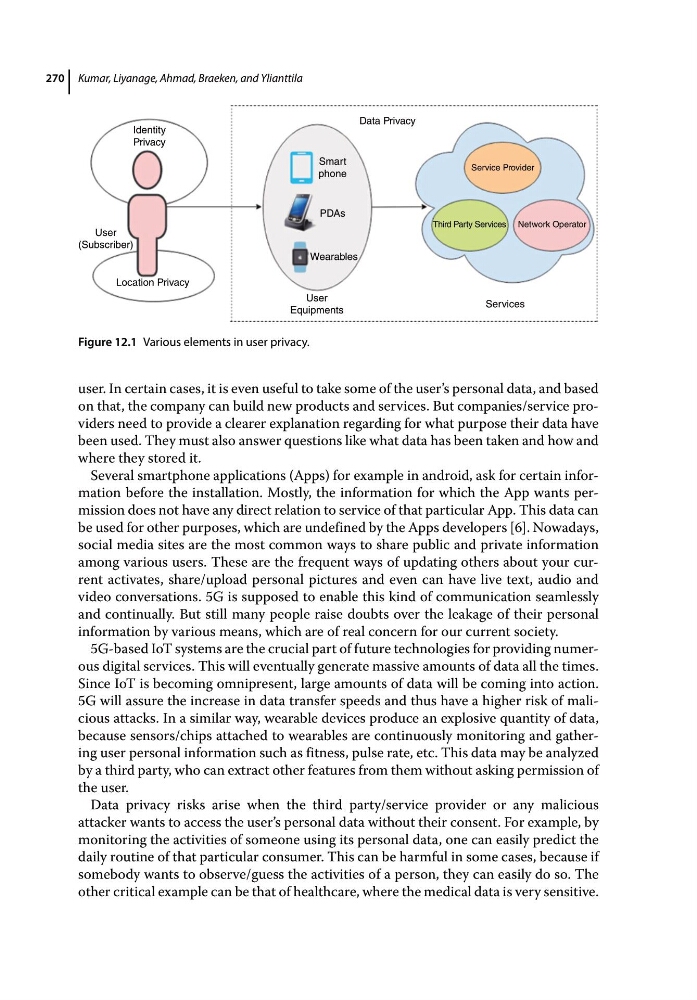
Figure 12.1 Various elements in user privacy.
270
user. In certain cases, it is even useful to take some of the user’s personal data, and based
on that, the company can build new products and services. But companies/service providers need to provide a clearer explanation regarding for what purpose their data have
been used. They must also answer questions like what data has been taken and how and
where they stored it.
Several smartphone applications (Apps) for example in android, ask for certain information before the installation. Mostly, the information for which the App wants permission does not have any direct relation to service of that particular App. This data can
be used for other purposes, which are undefined by the Apps developers [6]. Nowadays,
social media sites are the most common ways to share public and private information
among various users. These are the frequent ways of updating others about your current activates, share/upload personal pictures and even can have live text, audio and
video conversations. 5G is supposed to enable this kind of communication seamlessly
and continually. But still many people raise doubts over the leakage of their personal
information by various means, which are of real concern for our current society.
5G‐based IoT systems are the crucial part of future technologies for providing numerous digital services. This will eventually generate massive amounts of data all the times.
Since IoT is becoming omnipresent, large amounts of data will be coming into action.
5G will assure the increase in data transfer speeds and thus have a higher risk of malicious attacks. In a similar way, wearable devices produce an explosive quantity of data,
because sensors/chips attached to wearables are continuously monitoring and gathering user personal information such as fitness, pulse rate, etc. This data may be analyzed
by a third party, who can extract other features from them without asking permission of
the user.
Data privacy risks arise when the third party/service provider or any malicious
attacker wants to access the user’s personal data without their consent. For example, by
monitoring the activities of someone using its personal data, one can easily predict the
daily routine of that particular consumer. This can be harmful in some cases, because if
somebody wants to observe/guess the activities of a person, they can easily do so. The
other critical example can be that of healthcare, where the medical data is very sensitive.
Identity
Privacy
Data Privacy
Smart
phone
Service Provider
Third Party Services Network Operator
PDAs
Wearables
User
Equipments
Services
User
(Subscriber)
Location Privacy
Figure 12.1 Various elements in user privacy.