

Monshizadeh and Khatri
260
11.5.2 SIMless Robot
In the SIMless robot scenario, robots do not have any SIM cards; they are connected to
LRC via Wi‐Fi, and LRC has a SIM card to connect to the mobile network. LRC acts as
a gateway for all the robots connected to it. The communication via the mobile network
and anomaly detection procedures are as in the above‐mentioned scenario.
For a drone communication case, as shown in the Figure 11.11, each cell may have
multiple LRCs that are either fixed at a location (Private LTE) or integrated into a BTS.
LRCs are authenticated with the nearest BTS of the mobile network operator in that
area. The LRC is the primary contact for drones operating in the area; and every drone
will be first authenticated to the LRC in the associated cell of an area. After authentication with the first LRC, the drone will be assigned with a task. In addition to task
assignment, task cancellation, and task replacement processes, the LRC periodically
collects information from drones and sends it to BTS. The received information will be
forwarded to an IoT anomaly detection module for further analysis. Each LRC has
MVNO1
IoT Data Classifier
IoT Data Miner
IoT Anomaly Detection
IoT Applications
IoT Orchestrator
5G Core Network
HSS AAA
MME
Gateway
EIR
App
1
App
2
App
n
MVNO2
IoT Data Classifier
IoT Data Miner
IoT Anomaly Detection
IoT Applications
IoT Orchestrator
5G Core Network
HSS AAA
MME
Gateway
EIR
App
1
App
2
App
n
Brand 1 Robot
Controller
Data
Collector
Monitoring
& Security
Brand 2 Robot
Controller
Data
Collector
Monitoring
& Security
Brand n Robot
Controller
Data
Collector
Monitoring
& Security
R 11
R 12
R 1n
R 21
R 22
R 2n
R n1
R n2
R nn
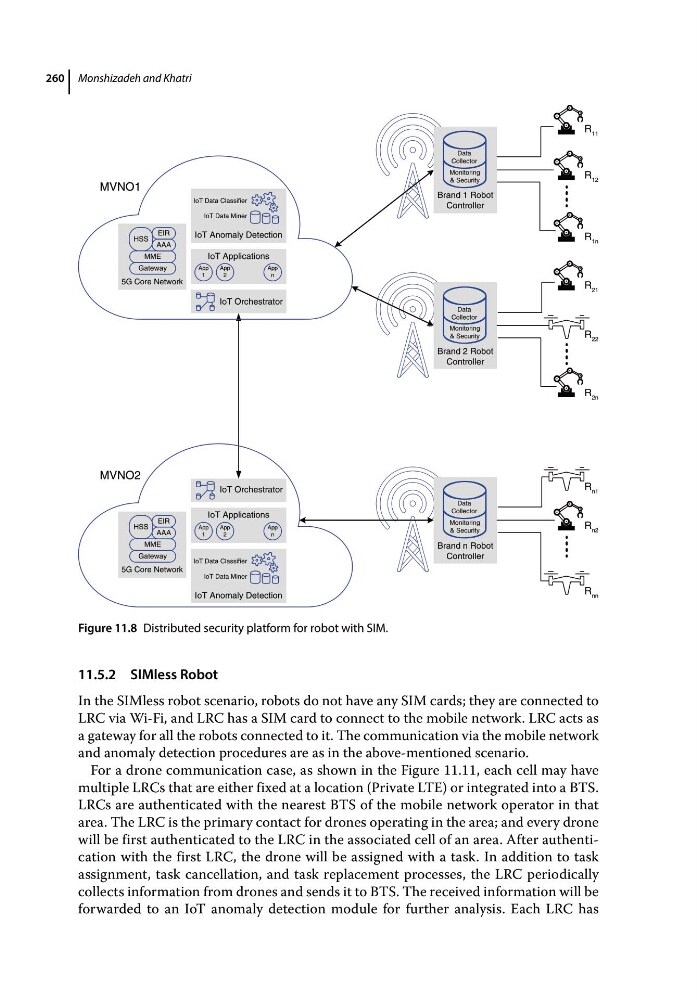
Figure 11.8 Distributed security platform for robot with SIM.
260
11.5.2 SIMless Robot
In the SIMless robot scenario, robots do not have any SIM cards; they are connected to
LRC via Wi‐Fi, and LRC has a SIM card to connect to the mobile network. LRC acts as
a gateway for all the robots connected to it. The communication via the mobile network
and anomaly detection procedures are as in the above‐mentioned scenario.
For a drone communication case, as shown in the Figure 11.11, each cell may have
multiple LRCs that are either fixed at a location (Private LTE) or integrated into a BTS.
LRCs are authenticated with the nearest BTS of the mobile network operator in that
area. The LRC is the primary contact for drones operating in the area; and every drone
will be first authenticated to the LRC in the associated cell of an area. After authentication with the first LRC, the drone will be assigned with a task. In addition to task
assignment, task cancellation, and task replacement processes, the LRC periodically
collects information from drones and sends it to BTS. The received information will be
forwarded to an IoT anomaly detection module for further analysis. Each LRC has
MVNO1
IoT Data Classifier
IoT Data Miner
IoT Anomaly Detection
IoT Applications
IoT Orchestrator
5G Core Network
HSS AAA
MME
Gateway
EIR
App
1
App
2
App
n
MVNO2
IoT Data Classifier
IoT Data Miner
IoT Anomaly Detection
IoT Applications
IoT Orchestrator
5G Core Network
HSS AAA
MME
Gateway
EIR
App
1
App
2
App
n
Brand 1 Robot
Controller
Data
Collector
Monitoring
& Security
Brand 2 Robot
Controller
Data
Collector
Monitoring
& Security
Brand n Robot
Controller
Data
Collector
Monitoring
& Security
R 11
R 12
R 1n
R 21
R 22
R 2n
R n1
R n2
R nn
Figure 11.8 Distributed security platform for robot with SIM.