

Monshizadeh and Khatri
248
The rest of this chapter is organized as follows. Section 11.2 briefly reviews related
work. Section 11.3 discusses IoT services, IoT threats, MCR and its security challenges.
Section 11.4 discusses the distributed security architecture for MCRs that detects
anomalies and distributes preventive actions to mitigate identified threats. Further, in
Section 11.5, the data classification and connectivity scenarios for security platform are
discussed. Finally, the conclusion is presented in the last section.
11.2 Related Work
Ian et al. [3] have proposed an automated drone security system for surveillance purposes, where on‐board sensors and an imaging device are used to capture surveillance
data. Drones execute flight operation, store surveillance data and connect to a server
for location update and transmission of encrypted surveillance data. In this study,
Global Positioning System (GPS) is used for positioning. A user device is connected to
a server to receive and display surveillance data. The flight operation of a drone is
controlled by a server or a user device. It also covers drone docks that are used for
launching, landing and charging drones, as drones are battery powered. Their proposed architecture does not address authentication hijacking scenarios for drones and
the server. A malicious drone may get authenticated to a server; or a server may get
hacked. In such cases, an attacker gains access to data and misguides the drones for
surveillance.
Daniel [4] proposed a system for a drone docking station to deliver goods. A drone
resides at a docking station and goods from a storage facility are attached to the drone for
delivery. The communication between the drone docking station and the drone is via
GPS, Wi‐Fi, Bluetooth and satellites. The drone can be traced via GPS; however, its flight
path cannot be controlled. When the drone reaches the docking station, it may inform
the next delivery to the storage facility via Wi‐Fi or Bluetooth. Then the storage facility
exchanges information about the next delivery, such as what and where to deliver.
10 years
on battery
100 Mbps
whenever needed
Ultra
reliability
< 10 –5 E2E outage
10 000
x more traffic
Ultra low cost
for massive
machine coms.
>10 Gbps
peak data rates
<1 ms
radio latency
Zero
mobility
interruption
1,000,000
devices per km 2
Massive
machine
communication
Extreme
Mobile
Broadband
Critical
machine
communication
Capacity
Connectivity
Latency
Reliability
5G
“ U
n l i m it e d exp e r ie n c
e ”
“
F o r e v e ryt hin g ”
“ In stant a c t io n ”
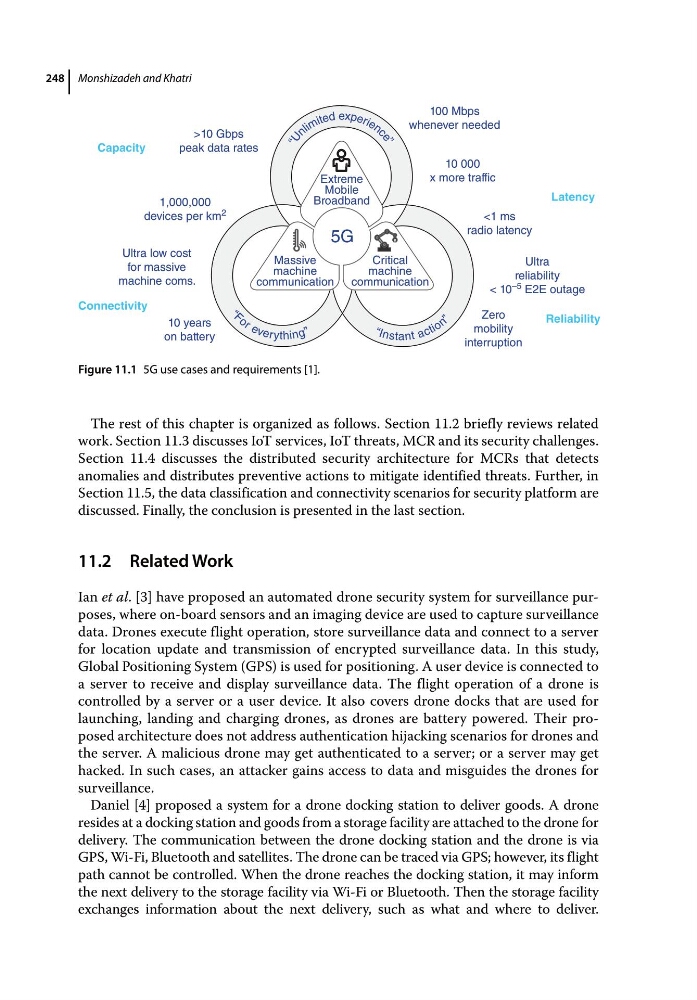
Figure 11.1 5G use cases and requirements [1].
248
The rest of this chapter is organized as follows. Section 11.2 briefly reviews related
work. Section 11.3 discusses IoT services, IoT threats, MCR and its security challenges.
Section 11.4 discusses the distributed security architecture for MCRs that detects
anomalies and distributes preventive actions to mitigate identified threats. Further, in
Section 11.5, the data classification and connectivity scenarios for security platform are
discussed. Finally, the conclusion is presented in the last section.
11.2 Related Work
Ian et al. [3] have proposed an automated drone security system for surveillance purposes, where on‐board sensors and an imaging device are used to capture surveillance
data. Drones execute flight operation, store surveillance data and connect to a server
for location update and transmission of encrypted surveillance data. In this study,
Global Positioning System (GPS) is used for positioning. A user device is connected to
a server to receive and display surveillance data. The flight operation of a drone is
controlled by a server or a user device. It also covers drone docks that are used for
launching, landing and charging drones, as drones are battery powered. Their proposed architecture does not address authentication hijacking scenarios for drones and
the server. A malicious drone may get authenticated to a server; or a server may get
hacked. In such cases, an attacker gains access to data and misguides the drones for
surveillance.
Daniel [4] proposed a system for a drone docking station to deliver goods. A drone
resides at a docking station and goods from a storage facility are attached to the drone for
delivery. The communication between the drone docking station and the drone is via
GPS, Wi‐Fi, Bluetooth and satellites. The drone can be traced via GPS; however, its flight
path cannot be controlled. When the drone reaches the docking station, it may inform
the next delivery to the storage facility via Wi‐Fi or Bluetooth. Then the storage facility
exchanges information about the next delivery, such as what and where to deliver.
10 years
on battery
100 Mbps
whenever needed
Ultra
reliability
< 10 –5 E2E outage
10 000
x more traffic
Ultra low cost
for massive
machine coms.
>10 Gbps
peak data rates
<1 ms
radio latency
Zero
mobility
interruption
1,000,000
devices per km 2
Massive
machine
communication
Extreme
Mobile
Broadband
Critical
machine
communication
Capacity
Connectivity
Latency
Reliability
5G
“ U
n l i m it e d exp e r ie n c
e ”
“
F o r e v e ryt hin g ”
“ In stant a c t io n ”
Figure 11.1 5G use cases and requirements [1].