

26 Software Networks
Orchestration”, is charged with defining the rollout, instantiation,
configuration and management of network services that use the NFV
infrastructure. The third group, “Software Architecture”, aims to
define the reference software architecture for the execution of
virtualized functions. The fourth group, “Security Expert Group”, as
the name suggests, works on the security of the software architecture.
Finally, the last group, “Performance and Portability Expert Group”,
needs to provide solutions to optimize performances and manage the
portability of the virtual machines representing the functions of this
new environment.
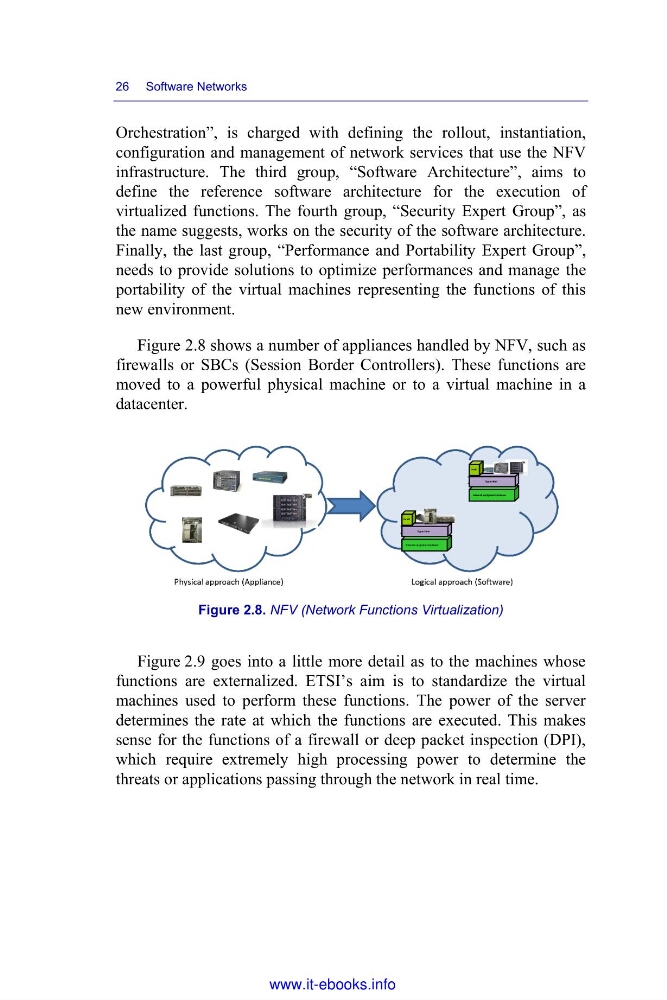
Figure 2.8 shows a number of appliances handled by NFV, such as
firewalls or SBCs (Session Border Controllers). These functions are
moved to a powerful physical machine or to a virtual machine in a
datacenter.
Figure 2.8. NFV (Network Functions Virtualization)
Figure 2.9 goes into a little more detail as to the machines whose
functions are externalized. ETSI’s aim is to standardize the virtual
machines used to perform these functions. The power of the server
determines the rate at which the functions are executed. This makes
sense for the functions of a firewall or deep packet inspection (DPI),
which require extremely high processing power to determine the
threats or applications passing through the network in real time.
www.it-ebooks.info
Orchestration”, is charged with defining the rollout, instantiation,
configuration and management of network services that use the NFV
infrastructure. The third group, “Software Architecture”, aims to
define the reference software architecture for the execution of
virtualized functions. The fourth group, “Security Expert Group”, as
the name suggests, works on the security of the software architecture.
Finally, the last group, “Performance and Portability Expert Group”,
needs to provide solutions to optimize performances and manage the
portability of the virtual machines representing the functions of this
new environment.
Figure 2.8 shows a number of appliances handled by NFV, such as
firewalls or SBCs (Session Border Controllers). These functions are
moved to a powerful physical machine or to a virtual machine in a
datacenter.
Figure 2.8. NFV (Network Functions Virtualization)
Figure 2.9 goes into a little more detail as to the machines whose
functions are externalized. ETSI’s aim is to standardize the virtual
machines used to perform these functions. The power of the server
determines the rate at which the functions are executed. This makes
sense for the functions of a firewall or deep packet inspection (DPI),
which require extremely high processing power to determine the
threats or applications passing through the network in real time.
www.it-ebooks.info