

Wi-Fi and 5G 159
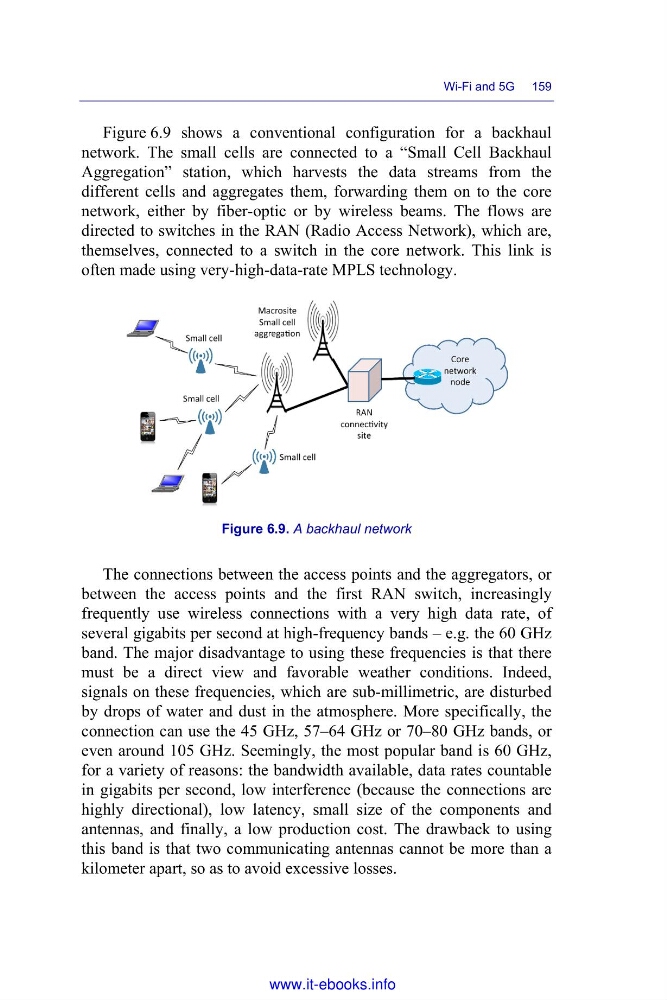
Figure 6.9 shows a conventional configuration for a backhaul
network. The small cells are connected to a “Small Cell Backhaul
Aggregation” station, which harvests the data streams from the
different cells and aggregates them, forwarding them on to the core
network, either by fiber-optic or by wireless beams. The flows are
directed to switches in the RAN (Radio Access Network), which are,
themselves, connected to a switch in the core network. This link is
often made using very-high-data-rate MPLS technology.
Figure 6.9. A backhaul network
The connections between the access points and the aggregators, or
between the access points and the first RAN switch, increasingly
frequently use wireless connections with a very high data rate, of
several gigabits per second at high-frequency bands – e.g. the 60 GHz
band. The major disadvantage to using these frequencies is that there
must be a direct view and favorable weather conditions. Indeed,
signals on these frequencies, which are sub-millimetric, are disturbed
by drops of water and dust in the atmosphere. More specifically, the
connection can use the 45 GHz, 57–64 GHz or 70–80 GHz bands, or
even around 105 GHz. Seemingly, the most popular band is 60 GHz,
for a variety of reasons: the bandwidth available, data rates countable
in gigabits per second, low interference (because the connections are
highly directional), low latency, small size of the components and
antennas, and finally, a low production cost. The drawback to using
this band is that two communicating antennas cannot be more than a
kilometer apart, so as to avoid excessive losses.
www.it-ebooks.info
Figure 6.9 shows a conventional configuration for a backhaul
network. The small cells are connected to a “Small Cell Backhaul
Aggregation” station, which harvests the data streams from the
different cells and aggregates them, forwarding them on to the core
network, either by fiber-optic or by wireless beams. The flows are
directed to switches in the RAN (Radio Access Network), which are,
themselves, connected to a switch in the core network. This link is
often made using very-high-data-rate MPLS technology.
Figure 6.9. A backhaul network
The connections between the access points and the aggregators, or
between the access points and the first RAN switch, increasingly
frequently use wireless connections with a very high data rate, of
several gigabits per second at high-frequency bands – e.g. the 60 GHz
band. The major disadvantage to using these frequencies is that there
must be a direct view and favorable weather conditions. Indeed,
signals on these frequencies, which are sub-millimetric, are disturbed
by drops of water and dust in the atmosphere. More specifically, the
connection can use the 45 GHz, 57–64 GHz or 70–80 GHz bands, or
even around 105 GHz. Seemingly, the most popular band is 60 GHz,
for a variety of reasons: the bandwidth available, data rates countable
in gigabits per second, low interference (because the connections are
highly directional), low latency, small size of the components and
antennas, and finally, a low production cost. The drawback to using
this band is that two communicating antennas cannot be more than a
kilometer apart, so as to avoid excessive losses.
www.it-ebooks.info