

326
V. E. Chahana et al.
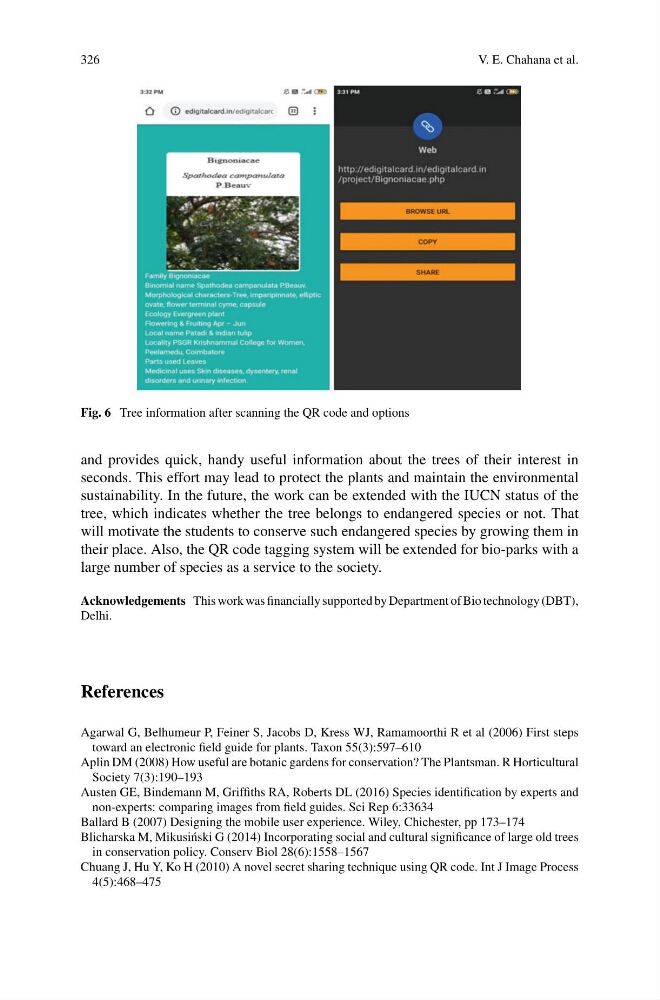
Fig. 6 Tree information after scanning the QR code and options
and provides quick, handy useful information about the trees of their interest in
seconds. This effort may lead to protect the plants and maintain the environmental
sustainability. In the future, the work can be extended with the IUCN status of the
tree, which indicates whether the tree belongs to endangered species or not. That
will motivate the students to conserve such endangered species by growing them in
their place. Also, the QR code tagging system will be extended for bio-parks with a
large number of species as a service to the society.
Acknowledgements This work was financially supported by Department of Bio technology (DBT),
Delhi.
References
Agarwal G, Belhumeur P, Feiner S, Jacobs D, Kress WJ, Ramamoorthi R et al (2006) First steps
toward an electronic field guide for plants. Taxon 55(3):597–610
Aplin DM (2008) How useful are botanic gardens for conservation? The Plantsman. R Horticultural
Society 7(3):190–193
Austen GE, Bindemann M, Griffiths RA, Roberts DL (2016) Species identification by experts and
non-experts: comparing images from field guides. Sci Rep 6:33634
Ballard B (2007) Designing the mobile user experience. Wiley, Chichester, pp 173–174
Blicharska M, Mikusi´ nski G (2014) Incorporating social and cultural significance of large old trees
in conservation policy. Conserv Biol 28(6):1558–1567
Chuang J, Hu Y, Ko H (2010) A novel secret sharing technique using QR code. Int J Image Process
4(5):468–475
V. E. Chahana et al.
Fig. 6 Tree information after scanning the QR code and options
and provides quick, handy useful information about the trees of their interest in
seconds. This effort may lead to protect the plants and maintain the environmental
sustainability. In the future, the work can be extended with the IUCN status of the
tree, which indicates whether the tree belongs to endangered species or not. That
will motivate the students to conserve such endangered species by growing them in
their place. Also, the QR code tagging system will be extended for bio-parks with a
large number of species as a service to the society.
Acknowledgements This work was financially supported by Department of Bio technology (DBT),
Delhi.
References
Agarwal G, Belhumeur P, Feiner S, Jacobs D, Kress WJ, Ramamoorthi R et al (2006) First steps
toward an electronic field guide for plants. Taxon 55(3):597–610
Aplin DM (2008) How useful are botanic gardens for conservation? The Plantsman. R Horticultural
Society 7(3):190–193
Austen GE, Bindemann M, Griffiths RA, Roberts DL (2016) Species identification by experts and
non-experts: comparing images from field guides. Sci Rep 6:33634
Ballard B (2007) Designing the mobile user experience. Wiley, Chichester, pp 173–174
Blicharska M, Mikusi´ nski G (2014) Incorporating social and cultural significance of large old trees
in conservation policy. Conserv Biol 28(6):1558–1567
Chuang J, Hu Y, Ko H (2010) A novel secret sharing technique using QR code. Int J Image Process
4(5):468–475