

Experimentation and Evaluation of Biodegradative Kinetic …
169
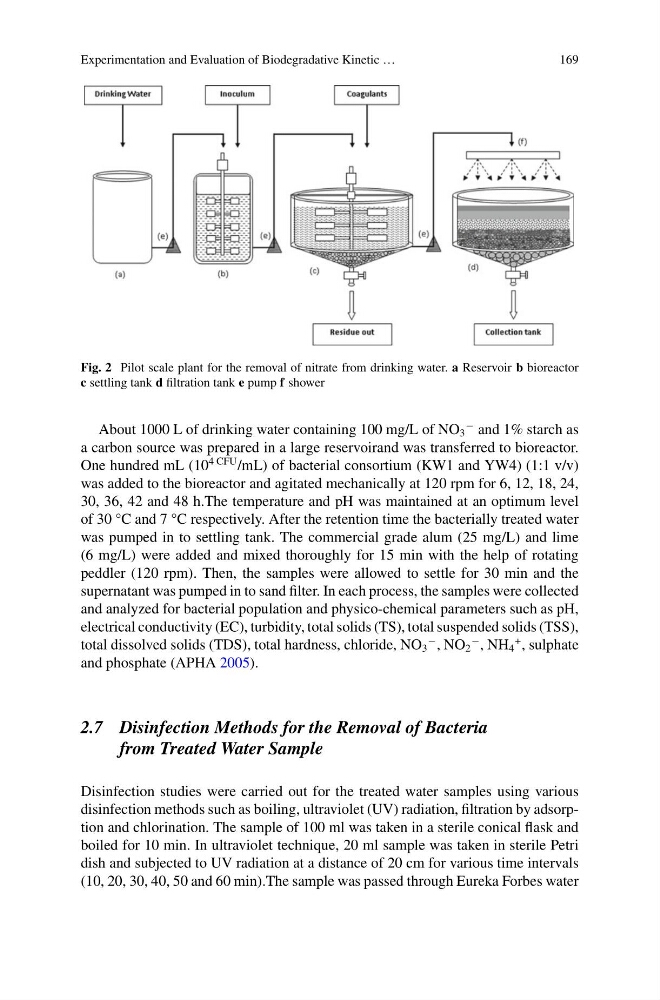
Fig. 2 Pilot scale plant for the removal of nitrate from drinking water. a Reservoir b bioreactor
c settling tank d filtration tank e pump f shower
About 1000 L of drinking water containing 100 mg/L of NO 3
− and 1% starch as
a carbon source was prepared in a large reservoirand was transferred to bioreactor.
One hundred mL (10
4 CFU /mL) of bacterial consortium (KW1 and YW4) (1:1 v/v)
was added to the bioreactor and agitated mechanically at 120 rpm for 6, 12, 18, 24,
30, 36, 42 and 48 h.The temperature and pH was maintained at an optimum level
of 30 °C and 7 °C respectively. After the retention time the bacterially treated water
was pumped in to settling tank. The commercial grade alum (25 mg/L) and lime
(6 mg/L) were added and mixed thoroughly for 15 min with the help of rotating
peddler (120 rpm). Then, the samples were allowed to settle for 30 min and the
supernatant was pumped in to sand filter. In each process, the samples were collected
and analyzed for bacterial population and physico-chemical parameters such as pH,
electrical conductivity (EC), turbidity, total solids (TS), total suspended solids (TSS),
total dissolved solids (TDS), total hardness, chloride, NO 3
− , NO 2
− , NH 4
+ , sulphate
and phosphate (APHA 2005).
2.7 Disinfection Methods for the Removal of Bacteria
from Treated Water Sample
Disinfection studies were carried out for the treated water samples using various
disinfection methods such as boiling, ultraviolet (UV) radiation, filtration by adsorption and chlorination. The sample of 100 ml was taken in a sterile conical flask and
boiled for 10 min. In ultraviolet technique, 20 ml sample was taken in sterile Petri
dish and subjected to UV radiation at a distance of 20 cm for various time intervals
(10, 20, 30, 40, 50 and 60 min).The sample was passed through Eureka Forbes water
169
Fig. 2 Pilot scale plant for the removal of nitrate from drinking water. a Reservoir b bioreactor
c settling tank d filtration tank e pump f shower
About 1000 L of drinking water containing 100 mg/L of NO 3
− and 1% starch as
a carbon source was prepared in a large reservoirand was transferred to bioreactor.
One hundred mL (10
4 CFU /mL) of bacterial consortium (KW1 and YW4) (1:1 v/v)
was added to the bioreactor and agitated mechanically at 120 rpm for 6, 12, 18, 24,
30, 36, 42 and 48 h.The temperature and pH was maintained at an optimum level
of 30 °C and 7 °C respectively. After the retention time the bacterially treated water
was pumped in to settling tank. The commercial grade alum (25 mg/L) and lime
(6 mg/L) were added and mixed thoroughly for 15 min with the help of rotating
peddler (120 rpm). Then, the samples were allowed to settle for 30 min and the
supernatant was pumped in to sand filter. In each process, the samples were collected
and analyzed for bacterial population and physico-chemical parameters such as pH,
electrical conductivity (EC), turbidity, total solids (TS), total suspended solids (TSS),
total dissolved solids (TDS), total hardness, chloride, NO 3
− , NO 2
− , NH 4
+ , sulphate
and phosphate (APHA 2005).
2.7 Disinfection Methods for the Removal of Bacteria
from Treated Water Sample
Disinfection studies were carried out for the treated water samples using various
disinfection methods such as boiling, ultraviolet (UV) radiation, filtration by adsorption and chlorination. The sample of 100 ml was taken in a sterile conical flask and
boiled for 10 min. In ultraviolet technique, 20 ml sample was taken in sterile Petri
dish and subjected to UV radiation at a distance of 20 cm for various time intervals
(10, 20, 30, 40, 50 and 60 min).The sample was passed through Eureka Forbes water