

140
B. Sivasathya et al.
0
50
100
150
200
250
300
350
400
450
500
Raw Effluent
Chemical
treatment
(Hypo)
Dodonae
viscosa seed
powder 5g/l
After filtration
Eggshell,Sand
and Activated
carbon (Amla
seedpowder)
Total suspended solids (mg/l)
total hardness (mg/l)
Free Residual chloride (mg/l)
Turbidity
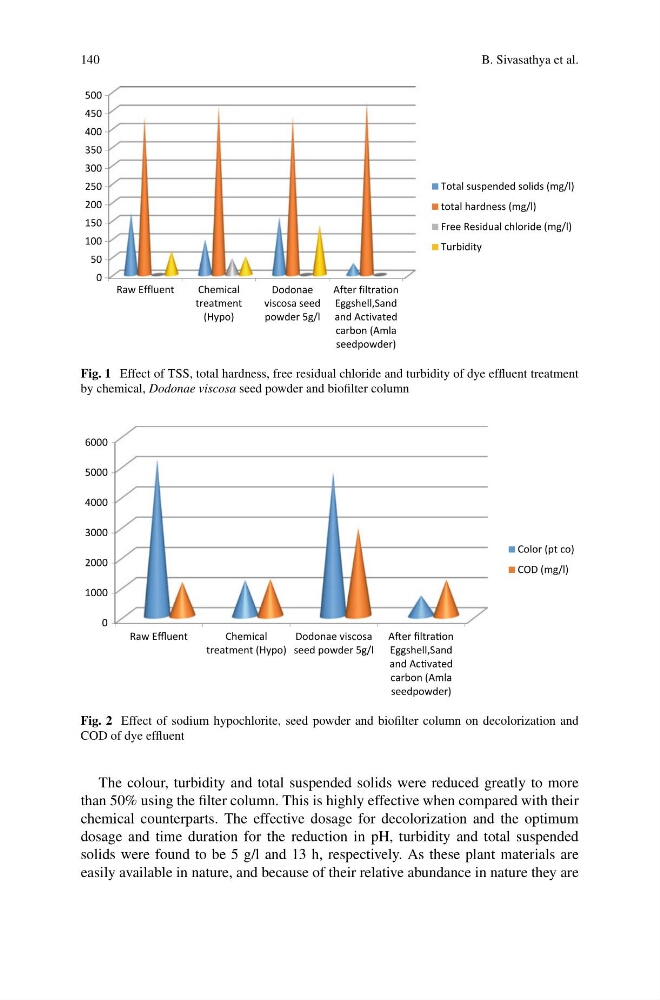
Fig. 1 Effect of TSS, total hardness, free residual chloride and turbidity of dye effluent treatment
by chemical, Dodonae viscosa seed powder and biofilter column
0
1000
2000
3000
4000
5000
6000
Raw Effluent
Chemical
treatment (Hypo)
Dodonae viscosa
seed powder 5g/l
Aer filtra
Eggshell,Sand
and Ac
carbon (Amla
seedpowder)
Color (pt co)
COD (mg/l)
Fig. 2 Effect of sodium hypochlorite, seed powder and biofilter column on decolorization and
COD of dye effluent
The colour, turbidity and total suspended solids were reduced greatly to more
than 50% using the filter column. This is highly effective when compared with their
chemical counterparts. The effective dosage for decolorization and the optimum
dosage and time duration for the reduction in pH, turbidity and total suspended
solids were found to be 5 g/l and 13 h, respectively. As these plant materials are
easily available in nature, and because of their relative abundance in nature they are
B. Sivasathya et al.
0
50
100
150
200
250
300
350
400
450
500
Raw Effluent
Chemical
treatment
(Hypo)
Dodonae
viscosa seed
powder 5g/l
After filtration
Eggshell,Sand
and Activated
carbon (Amla
seedpowder)
Total suspended solids (mg/l)
total hardness (mg/l)
Free Residual chloride (mg/l)
Turbidity
Fig. 1 Effect of TSS, total hardness, free residual chloride and turbidity of dye effluent treatment
by chemical, Dodonae viscosa seed powder and biofilter column
0
1000
2000
3000
4000
5000
6000
Raw Effluent
Chemical
treatment (Hypo)
Dodonae viscosa
seed powder 5g/l
Aer filtra
Eggshell,Sand
and Ac
carbon (Amla
seedpowder)
Color (pt co)
COD (mg/l)
Fig. 2 Effect of sodium hypochlorite, seed powder and biofilter column on decolorization and
COD of dye effluent
The colour, turbidity and total suspended solids were reduced greatly to more
than 50% using the filter column. This is highly effective when compared with their
chemical counterparts. The effective dosage for decolorization and the optimum
dosage and time duration for the reduction in pH, turbidity and total suspended
solids were found to be 5 g/l and 13 h, respectively. As these plant materials are
easily available in nature, and because of their relative abundance in nature they are