

Methods of Transdisciplinary Collaboration …
85
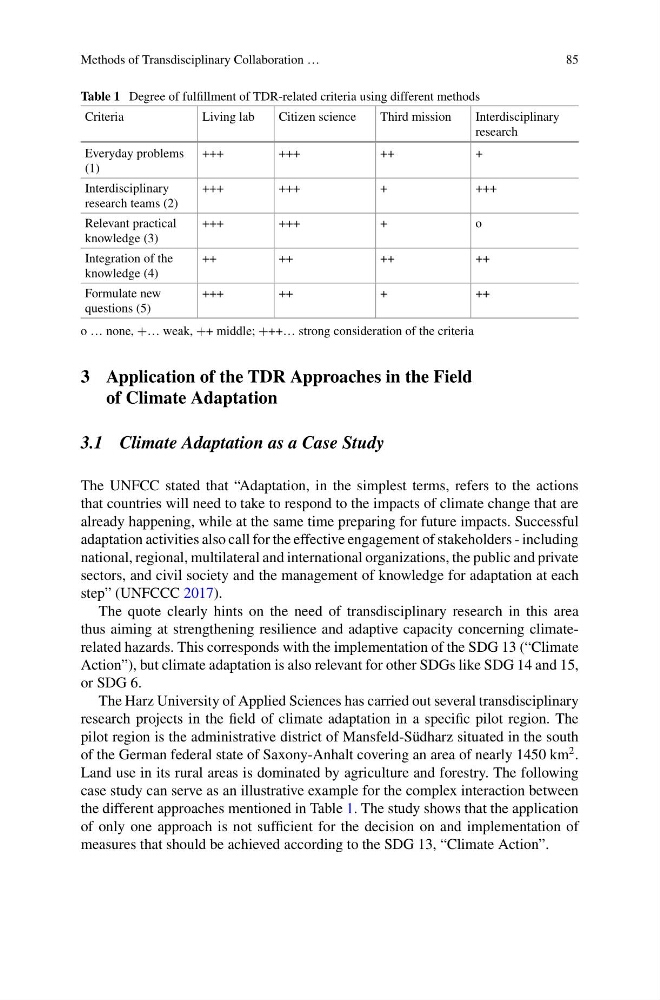
Table 1 Degree of fulfillment of TDR-related criteria using different methods
Criteria
Living lab
Citizen science
Third mission
Interdisciplinary
research
Everyday problems
(1)
+++
+++
++
+
Interdisciplinary
research teams (2)
+++
+++
+
+++
Relevant practical
knowledge (3)
+++
+++
+
o
Integration of the
knowledge (4)
++
++
++
++
Formulate new
questions (5)
+++
++
+
++
o … none, +… weak, ++ middle; +++… strong consideration of the criteria
3 Application of the TDR Approaches in the Field
of Climate Adaptation
3.1 Climate Adaptation as a Case Study
The UNFCC stated that “Adaptation, in the simplest terms, refers to the actions
that countries will need to take to respond to the impacts of climate change that are
already happening, while at the same time preparing for future impacts. Successful
adaptation activities also call for the effective engagement of stakeholders - including
national, regional, multilateral and international organizations, the public and private
sectors, and civil society and the management of knowledge for adaptation at each
step” (UNFCCC 2017).
The quote clearly hints on the need of transdisciplinary research in this area
thus aiming at strengthening resilience and adaptive capacity concerning climaterelated hazards. This corresponds with the implementation of the SDG 13 (“Climate
Action”), but climate adaptation is also relevant for other SDGs like SDG 14 and 15,
or SDG 6.
The Harz University of Applied Sciences has carried out several transdisciplinary
research projects in the field of climate adaptation in a specific pilot region. The
pilot region is the administrative district of Mansfeld-Südharz situated in the south
of the German federal state of Saxony-Anhalt covering an area of nearly 1450 km
2 .
Land use in its rural areas is dominated by agriculture and forestry. The following
case study can serve as an illustrative example for the complex interaction between
the different approaches mentioned in Table 1. The study shows that the application
of only one approach is not sufficient for the decision on and implementation of
measures that should be achieved according to the SDG 13, “Climate Action”.
85
Table 1 Degree of fulfillment of TDR-related criteria using different methods
Criteria
Living lab
Citizen science
Third mission
Interdisciplinary
research
Everyday problems
(1)
+++
+++
++
+
Interdisciplinary
research teams (2)
+++
+++
+
+++
Relevant practical
knowledge (3)
+++
+++
+
o
Integration of the
knowledge (4)
++
++
++
++
Formulate new
questions (5)
+++
++
+
++
o … none, +… weak, ++ middle; +++… strong consideration of the criteria
3 Application of the TDR Approaches in the Field
of Climate Adaptation
3.1 Climate Adaptation as a Case Study
The UNFCC stated that “Adaptation, in the simplest terms, refers to the actions
that countries will need to take to respond to the impacts of climate change that are
already happening, while at the same time preparing for future impacts. Successful
adaptation activities also call for the effective engagement of stakeholders - including
national, regional, multilateral and international organizations, the public and private
sectors, and civil society and the management of knowledge for adaptation at each
step” (UNFCCC 2017).
The quote clearly hints on the need of transdisciplinary research in this area
thus aiming at strengthening resilience and adaptive capacity concerning climaterelated hazards. This corresponds with the implementation of the SDG 13 (“Climate
Action”), but climate adaptation is also relevant for other SDGs like SDG 14 and 15,
or SDG 6.
The Harz University of Applied Sciences has carried out several transdisciplinary
research projects in the field of climate adaptation in a specific pilot region. The
pilot region is the administrative district of Mansfeld-Südharz situated in the south
of the German federal state of Saxony-Anhalt covering an area of nearly 1450 km
2 .
Land use in its rural areas is dominated by agriculture and forestry. The following
case study can serve as an illustrative example for the complex interaction between
the different approaches mentioned in Table 1. The study shows that the application
of only one approach is not sufficient for the decision on and implementation of
measures that should be achieved according to the SDG 13, “Climate Action”.