

64
S. Linow
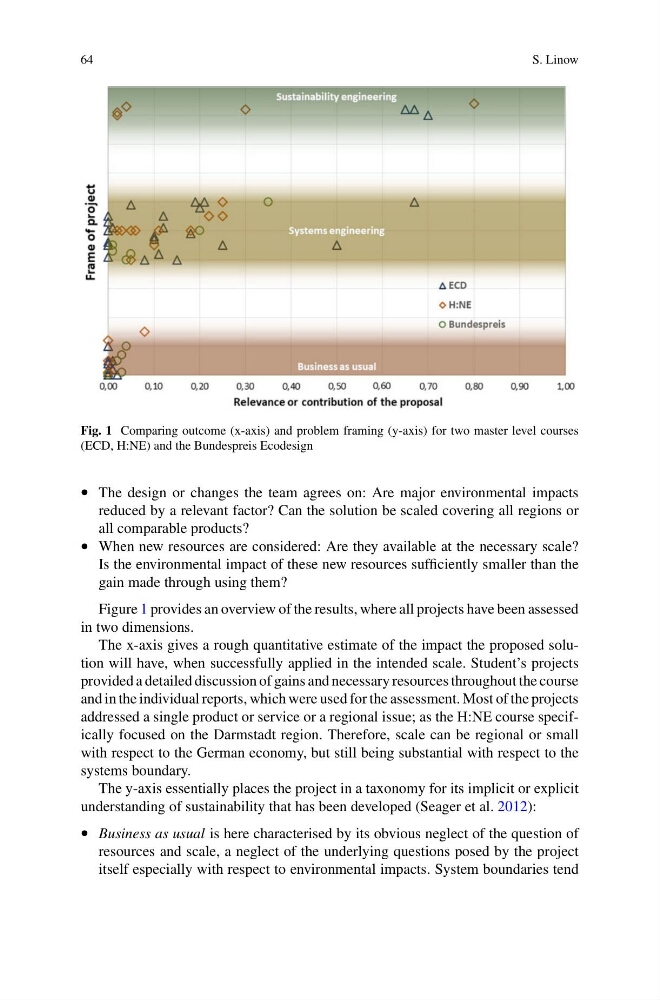
Fig. 1 Comparing outcome (x-axis) and problem framing (y-axis) for two master level courses
(ECD, H:NE) and the Bundespreis Ecodesign
• The design or changes the team agrees on: Are major environmental impacts
reduced by a relevant factor? Can the solution be scaled covering all regions or
all comparable products?
• When new resources are considered: Are they available at the necessary scale?
Is the environmental impact of these new resources sufficiently smaller than the
gain made through using them?
Figure 1 provides an overview of the results, where all projects have been assessed
in two dimensions.
The x-axis gives a rough quantitative estimate of the impact the proposed solution will have, when successfully applied in the intended scale. Student’s projects
provided a detailed discussion of gains and necessary resources throughout the course
and in the individual reports, which were used for the assessment. Most of the projects
addressed a single product or service or a regional issue; as the H:NE course specifically focused on the Darmstadt region. Therefore, scale can be regional or small
with respect to the German economy, but still being substantial with respect to the
systems boundary.
The y-axis essentially places the project in a taxonomy for its implicit or explicit
understanding of sustainability that has been developed (Seager et al. 2012):
• Business as usual is here characterised by its obvious neglect of the question of
resources and scale, a neglect of the underlying questions posed by the project
itself especially with respect to environmental impacts. System boundaries tend
S. Linow
Fig. 1 Comparing outcome (x-axis) and problem framing (y-axis) for two master level courses
(ECD, H:NE) and the Bundespreis Ecodesign
• The design or changes the team agrees on: Are major environmental impacts
reduced by a relevant factor? Can the solution be scaled covering all regions or
all comparable products?
• When new resources are considered: Are they available at the necessary scale?
Is the environmental impact of these new resources sufficiently smaller than the
gain made through using them?
Figure 1 provides an overview of the results, where all projects have been assessed
in two dimensions.
The x-axis gives a rough quantitative estimate of the impact the proposed solution will have, when successfully applied in the intended scale. Student’s projects
provided a detailed discussion of gains and necessary resources throughout the course
and in the individual reports, which were used for the assessment. Most of the projects
addressed a single product or service or a regional issue; as the H:NE course specifically focused on the Darmstadt region. Therefore, scale can be regional or small
with respect to the German economy, but still being substantial with respect to the
systems boundary.
The y-axis essentially places the project in a taxonomy for its implicit or explicit
understanding of sustainability that has been developed (Seager et al. 2012):
• Business as usual is here characterised by its obvious neglect of the question of
resources and scale, a neglect of the underlying questions posed by the project
itself especially with respect to environmental impacts. System boundaries tend