

60
S. Linow
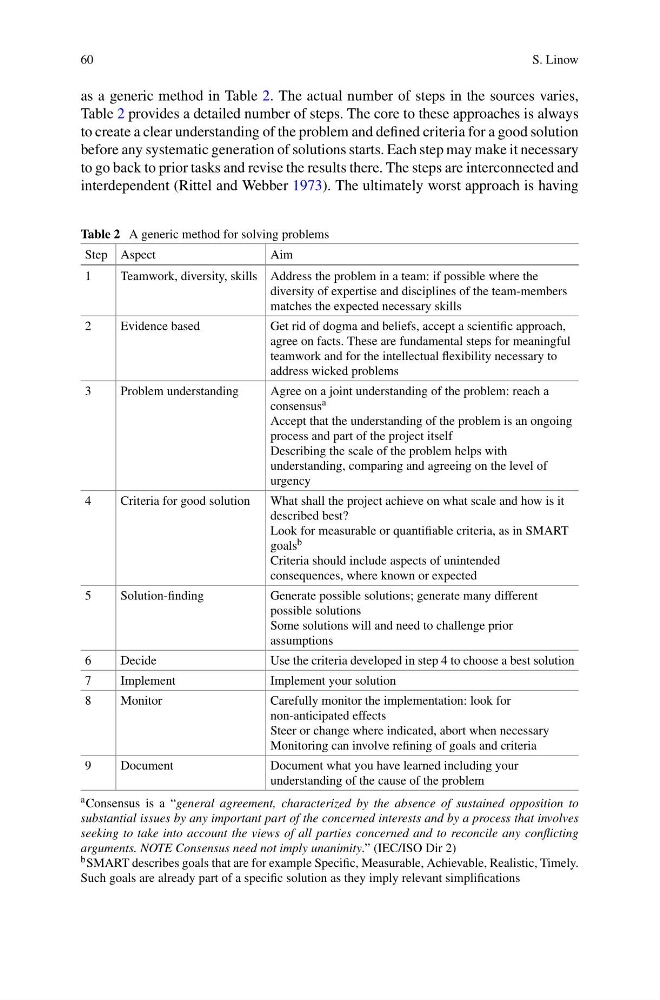
as a generic method in Table 2. The actual number of steps in the sources varies,
Table 2 provides a detailed number of steps. The core to these approaches is always
to create a clear understanding of the problem and defined criteria for a good solution
before any systematic generation of solutions starts. Each step may make it necessary
to go back to prior tasks and revise the results there. The steps are interconnected and
interdependent (Rittel and Webber 1973). The ultimately worst approach is having
Table 2 A generic method for solving problems
Step Aspect
Aim
1
Teamwork, diversity, skills Address the problem in a team: if possible where the
diversity of expertise and disciplines of the team-members
matches the expected necessary skills
2
Evidence based
Get rid of dogma and beliefs, accept a scientific approach,
agree on facts. These are fundamental steps for meaningful
teamwork and for the intellectual flexibility necessary to
address wicked problems
3
Problem understanding
Agree on a joint understanding of the problem: reach a
consensus a
Accept that the understanding of the problem is an ongoing
process and part of the project itself
Describing the scale of the problem helps with
understanding, comparing and agreeing on the level of
urgency
4
Criteria for good solution
What shall the project achieve on what scale and how is it
described best?
Look for measurable or quantifiable criteria, as in SMART
goals b
Criteria should include aspects of unintended
consequences, where known or expected
5
Solution-finding
Generate possible solutions; generate many different
possible solutions
Some solutions will and need to challenge prior
assumptions
6
Decide
Use the criteria developed in step 4 to choose a best solution
7
Implement
Implement your solution
8
Monitor
Carefully monitor the implementation: look for
non-anticipated effects
Steer or change where indicated, abort when necessary
Monitoring can involve refining of goals and criteria
9
Document
Document what you have learned including your
understanding of the cause of the problem
a Consensus is a “general agreement, characterized by the absence of sustained opposition to
substantial issues by any important part of the concerned interests and by a process that involves
seeking to take into account the views of all parties concerned and to reconcile any conflicting
arguments. NOTE Consensus need not imply unanimity.” (IEC/ISO Dir 2)
b SMART describes goals that are for example Specific, Measurable, Achievable, Realistic, Timely.
Such goals are already part of a specific solution as they imply relevant simplifications
S. Linow
as a generic method in Table 2. The actual number of steps in the sources varies,
Table 2 provides a detailed number of steps. The core to these approaches is always
to create a clear understanding of the problem and defined criteria for a good solution
before any systematic generation of solutions starts. Each step may make it necessary
to go back to prior tasks and revise the results there. The steps are interconnected and
interdependent (Rittel and Webber 1973). The ultimately worst approach is having
Table 2 A generic method for solving problems
Step Aspect
Aim
1
Teamwork, diversity, skills Address the problem in a team: if possible where the
diversity of expertise and disciplines of the team-members
matches the expected necessary skills
2
Evidence based
Get rid of dogma and beliefs, accept a scientific approach,
agree on facts. These are fundamental steps for meaningful
teamwork and for the intellectual flexibility necessary to
address wicked problems
3
Problem understanding
Agree on a joint understanding of the problem: reach a
consensus a
Accept that the understanding of the problem is an ongoing
process and part of the project itself
Describing the scale of the problem helps with
understanding, comparing and agreeing on the level of
urgency
4
Criteria for good solution
What shall the project achieve on what scale and how is it
described best?
Look for measurable or quantifiable criteria, as in SMART
goals b
Criteria should include aspects of unintended
consequences, where known or expected
5
Solution-finding
Generate possible solutions; generate many different
possible solutions
Some solutions will and need to challenge prior
assumptions
6
Decide
Use the criteria developed in step 4 to choose a best solution
7
Implement
Implement your solution
8
Monitor
Carefully monitor the implementation: look for
non-anticipated effects
Steer or change where indicated, abort when necessary
Monitoring can involve refining of goals and criteria
9
Document
Document what you have learned including your
understanding of the cause of the problem
a Consensus is a “general agreement, characterized by the absence of sustained opposition to
substantial issues by any important part of the concerned interests and by a process that involves
seeking to take into account the views of all parties concerned and to reconcile any conflicting
arguments. NOTE Consensus need not imply unanimity.” (IEC/ISO Dir 2)
b SMART describes goals that are for example Specific, Measurable, Achievable, Realistic, Timely.
Such goals are already part of a specific solution as they imply relevant simplifications