

Universities, Sustainability and Society: A SDGs Perspective
557
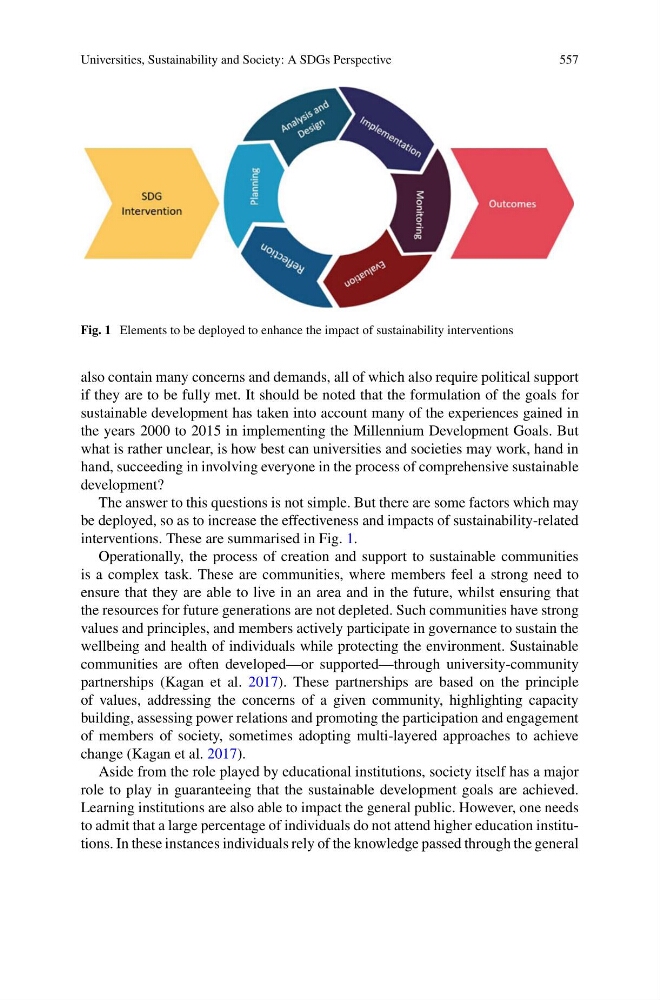
Fig. 1 Elements to be deployed to enhance the impact of sustainability interventions
also contain many concerns and demands, all of which also require political support
if they are to be fully met. It should be noted that the formulation of the goals for
sustainable development has taken into account many of the experiences gained in
the years 2000 to 2015 in implementing the Millennium Development Goals. But
what is rather unclear, is how best can universities and societies may work, hand in
hand, succeeding in involving everyone in the process of comprehensive sustainable
development?
The answer to this questions is not simple. But there are some factors which may
be deployed, so as to increase the effectiveness and impacts of sustainability-related
interventions. These are summarised in Fig. 1.
Operationally, the process of creation and support to sustainable communities
is a complex task. These are communities, where members feel a strong need to
ensure that they are able to live in an area and in the future, whilst ensuring that
the resources for future generations are not depleted. Such communities have strong
values and principles, and members actively participate in governance to sustain the
wellbeing and health of individuals while protecting the environment. Sustainable
communities are often developed—or supported—through university-community
partnerships (Kagan et al. 2017). These partnerships are based on the principle
of values, addressing the concerns of a given community, highlighting capacity
building, assessing power relations and promoting the participation and engagement
of members of society, sometimes adopting multi-layered approaches to achieve
change (Kagan et al. 2017).
Aside from the role played by educational institutions, society itself has a major
role to play in guaranteeing that the sustainable development goals are achieved.
Learning institutions are also able to impact the general public. However, one needs
to admit that a large percentage of individuals do not attend higher education institutions. In these instances individuals rely of the knowledge passed through the general
557
Fig. 1 Elements to be deployed to enhance the impact of sustainability interventions
also contain many concerns and demands, all of which also require political support
if they are to be fully met. It should be noted that the formulation of the goals for
sustainable development has taken into account many of the experiences gained in
the years 2000 to 2015 in implementing the Millennium Development Goals. But
what is rather unclear, is how best can universities and societies may work, hand in
hand, succeeding in involving everyone in the process of comprehensive sustainable
development?
The answer to this questions is not simple. But there are some factors which may
be deployed, so as to increase the effectiveness and impacts of sustainability-related
interventions. These are summarised in Fig. 1.
Operationally, the process of creation and support to sustainable communities
is a complex task. These are communities, where members feel a strong need to
ensure that they are able to live in an area and in the future, whilst ensuring that
the resources for future generations are not depleted. Such communities have strong
values and principles, and members actively participate in governance to sustain the
wellbeing and health of individuals while protecting the environment. Sustainable
communities are often developed—or supported—through university-community
partnerships (Kagan et al. 2017). These partnerships are based on the principle
of values, addressing the concerns of a given community, highlighting capacity
building, assessing power relations and promoting the participation and engagement
of members of society, sometimes adopting multi-layered approaches to achieve
change (Kagan et al. 2017).
Aside from the role played by educational institutions, society itself has a major
role to play in guaranteeing that the sustainable development goals are achieved.
Learning institutions are also able to impact the general public. However, one needs
to admit that a large percentage of individuals do not attend higher education institutions. In these instances individuals rely of the knowledge passed through the general