

546
D. Kattwinkel and B. Bender
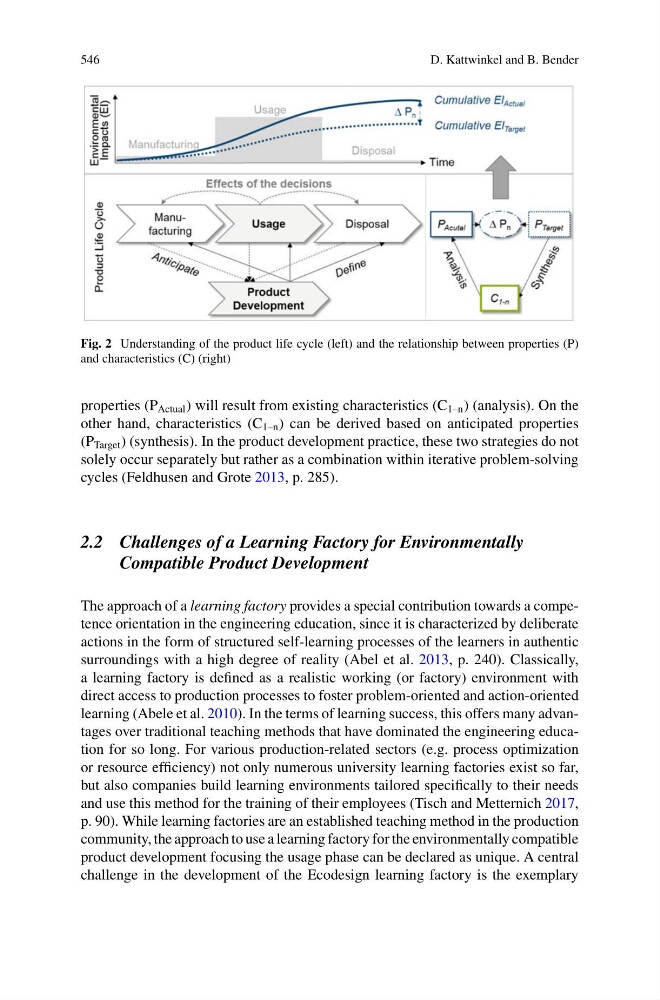
Fig. 2 Understanding of the product life cycle (left) and the relationship between properties (P)
and characteristics (C) (right)
properties (P Actual ) will result from existing characteristics (C 1–n ) (analysis). On the
other hand, characteristics (C 1–n ) can be derived based on anticipated properties
(P Target ) (synthesis). In the product development practice, these two strategies do not
solely occur separately but rather as a combination within iterative problem-solving
cycles (Feldhusen and Grote 2013, p. 285).
2.2 Challenges of a Learning Factory for Environmentally
Compatible Product Development
The approach of a learning factory provides a special contribution towards a competence orientation in the engineering education, since it is characterized by deliberate
actions in the form of structured self-learning processes of the learners in authentic
surroundings with a high degree of reality (Abel et al. 2013, p. 240). Classically,
a learning factory is defined as a realistic working (or factory) environment with
direct access to production processes to foster problem-oriented and action-oriented
learning (Abele et al. 2010). In the terms of learning success, this offers many advantages over traditional teaching methods that have dominated the engineering education for so long. For various production-related sectors (e.g. process optimization
or resource efficiency) not only numerous university learning factories exist so far,
but also companies build learning environments tailored specifically to their needs
and use this method for the training of their employees (Tisch and Metternich 2017,
p. 90). While learning factories are an established teaching method in the production
community, the approach to use a learning factory for the environmentally compatible
product development focusing the usage phase can be declared as unique. A central
challenge in the development of the Ecodesign learning factory is the exemplary
D. Kattwinkel and B. Bender
Fig. 2 Understanding of the product life cycle (left) and the relationship between properties (P)
and characteristics (C) (right)
properties (P Actual ) will result from existing characteristics (C 1–n ) (analysis). On the
other hand, characteristics (C 1–n ) can be derived based on anticipated properties
(P Target ) (synthesis). In the product development practice, these two strategies do not
solely occur separately but rather as a combination within iterative problem-solving
cycles (Feldhusen and Grote 2013, p. 285).
2.2 Challenges of a Learning Factory for Environmentally
Compatible Product Development
The approach of a learning factory provides a special contribution towards a competence orientation in the engineering education, since it is characterized by deliberate
actions in the form of structured self-learning processes of the learners in authentic
surroundings with a high degree of reality (Abel et al. 2013, p. 240). Classically,
a learning factory is defined as a realistic working (or factory) environment with
direct access to production processes to foster problem-oriented and action-oriented
learning (Abele et al. 2010). In the terms of learning success, this offers many advantages over traditional teaching methods that have dominated the engineering education for so long. For various production-related sectors (e.g. process optimization
or resource efficiency) not only numerous university learning factories exist so far,
but also companies build learning environments tailored specifically to their needs
and use this method for the training of their employees (Tisch and Metternich 2017,
p. 90). While learning factories are an established teaching method in the production
community, the approach to use a learning factory for the environmentally compatible
product development focusing the usage phase can be declared as unique. A central
challenge in the development of the Ecodesign learning factory is the exemplary