

Introduction of the Research Project EcoING …
543
Ethics, Sustainability,
Environment
Sustainable product
development,
Ecodesign
Lightweight
engineering
Alternative drive
technology
Sustainable materials
Sustainable
manufacturing
Reycling and Disposal
Energy efficiency
Environm.
engineering and
protection
Sustainable energies
Energy and climate
management
Energy economy
6
11
60
15
1
22
21
29
54
76
27
34
5%
9%
51% 13%
1%
19% 18% 25% 46% 64% 23% 29%
Full coverage
Partial coverage
No coverage
Usage
Recycling / Disposal
Manufacturing
Greater context
Total number of
German courses
PLC
Categorisation
Topic of
the
course
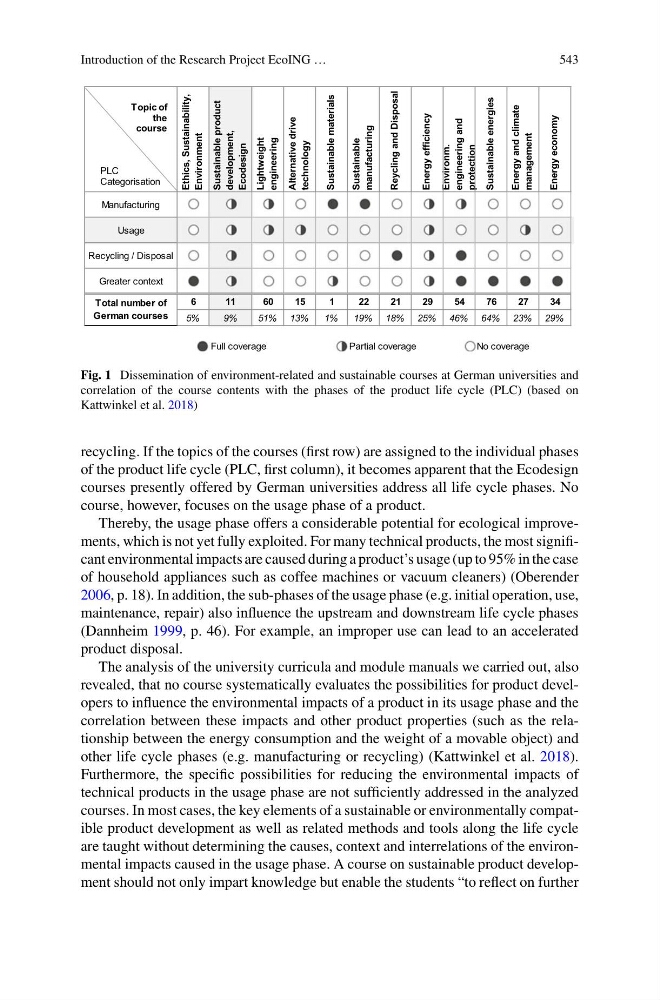
Fig. 1 Dissemination of environment-related and sustainable courses at German universities and
correlation of the course contents with the phases of the product life cycle (PLC) (based on
Kattwinkel et al. 2018)
recycling. If the topics of the courses (first row) are assigned to the individual phases
of the product life cycle (PLC, first column), it becomes apparent that the Ecodesign
courses presently offered by German universities address all life cycle phases. No
course, however, focuses on the usage phase of a product.
Thereby, the usage phase offers a considerable potential for ecological improvements, which is not yet fully exploited. For many technical products, the most significant environmental impacts are caused during a product’s usage (up to 95% in the case
of household appliances such as coffee machines or vacuum cleaners) (Oberender
2006, p. 18). In addition, the sub-phases of the usage phase (e.g. initial operation, use,
maintenance, repair) also influence the upstream and downstream life cycle phases
(Dannheim 1999, p. 46). For example, an improper use can lead to an accelerated
product disposal.
The analysis of the university curricula and module manuals we carried out, also
revealed, that no course systematically evaluates the possibilities for product developers to influence the environmental impacts of a product in its usage phase and the
correlation between these impacts and other product properties (such as the relationship between the energy consumption and the weight of a movable object) and
other life cycle phases (e.g. manufacturing or recycling) (Kattwinkel et al. 2018).
Furthermore, the specific possibilities for reducing the environmental impacts of
technical products in the usage phase are not sufficiently addressed in the analyzed
courses. In most cases, the key elements of a sustainable or environmentally compatible product development as well as related methods and tools along the life cycle
are taught without determining the causes, context and interrelations of the environmental impacts caused in the usage phase. A course on sustainable product development should not only impart knowledge but enable the students “to reflect on further
543
Ethics, Sustainability,
Environment
Sustainable product
development,
Ecodesign
Lightweight
engineering
Alternative drive
technology
Sustainable materials
Sustainable
manufacturing
Reycling and Disposal
Energy efficiency
Environm.
engineering and
protection
Sustainable energies
Energy and climate
management
Energy economy
6
11
60
15
1
22
21
29
54
76
27
34
5%
9%
51% 13%
1%
19% 18% 25% 46% 64% 23% 29%
Full coverage
Partial coverage
No coverage
Usage
Recycling / Disposal
Manufacturing
Greater context
Total number of
German courses
PLC
Categorisation
Topic of
the
course
Fig. 1 Dissemination of environment-related and sustainable courses at German universities and
correlation of the course contents with the phases of the product life cycle (PLC) (based on
Kattwinkel et al. 2018)
recycling. If the topics of the courses (first row) are assigned to the individual phases
of the product life cycle (PLC, first column), it becomes apparent that the Ecodesign
courses presently offered by German universities address all life cycle phases. No
course, however, focuses on the usage phase of a product.
Thereby, the usage phase offers a considerable potential for ecological improvements, which is not yet fully exploited. For many technical products, the most significant environmental impacts are caused during a product’s usage (up to 95% in the case
of household appliances such as coffee machines or vacuum cleaners) (Oberender
2006, p. 18). In addition, the sub-phases of the usage phase (e.g. initial operation, use,
maintenance, repair) also influence the upstream and downstream life cycle phases
(Dannheim 1999, p. 46). For example, an improper use can lead to an accelerated
product disposal.
The analysis of the university curricula and module manuals we carried out, also
revealed, that no course systematically evaluates the possibilities for product developers to influence the environmental impacts of a product in its usage phase and the
correlation between these impacts and other product properties (such as the relationship between the energy consumption and the weight of a movable object) and
other life cycle phases (e.g. manufacturing or recycling) (Kattwinkel et al. 2018).
Furthermore, the specific possibilities for reducing the environmental impacts of
technical products in the usage phase are not sufficiently addressed in the analyzed
courses. In most cases, the key elements of a sustainable or environmentally compatible product development as well as related methods and tools along the life cycle
are taught without determining the causes, context and interrelations of the environmental impacts caused in the usage phase. A course on sustainable product development should not only impart knowledge but enable the students “to reflect on further