

428
T. Ambrizzi et al.
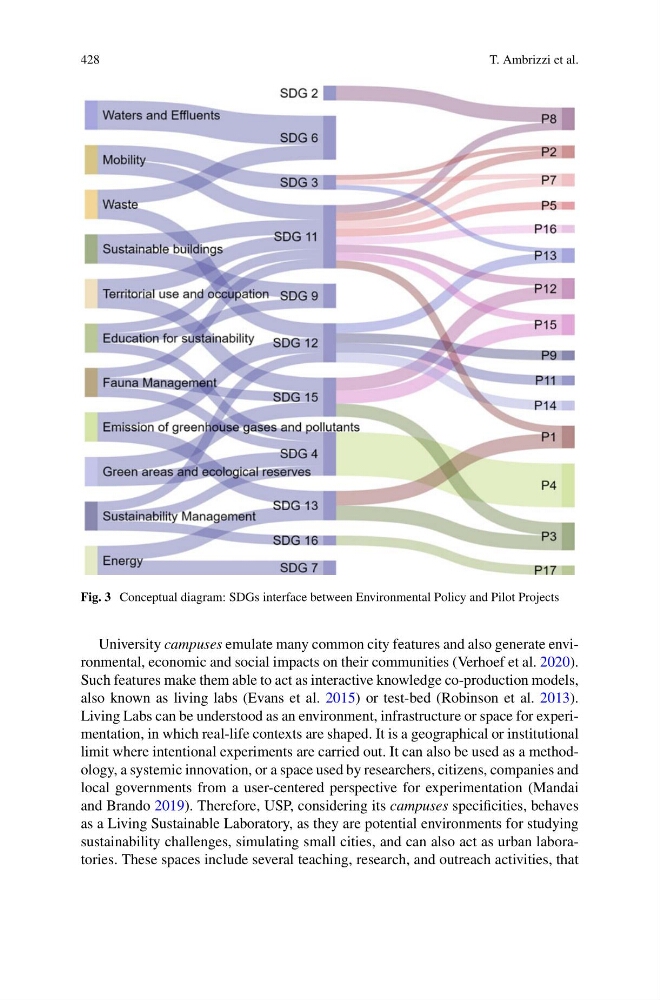
Fig. 3 Conceptual diagram: SDGs interface between Environmental Policy and Pilot Projects
University campuses emulate many common city features and also generate environmental, economic and social impacts on their communities (Verhoef et al. 2020).
Such features make them able to act as interactive knowledge co-production models,
also known as living labs (Evans et al. 2015) or test-bed (Robinson et al. 2013).
Living Labs can be understood as an environment, infrastructure or space for experimentation, in which real-life contexts are shaped. It is a geographical or institutional
limit where intentional experiments are carried out. It can also be used as a methodology, a systemic innovation, or a space used by researchers, citizens, companies and
local governments from a user-centered perspective for experimentation (Mandai
and Brando 2019). Therefore, USP, considering its campuses specificities, behaves
as a Living Sustainable Laboratory, as they are potential environments for studying
sustainability challenges, simulating small cities, and can also act as urban laboratories. These spaces include several teaching, research, and outreach activities, that
T. Ambrizzi et al.
Fig. 3 Conceptual diagram: SDGs interface between Environmental Policy and Pilot Projects
University campuses emulate many common city features and also generate environmental, economic and social impacts on their communities (Verhoef et al. 2020).
Such features make them able to act as interactive knowledge co-production models,
also known as living labs (Evans et al. 2015) or test-bed (Robinson et al. 2013).
Living Labs can be understood as an environment, infrastructure or space for experimentation, in which real-life contexts are shaped. It is a geographical or institutional
limit where intentional experiments are carried out. It can also be used as a methodology, a systemic innovation, or a space used by researchers, citizens, companies and
local governments from a user-centered perspective for experimentation (Mandai
and Brando 2019). Therefore, USP, considering its campuses specificities, behaves
as a Living Sustainable Laboratory, as they are potential environments for studying
sustainability challenges, simulating small cities, and can also act as urban laboratories. These spaces include several teaching, research, and outreach activities, that