

424
T. Ambrizzi et al.
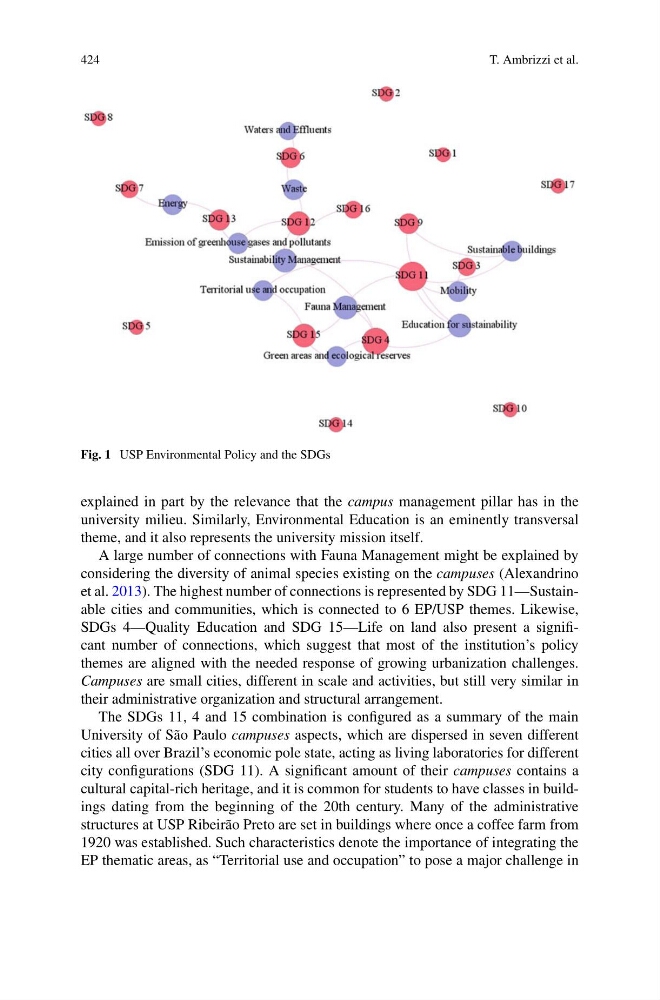
Fig. 1 USP Environmental Policy and the SDGs
explained in part by the relevance that the campus management pillar has in the
university milieu. Similarly, Environmental Education is an eminently transversal
theme, and it also represents the university mission itself.
A large number of connections with Fauna Management might be explained by
considering the diversity of animal species existing on the campuses (Alexandrino
et al. 2013). The highest number of connections is represented by SDG 11—Sustainable cities and communities, which is connected to 6 EP/USP themes. Likewise,
SDGs 4—Quality Education and SDG 15—Life on land also present a significant number of connections, which suggest that most of the institution’s policy
themes are aligned with the needed response of growing urbanization challenges.
Campuses are small cities, different in scale and activities, but still very similar in
their administrative organization and structural arrangement.
The SDGs 11, 4 and 15 combination is configured as a summary of the main
University of São Paulo campuses aspects, which are dispersed in seven different
cities all over Brazil’s economic pole state, acting as living laboratories for different
city configurations (SDG 11). A significant amount of their campuses contains a
cultural capital-rich heritage, and it is common for students to have classes in buildings dating from the beginning of the 20th century. Many of the administrative
structures at USP Ribeirão Preto are set in buildings where once a coffee farm from
1920 was established. Such characteristics denote the importance of integrating the
EP thematic areas, as “Territorial use and occupation” to pose a major challenge in
T. Ambrizzi et al.
Fig. 1 USP Environmental Policy and the SDGs
explained in part by the relevance that the campus management pillar has in the
university milieu. Similarly, Environmental Education is an eminently transversal
theme, and it also represents the university mission itself.
A large number of connections with Fauna Management might be explained by
considering the diversity of animal species existing on the campuses (Alexandrino
et al. 2013). The highest number of connections is represented by SDG 11—Sustainable cities and communities, which is connected to 6 EP/USP themes. Likewise,
SDGs 4—Quality Education and SDG 15—Life on land also present a significant number of connections, which suggest that most of the institution’s policy
themes are aligned with the needed response of growing urbanization challenges.
Campuses are small cities, different in scale and activities, but still very similar in
their administrative organization and structural arrangement.
The SDGs 11, 4 and 15 combination is configured as a summary of the main
University of São Paulo campuses aspects, which are dispersed in seven different
cities all over Brazil’s economic pole state, acting as living laboratories for different
city configurations (SDG 11). A significant amount of their campuses contains a
cultural capital-rich heritage, and it is common for students to have classes in buildings dating from the beginning of the 20th century. Many of the administrative
structures at USP Ribeirão Preto are set in buildings where once a coffee farm from
1920 was established. Such characteristics denote the importance of integrating the
EP thematic areas, as “Territorial use and occupation” to pose a major challenge in