

346
J. Kleinen and L. Kurz
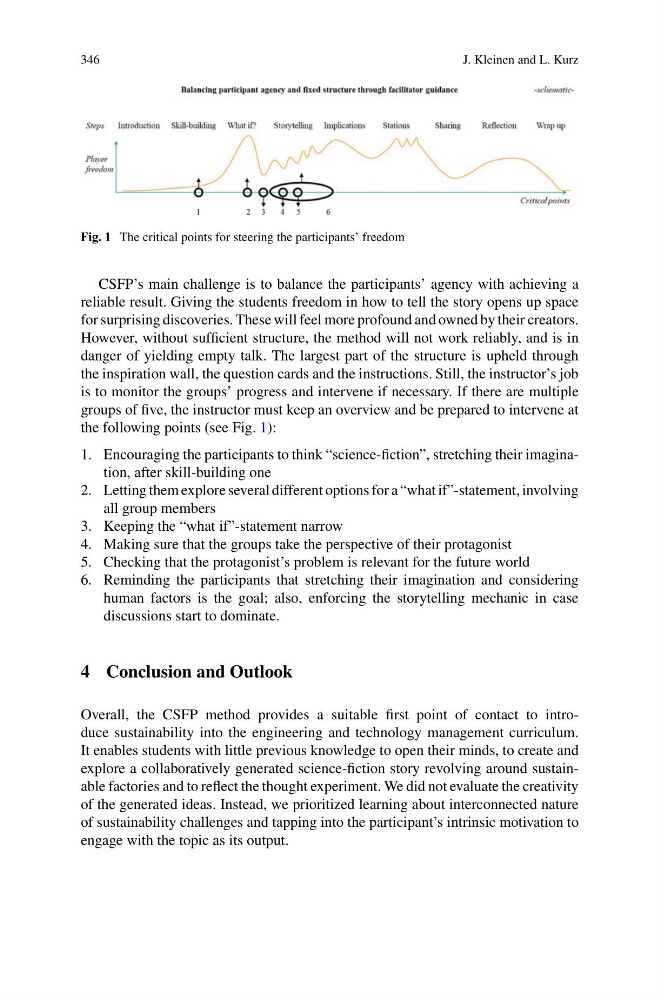
Fig. 1 The critical points for steering the participants’ freedom
CSFP’s main challenge is to balance the participants’ agency with achieving a
reliable result. Giving the students freedom in how to tell the story opens up space
for surprising discoveries. These will feel more profound and owned by their creators.
However, without sufficient structure, the method will not work reliably, and is in
danger of yielding empty talk. The largest part of the structure is upheld through
the inspiration wall, the question cards and the instructions. Still, the instructor’s job
is to monitor the groups’ progress and intervene if necessary. If there are multiple
groups of five, the instructor must keep an overview and be prepared to intervene at
the following points (see Fig. 1):
1. Encouraging the participants to think “science-fiction”, stretching their imagination, after skill-building one
2. Letting them explore several different options for a “what if”-statement, involving
all group members
3. Keeping the “what if”-statement narrow
4. Making sure that the groups take the perspective of their protagonist
5. Checking that the protagonist’s problem is relevant for the future world
6. Reminding the participants that stretching their imagination and considering
human factors is the goal; also, enforcing the storytelling mechanic in case
discussions start to dominate.
4 Conclusion and Outlook
Overall, the CSFP method provides a suitable first point of contact to introduce sustainability into the engineering and technology management curriculum.
It enables students with little previous knowledge to open their minds, to create and
explore a collaboratively generated science-fiction story revolving around sustainable factories and to reflect the thought experiment. We did not evaluate the creativity
of the generated ideas. Instead, we prioritized learning about interconnected nature
of sustainability challenges and tapping into the participant’s intrinsic motivation to
engage with the topic as its output.
J. Kleinen and L. Kurz
Fig. 1 The critical points for steering the participants’ freedom
CSFP’s main challenge is to balance the participants’ agency with achieving a
reliable result. Giving the students freedom in how to tell the story opens up space
for surprising discoveries. These will feel more profound and owned by their creators.
However, without sufficient structure, the method will not work reliably, and is in
danger of yielding empty talk. The largest part of the structure is upheld through
the inspiration wall, the question cards and the instructions. Still, the instructor’s job
is to monitor the groups’ progress and intervene if necessary. If there are multiple
groups of five, the instructor must keep an overview and be prepared to intervene at
the following points (see Fig. 1):
1. Encouraging the participants to think “science-fiction”, stretching their imagination, after skill-building one
2. Letting them explore several different options for a “what if”-statement, involving
all group members
3. Keeping the “what if”-statement narrow
4. Making sure that the groups take the perspective of their protagonist
5. Checking that the protagonist’s problem is relevant for the future world
6. Reminding the participants that stretching their imagination and considering
human factors is the goal; also, enforcing the storytelling mechanic in case
discussions start to dominate.
4 Conclusion and Outlook
Overall, the CSFP method provides a suitable first point of contact to introduce sustainability into the engineering and technology management curriculum.
It enables students with little previous knowledge to open their minds, to create and
explore a collaboratively generated science-fiction story revolving around sustainable factories and to reflect the thought experiment. We did not evaluate the creativity
of the generated ideas. Instead, we prioritized learning about interconnected nature
of sustainability challenges and tapping into the participant’s intrinsic motivation to
engage with the topic as its output.