

Universities as ‘Global Citizens’: Reflections and Learning …
97
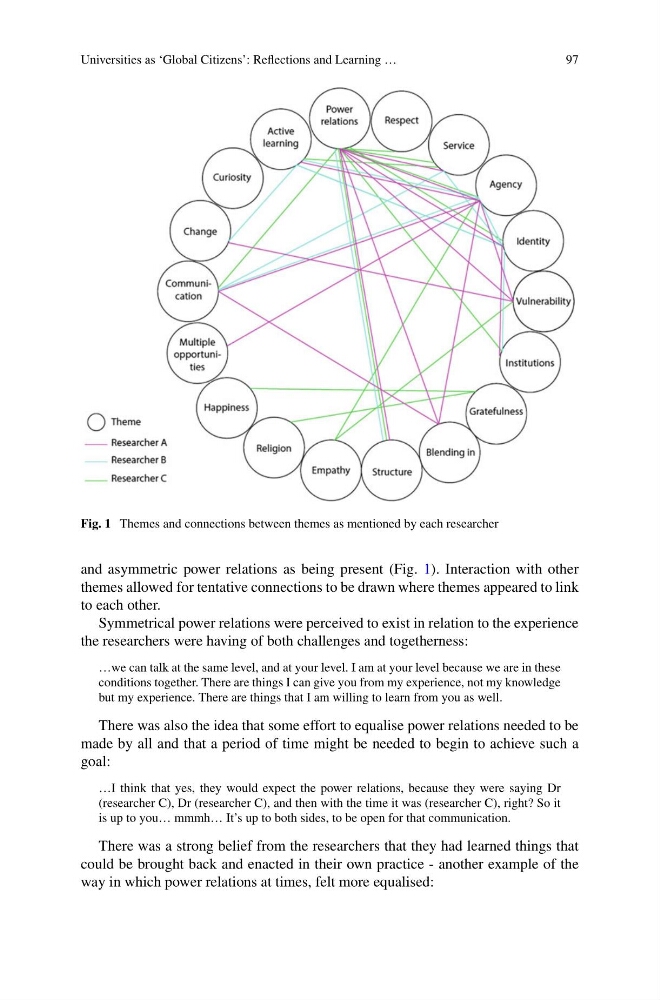
Fig. 1 Themes and connections between themes as mentioned by each researcher
and asymmetric power relations as being present (Fig. 1). Interaction with other
themes allowed for tentative connections to be drawn where themes appeared to link
to each other.
Symmetrical power relations were perceived to exist in relation to the experience
the researchers were having of both challenges and togetherness:
…we can talk at the same level, and at your level. I am at your level because we are in these
conditions together. There are things I can give you from my experience, not my knowledge
but my experience. There are things that I am willing to learn from you as well.
There was also the idea that some effort to equalise power relations needed to be
made by all and that a period of time might be needed to begin to achieve such a
goal:
…I think that yes, they would expect the power relations, because they were saying Dr
(researcher C), Dr (researcher C), and then with the time it was (researcher C), right? So it
is up to you… mmmh… It’s up to both sides, to be open for that communication.
There was a strong belief from the researchers that they had learned things that
could be brought back and enacted in their own practice - another example of the
way in which power relations at times, felt more equalised:
97
Fig. 1 Themes and connections between themes as mentioned by each researcher
and asymmetric power relations as being present (Fig. 1). Interaction with other
themes allowed for tentative connections to be drawn where themes appeared to link
to each other.
Symmetrical power relations were perceived to exist in relation to the experience
the researchers were having of both challenges and togetherness:
…we can talk at the same level, and at your level. I am at your level because we are in these
conditions together. There are things I can give you from my experience, not my knowledge
but my experience. There are things that I am willing to learn from you as well.
There was also the idea that some effort to equalise power relations needed to be
made by all and that a period of time might be needed to begin to achieve such a
goal:
…I think that yes, they would expect the power relations, because they were saying Dr
(researcher C), Dr (researcher C), and then with the time it was (researcher C), right? So it
is up to you… mmmh… It’s up to both sides, to be open for that communication.
There was a strong belief from the researchers that they had learned things that
could be brought back and enacted in their own practice - another example of the
way in which power relations at times, felt more equalised: