

82
Large paper bags, tightly closed to prevent contamination, will be used during transportation. The amount of fresh moss needed for metal analysis is about 1 kg. The
taken moss samples were dried on laboratory paper. The samples were then cleaned
from dead material and attached litter, so that just the green and green-brown shoots
from the 3 latest years were included.
Each sample was placed in a separate laboratory paper and turned several times
until the moss was dried (room temperature 20–25 °C) to reach constant weight.
The dried material that will not be used for planned analyses was stored in an environmental specimen bank for future investigations.
To avoid contamination, non-talcum plastic disposable gloves were used, and the
mosses were handled on clean laboratory paper. No metal tools were used. For longtime storage, the moss samples were dried and put in sealed plastic bags together
with information about the sample (species, locality name, coordinates, collecting
date and other information that can be a subject of interest). The moss samples were
stored in a dry place, at room temperature.
In total 107 moss samples were collected from the studied area. A map with the
moss sampling locations is given in Fig. 3.3.
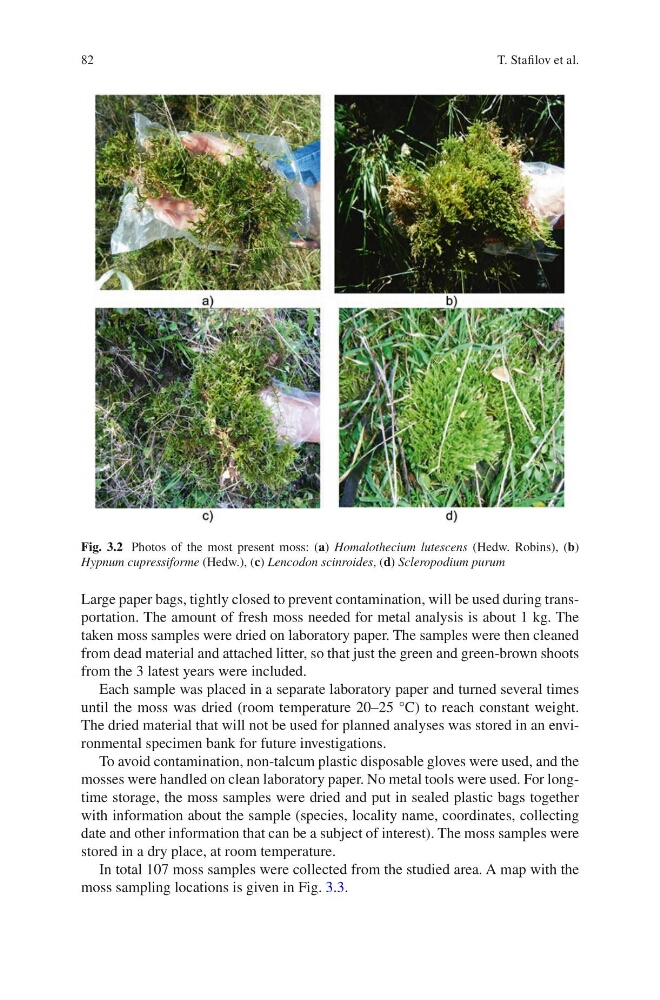
Fig. 3.2 Photos of the most present moss: (а) Homalothecium lutescens (Hedw. Robins), (b)
Hypnum cupressiforme (Hedw.), (c) Lencodon scinroides, (d) Scleropodium purum
T. Stafilov et al.
Large paper bags, tightly closed to prevent contamination, will be used during transportation. The amount of fresh moss needed for metal analysis is about 1 kg. The
taken moss samples were dried on laboratory paper. The samples were then cleaned
from dead material and attached litter, so that just the green and green-brown shoots
from the 3 latest years were included.
Each sample was placed in a separate laboratory paper and turned several times
until the moss was dried (room temperature 20–25 °C) to reach constant weight.
The dried material that will not be used for planned analyses was stored in an environmental specimen bank for future investigations.
To avoid contamination, non-talcum plastic disposable gloves were used, and the
mosses were handled on clean laboratory paper. No metal tools were used. For longtime storage, the moss samples were dried and put in sealed plastic bags together
with information about the sample (species, locality name, coordinates, collecting
date and other information that can be a subject of interest). The moss samples were
stored in a dry place, at room temperature.
In total 107 moss samples were collected from the studied area. A map with the
moss sampling locations is given in Fig. 3.3.
Fig. 3.2 Photos of the most present moss: (а) Homalothecium lutescens (Hedw. Robins), (b)
Hypnum cupressiforme (Hedw.), (c) Lencodon scinroides, (d) Scleropodium purum
T. Stafilov et al.