

230
USA (Gilliom et al. 2006), etc. In groundwater of the investigated area, chlorpyrifos
was identified in one sample in a concentration of 0.0367 μg/l. Pyrimethanil is a
fungicide from the chemical group of anilinopyrimidine compounds, widely used in
vegetable production for control of gray mold, powdery mildew, and downy mildew. It is moderately soluble in water, nonvolatile, weak-based pesticide, moderately persistent in the soil with the ability to leach in groundwater and stay stable at
pH 5–9. Literature data about the presence of pyrimethanil in groundwater are
scarce. It is found in 1 of 12 analyzed groundwater samples in the agriculture area
occupied with potato production in the USA in concentration of 4.1 ng/l (Reilly
et al. 2012). The available information about the toxicity of pyrimethanil in groundwater provides evidence that this pesticide can be a decisive factor in the habitat
selection process of many species. It disturbs the environmental quality and is
potentially toxic for many aquatic species, affecting their survival, reproduction,
feeding, and growth (Araújo et al. 2015).
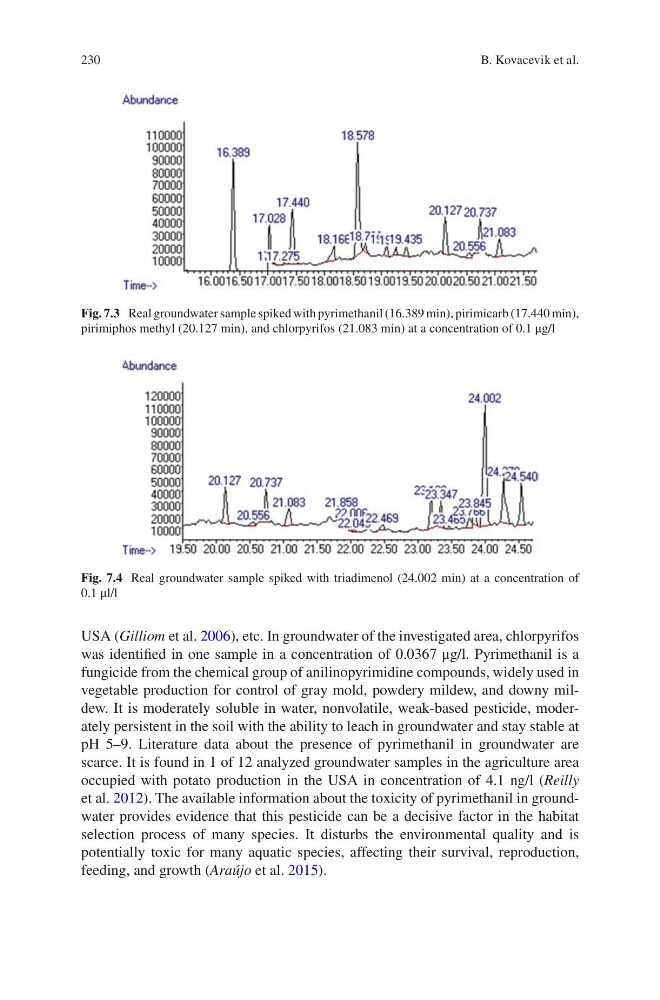
Fig. 7.3 Real groundwater sample spiked with pyrimethanil (16.389 min), pirimicarb (17.440 min),
pirimiphos methyl (20.127 min), and chlorpyrifos (21.083 min) at a concentration of 0.1 μg/l
Fig. 7.4 Real groundwater sample spiked with triadimenol (24.002 min) at a concentration of
0.1 μl/l
B. Kovacevik et al.
USA (Gilliom et al. 2006), etc. In groundwater of the investigated area, chlorpyrifos
was identified in one sample in a concentration of 0.0367 μg/l. Pyrimethanil is a
fungicide from the chemical group of anilinopyrimidine compounds, widely used in
vegetable production for control of gray mold, powdery mildew, and downy mildew. It is moderately soluble in water, nonvolatile, weak-based pesticide, moderately persistent in the soil with the ability to leach in groundwater and stay stable at
pH 5–9. Literature data about the presence of pyrimethanil in groundwater are
scarce. It is found in 1 of 12 analyzed groundwater samples in the agriculture area
occupied with potato production in the USA in concentration of 4.1 ng/l (Reilly
et al. 2012). The available information about the toxicity of pyrimethanil in groundwater provides evidence that this pesticide can be a decisive factor in the habitat
selection process of many species. It disturbs the environmental quality and is
potentially toxic for many aquatic species, affecting their survival, reproduction,
feeding, and growth (Araújo et al. 2015).
Fig. 7.3 Real groundwater sample spiked with pyrimethanil (16.389 min), pirimicarb (17.440 min),
pirimiphos methyl (20.127 min), and chlorpyrifos (21.083 min) at a concentration of 0.1 μg/l
Fig. 7.4 Real groundwater sample spiked with triadimenol (24.002 min) at a concentration of
0.1 μl/l
B. Kovacevik et al.