

165
threat to the health of the human population. The number of researches done so far
is huge, but the most common problem is to find a fast, effective, and transparent
research model. The proposed chemometric model can serve as an initial research
for subsequent screening models. This chemometric model, unlike the typical analysis with existing chemical instrumentation techniques, does not require chemical
destruction of the sample and additional costs for chemical agents. But on the other
hand, this model is suitable for screening for large areas in order to identify critical
areas. Quantitative chemical analysis still remains an irreplaceable identification
method for determining the multi-element distribution in the environment.
Bryophytes are a very useful tool for monitoring atmospheric deposition. This study
also introduced the ability to monitor isolated atmospheric deposition on the surface
of these plant species. Their unique structure and physiology allow dust particles to
remain trapped on their surface. With the help of electron microscopy, the composition of anthropogenic elements in the dust particles trapped on the surface of these
structures can be monitored. Chemical characterization is possible, but additional
research is needed to compare analytical methods with these non-destructive
analyses. Both types of moss, which have been proven to be effective bioindicators,
were used in this study. But when examining large areas, it is necessary to use them
alternately given their specific geographical distribution. Analyses have shown that
they have similar surface adsorption to dust particles, as well as insignificant variability in the chemical composition plant surface: extracted for the biogenic elements carbon and oxygen; macroelements Mg, Al, Si, K, and Ca; and microelements
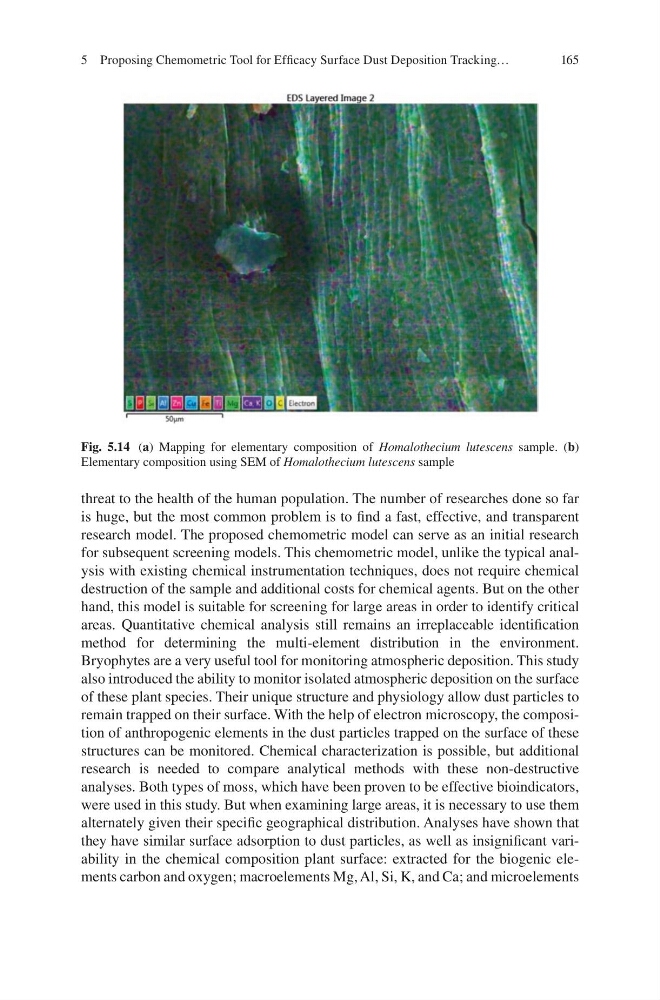
Fig. 5.14 (a) Mapping for elementary composition of Homalothecium lutescens sample. (b)
Elementary composition using SEM of Homalothecium lutescens sample
5 Proposing Chemometric Tool for Efficacy Surface Dust Deposition Tracking…
threat to the health of the human population. The number of researches done so far
is huge, but the most common problem is to find a fast, effective, and transparent
research model. The proposed chemometric model can serve as an initial research
for subsequent screening models. This chemometric model, unlike the typical analysis with existing chemical instrumentation techniques, does not require chemical
destruction of the sample and additional costs for chemical agents. But on the other
hand, this model is suitable for screening for large areas in order to identify critical
areas. Quantitative chemical analysis still remains an irreplaceable identification
method for determining the multi-element distribution in the environment.
Bryophytes are a very useful tool for monitoring atmospheric deposition. This study
also introduced the ability to monitor isolated atmospheric deposition on the surface
of these plant species. Their unique structure and physiology allow dust particles to
remain trapped on their surface. With the help of electron microscopy, the composition of anthropogenic elements in the dust particles trapped on the surface of these
structures can be monitored. Chemical characterization is possible, but additional
research is needed to compare analytical methods with these non-destructive
analyses. Both types of moss, which have been proven to be effective bioindicators,
were used in this study. But when examining large areas, it is necessary to use them
alternately given their specific geographical distribution. Analyses have shown that
they have similar surface adsorption to dust particles, as well as insignificant variability in the chemical composition plant surface: extracted for the biogenic elements carbon and oxygen; macroelements Mg, Al, Si, K, and Ca; and microelements
Fig. 5.14 (a) Mapping for elementary composition of Homalothecium lutescens sample. (b)
Elementary composition using SEM of Homalothecium lutescens sample
5 Proposing Chemometric Tool for Efficacy Surface Dust Deposition Tracking…