

4
F. Scrucca et al.
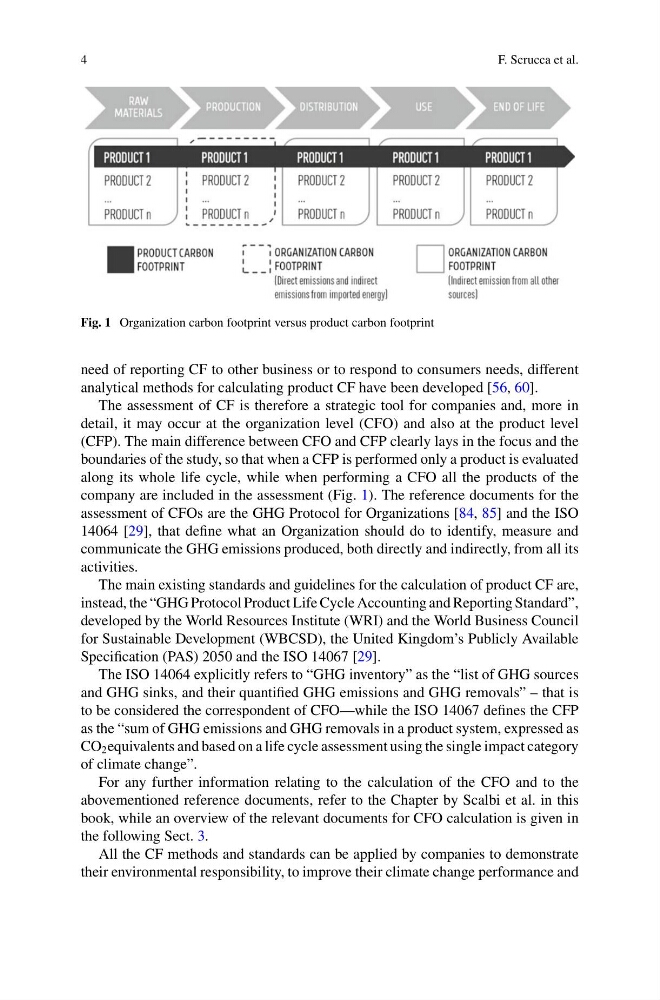
Fig. 1 Organization carbon footprint versus product carbon footprint
need of reporting CF to other business or to respond to consumers needs, different
analytical methods for calculating product CF have been developed [56, 60].
The assessment of CF is therefore a strategic tool for companies and, more in
detail, it may occur at the organization level (CFO) and also at the product level
(CFP). The main difference between CFO and CFP clearly lays in the focus and the
boundaries of the study, so that when a CFP is performed only a product is evaluated
along its whole life cycle, while when performing a CFO all the products of the
company are included in the assessment (Fig. 1). The reference documents for the
assessment of CFOs are the GHG Protocol for Organizations [84, 85] and the ISO
14064 [29], that define what an Organization should do to identify, measure and
communicate the GHG emissions produced, both directly and indirectly, from all its
activities.
The main existing standards and guidelines for the calculation of product CF are,
instead, the “GHG Protocol Product Life Cycle Accounting and Reporting Standard”,
developed by the World Resources Institute (WRI) and the World Business Council
for Sustainable Development (WBCSD), the United Kingdom’s Publicly Available
Specification (PAS) 2050 and the ISO 14067 [29].
The ISO 14064 explicitly refers to “GHG inventory” as the “list of GHG sources
and GHG sinks, and their quantified GHG emissions and GHG removals” – that is
to be considered the correspondent of CFO—while the ISO 14067 defines the CFP
as the “sum of GHG emissions and GHG removals in a product system, expressed as
CO 2 equivalents and based on a life cycle assessment using the single impact category
of climate change”.
For any further information relating to the calculation of the CFO and to the
abovementioned reference documents, refer to the Chapter by Scalbi et al. in this
book, while an overview of the relevant documents for CFO calculation is given in
the following Sect. 3.
All the CF methods and standards can be applied by companies to demonstrate
their environmental responsibility, to improve their climate change performance and
F. Scrucca et al.
Fig. 1 Organization carbon footprint versus product carbon footprint
need of reporting CF to other business or to respond to consumers needs, different
analytical methods for calculating product CF have been developed [56, 60].
The assessment of CF is therefore a strategic tool for companies and, more in
detail, it may occur at the organization level (CFO) and also at the product level
(CFP). The main difference between CFO and CFP clearly lays in the focus and the
boundaries of the study, so that when a CFP is performed only a product is evaluated
along its whole life cycle, while when performing a CFO all the products of the
company are included in the assessment (Fig. 1). The reference documents for the
assessment of CFOs are the GHG Protocol for Organizations [84, 85] and the ISO
14064 [29], that define what an Organization should do to identify, measure and
communicate the GHG emissions produced, both directly and indirectly, from all its
activities.
The main existing standards and guidelines for the calculation of product CF are,
instead, the “GHG Protocol Product Life Cycle Accounting and Reporting Standard”,
developed by the World Resources Institute (WRI) and the World Business Council
for Sustainable Development (WBCSD), the United Kingdom’s Publicly Available
Specification (PAS) 2050 and the ISO 14067 [29].
The ISO 14064 explicitly refers to “GHG inventory” as the “list of GHG sources
and GHG sinks, and their quantified GHG emissions and GHG removals” – that is
to be considered the correspondent of CFO—while the ISO 14067 defines the CFP
as the “sum of GHG emissions and GHG removals in a product system, expressed as
CO 2 equivalents and based on a life cycle assessment using the single impact category
of climate change”.
For any further information relating to the calculation of the CFO and to the
abovementioned reference documents, refer to the Chapter by Scalbi et al. in this
book, while an overview of the relevant documents for CFO calculation is given in
the following Sect. 3.
All the CF methods and standards can be applied by companies to demonstrate
their environmental responsibility, to improve their climate change performance and