

Ecological Footprint Assessment …
77
88.52%
9.19%
1.75% 0.52%
0.0012
%
Existing Mode
EF (raw
Material)
EF (Energy)
EF (Manpower)
EF
(transportation)
EF (Land)
96.99%
0.50%
1.91% 0.58%
0.0013%
Mode 1
EF (raw
Material)
EF (Energy)
EF (Manpower)
EF
(transportation)
EF (Land)
92.59%
5.02%
1.83% 0.55%
0.0012%
Mode 2
EF (raw
Material)
EF (Energy)
EF (Manpower)
EF
(transportation)
EF (Land)
96.04%
1.48%
1.89% 0.57%
0.0013%
Mode 3
EF (raw Material)
EF (Energy)
EF (Manpower)
EF
(transportation)
EF (Land)
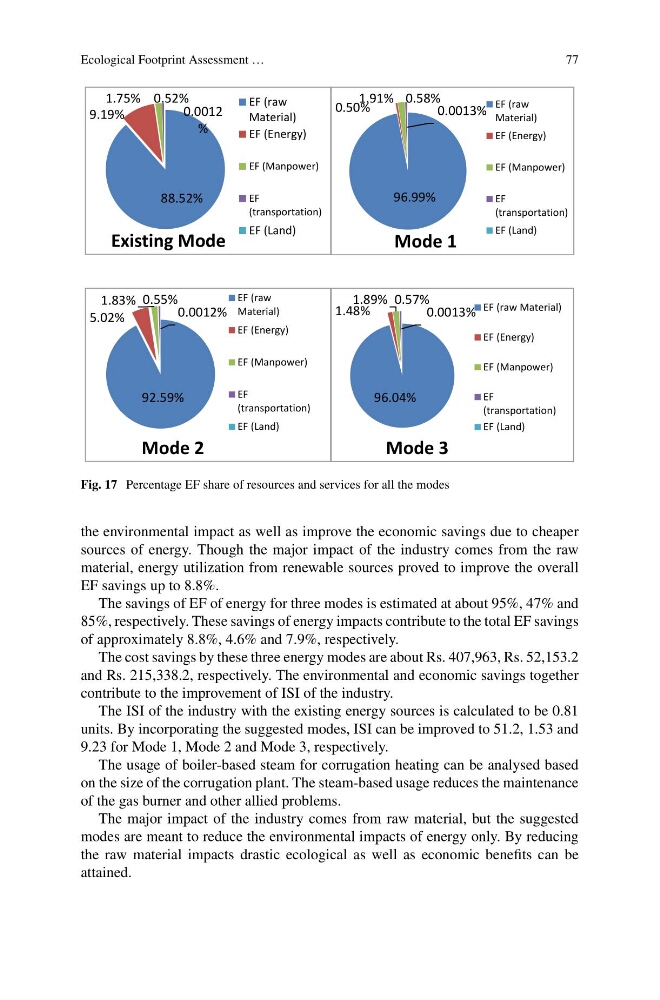
Fig. 17 Percentage EF share of resources and services for all the modes
the environmental impact as well as improve the economic savings due to cheaper
sources of energy. Though the major impact of the industry comes from the raw
material, energy utilization from renewable sources proved to improve the overall
EF savings up to 8.8%.
The savings of EF of energy for three modes is estimated at about 95%, 47% and
85%, respectively. These savings of energy impacts contribute to the total EF savings
of approximately 8.8%, 4.6% and 7.9%, respectively.
The cost savings by these three energy modes are about Rs. 407,963, Rs. 52,153.2
and Rs. 215,338.2, respectively. The environmental and economic savings together
contribute to the improvement of ISI of the industry.
The ISI of the industry with the existing energy sources is calculated to be 0.81
units. By incorporating the suggested modes, ISI can be improved to 51.2, 1.53 and
9.23 for Mode 1, Mode 2 and Mode 3, respectively.
The usage of boiler-based steam for corrugation heating can be analysed based
on the size of the corrugation plant. The steam-based usage reduces the maintenance
of the gas burner and other allied problems.
The major impact of the industry comes from raw material, but the suggested
modes are meant to reduce the environmental impacts of energy only. By reducing
the raw material impacts drastic ecological as well as economic benefits can be
attained.
77
88.52%
9.19%
1.75% 0.52%
0.0012
%
Existing Mode
EF (raw
Material)
EF (Energy)
EF (Manpower)
EF
(transportation)
EF (Land)
96.99%
0.50%
1.91% 0.58%
0.0013%
Mode 1
EF (raw
Material)
EF (Energy)
EF (Manpower)
EF
(transportation)
EF (Land)
92.59%
5.02%
1.83% 0.55%
0.0012%
Mode 2
EF (raw
Material)
EF (Energy)
EF (Manpower)
EF
(transportation)
EF (Land)
96.04%
1.48%
1.89% 0.57%
0.0013%
Mode 3
EF (raw Material)
EF (Energy)
EF (Manpower)
EF
(transportation)
EF (Land)
Fig. 17 Percentage EF share of resources and services for all the modes
the environmental impact as well as improve the economic savings due to cheaper
sources of energy. Though the major impact of the industry comes from the raw
material, energy utilization from renewable sources proved to improve the overall
EF savings up to 8.8%.
The savings of EF of energy for three modes is estimated at about 95%, 47% and
85%, respectively. These savings of energy impacts contribute to the total EF savings
of approximately 8.8%, 4.6% and 7.9%, respectively.
The cost savings by these three energy modes are about Rs. 407,963, Rs. 52,153.2
and Rs. 215,338.2, respectively. The environmental and economic savings together
contribute to the improvement of ISI of the industry.
The ISI of the industry with the existing energy sources is calculated to be 0.81
units. By incorporating the suggested modes, ISI can be improved to 51.2, 1.53 and
9.23 for Mode 1, Mode 2 and Mode 3, respectively.
The usage of boiler-based steam for corrugation heating can be analysed based
on the size of the corrugation plant. The steam-based usage reduces the maintenance
of the gas burner and other allied problems.
The major impact of the industry comes from raw material, but the suggested
modes are meant to reduce the environmental impacts of energy only. By reducing
the raw material impacts drastic ecological as well as economic benefits can be
attained.