

Archaeological Sites in Dakhla Oasis, Western Desert, Egypt
85
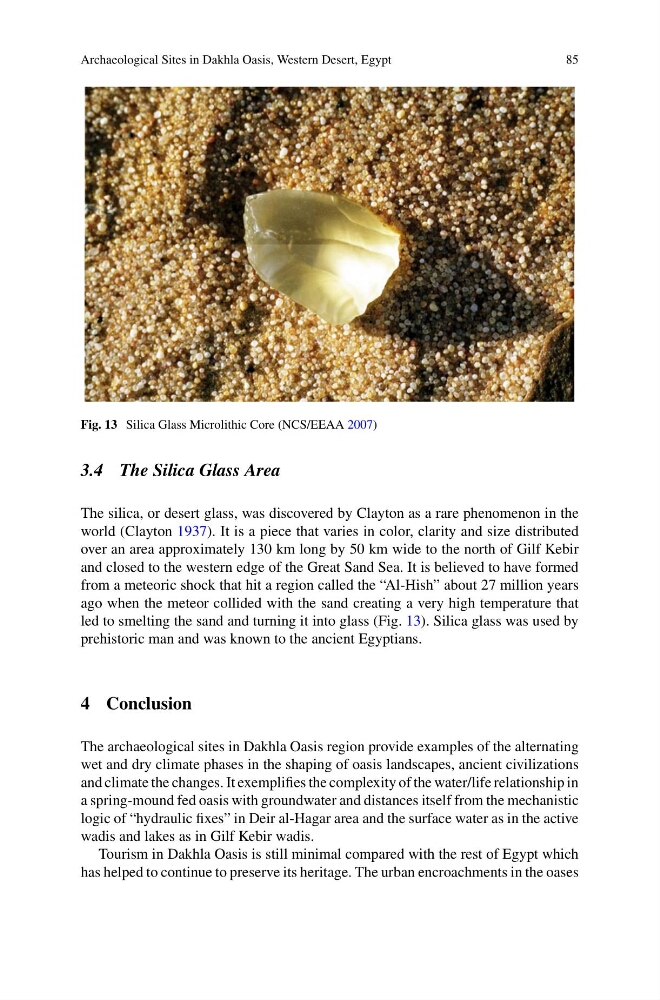
Fig. 13 Silica Glass Microlithic Core (NCS/EEAA 2007)
3.4 The Silica Glass Area
The silica, or desert glass, was discovered by Clayton as a rare phenomenon in the
world (Clayton 1937). It is a piece that varies in color, clarity and size distributed
over an area approximately 130 km long by 50 km wide to the north of Gilf Kebir
and closed to the western edge of the Great Sand Sea. It is believed to have formed
from a meteoric shock that hit a region called the “Al-Hish” about 27 million years
ago when the meteor collided with the sand creating a very high temperature that
led to smelting the sand and turning it into glass (Fig. 13). Silica glass was used by
prehistoric man and was known to the ancient Egyptians.
4 Conclusion
The archaeological sites in Dakhla Oasis region provide examples of the alternating
wet and dry climate phases in the shaping of oasis landscapes, ancient civilizations
and climate the changes. It exemplifies the complexity of the water/life relationship in
a spring-mound fed oasis with groundwater and distances itself from the mechanistic
logic of “hydraulic fixes” in Deir al-Hagar area and the surface water as in the active
wadis and lakes as in Gilf Kebir wadis.
Tourism in Dakhla Oasis is still minimal compared with the rest of Egypt which
has helped to continue to preserve its heritage. The urban encroachments in the oases
85
Fig. 13 Silica Glass Microlithic Core (NCS/EEAA 2007)
3.4 The Silica Glass Area
The silica, or desert glass, was discovered by Clayton as a rare phenomenon in the
world (Clayton 1937). It is a piece that varies in color, clarity and size distributed
over an area approximately 130 km long by 50 km wide to the north of Gilf Kebir
and closed to the western edge of the Great Sand Sea. It is believed to have formed
from a meteoric shock that hit a region called the “Al-Hish” about 27 million years
ago when the meteor collided with the sand creating a very high temperature that
led to smelting the sand and turning it into glass (Fig. 13). Silica glass was used by
prehistoric man and was known to the ancient Egyptians.
4 Conclusion
The archaeological sites in Dakhla Oasis region provide examples of the alternating
wet and dry climate phases in the shaping of oasis landscapes, ancient civilizations
and climate the changes. It exemplifies the complexity of the water/life relationship in
a spring-mound fed oasis with groundwater and distances itself from the mechanistic
logic of “hydraulic fixes” in Deir al-Hagar area and the surface water as in the active
wadis and lakes as in Gilf Kebir wadis.
Tourism in Dakhla Oasis is still minimal compared with the rest of Egypt which
has helped to continue to preserve its heritage. The urban encroachments in the oases