

Geology of Dakhla Oasis, Western Desert, Egypt
39
Duw
Dk
Ta
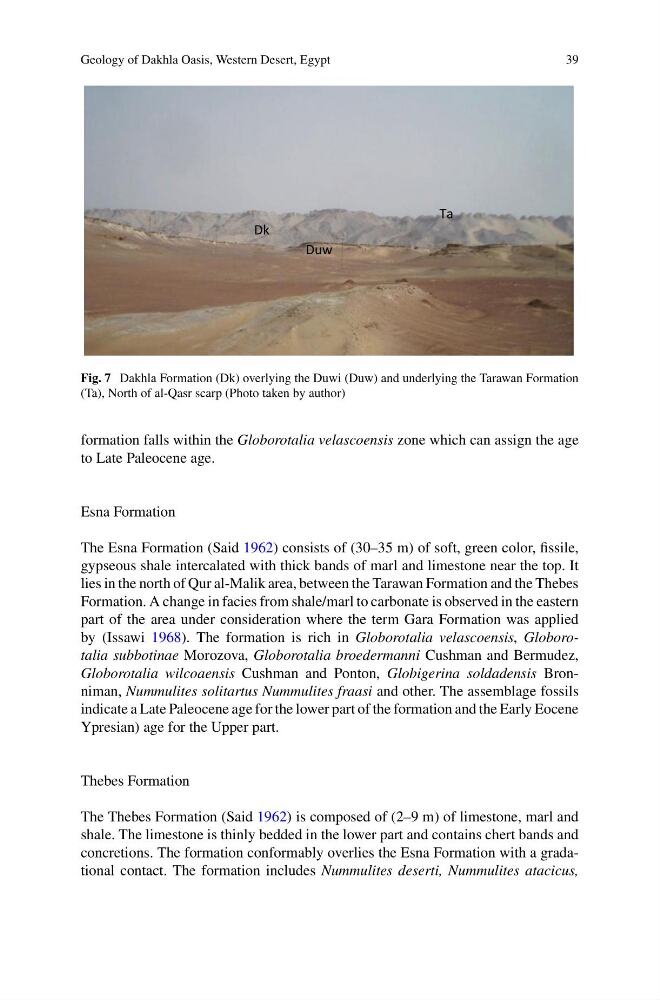
Fig. 7 Dakhla Formation (Dk) overlying the Duwi (Duw) and underlying the Tarawan Formation
(Ta), North of al-Qasr scarp (Photo taken by author)
formation falls within the Globorotalia velascoensis zone which can assign the age
to Late Paleocene age.
Esna Formation
The Esna Formation (Said 1962) consists of (30–35 m) of soft, green color, fissile,
gypseous shale intercalated with thick bands of marl and limestone near the top. It
lies in the north of Qur al-Malik area, between the Tarawan Formation and the Thebes
Formation. A change in facies from shale/marl to carbonate is observed in the eastern
part of the area under consideration where the term Gara Formation was applied
by (Issawi 1968). The formation is rich in Globorotalia velascoensis, Globorotalia subbotinae Morozova, Globorotalia broedermanni Cushman and Bermudez,
Globorotalia wilcoaensis Cushman and Ponton, Globigerina soldadensis Bronniman, Nummulites solitartus Nummulites fraasi and other. The assemblage fossils
indicate a Late Paleocene age for the lower part of the formation and the Early Eocene
Ypresian) age for the Upper part.
Thebes Formation
The Thebes Formation (Said 1962) is composed of (2–9 m) of limestone, marl and
shale. The limestone is thinly bedded in the lower part and contains chert bands and
concretions. The formation conformably overlies the Esna Formation with a gradational contact. The formation includes Nummulites deserti, Nummulites atacicus,
39
Duw
Dk
Ta
Fig. 7 Dakhla Formation (Dk) overlying the Duwi (Duw) and underlying the Tarawan Formation
(Ta), North of al-Qasr scarp (Photo taken by author)
formation falls within the Globorotalia velascoensis zone which can assign the age
to Late Paleocene age.
Esna Formation
The Esna Formation (Said 1962) consists of (30–35 m) of soft, green color, fissile,
gypseous shale intercalated with thick bands of marl and limestone near the top. It
lies in the north of Qur al-Malik area, between the Tarawan Formation and the Thebes
Formation. A change in facies from shale/marl to carbonate is observed in the eastern
part of the area under consideration where the term Gara Formation was applied
by (Issawi 1968). The formation is rich in Globorotalia velascoensis, Globorotalia subbotinae Morozova, Globorotalia broedermanni Cushman and Bermudez,
Globorotalia wilcoaensis Cushman and Ponton, Globigerina soldadensis Bronniman, Nummulites solitartus Nummulites fraasi and other. The assemblage fossils
indicate a Late Paleocene age for the lower part of the formation and the Early Eocene
Ypresian) age for the Upper part.
Thebes Formation
The Thebes Formation (Said 1962) is composed of (2–9 m) of limestone, marl and
shale. The limestone is thinly bedded in the lower part and contains chert bands and
concretions. The formation conformably overlies the Esna Formation with a gradational contact. The formation includes Nummulites deserti, Nummulites atacicus,