

History of Wells in Rashda Village …
211
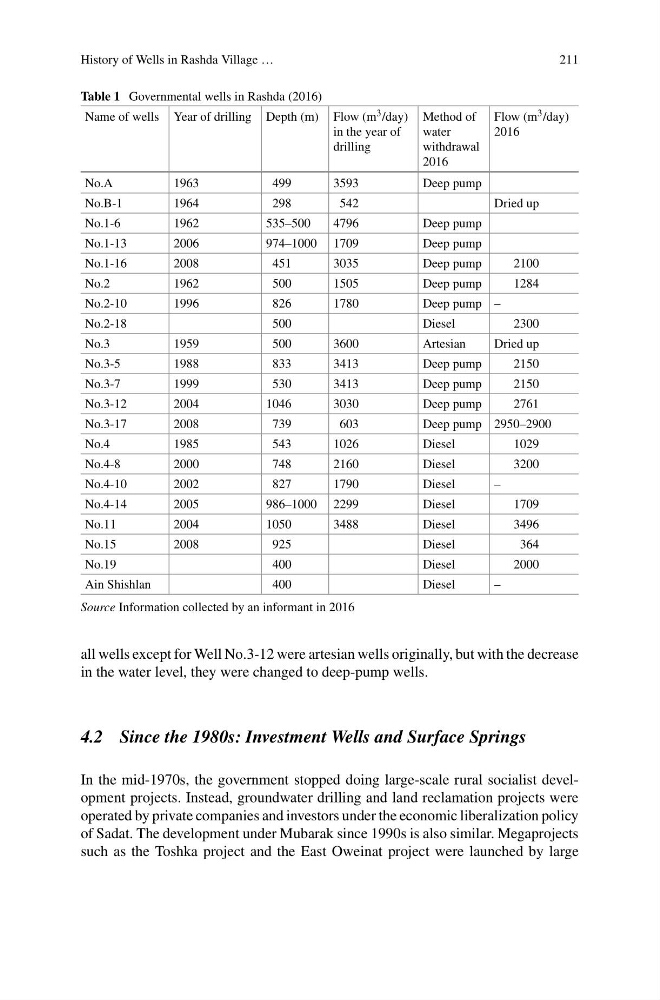
Table 1 Governmental wells in Rashda (2016)
Name of wells Year of drilling Depth (m) Flow (m 3 /day)
in the year of
drilling
Method of
water
withdrawal
2016
Flow (m 3 /day)
2016
No.A
1963
499
3593
Deep pump
No.B-1
1964
298
542
Dried up
No.1-6
1962
535–500
4796
Deep pump
No.1-13
2006
974–1000 1709
Deep pump
No.1-16
2008
451
3035
Deep pump
2100
No.2
1962
500
1505
Deep pump
1284
No.2-10
1996
826
1780
Deep pump –
No.2-18
500
Diesel
2300
No.3
1959
500
3600
Artesian
Dried up
No.3-5
1988
833
3413
Deep pump
2150
No.3-7
1999
530
3413
Deep pump
2150
No.3-12
2004
1046
3030
Deep pump
2761
No.3-17
2008
739
603
Deep pump 2950–2900
No.4
1985
543
1026
Diesel
1029
No.4-8
2000
748
2160
Diesel
3200
No.4-10
2002
827
1790
Diesel
–
No.4-14
2005
986–1000 2299
Diesel
1709
No.11
2004
1050
3488
Diesel
3496
No.15
2008
925
Diesel
364
No.19
400
Diesel
2000
Ain Shishlan
400
Diesel
–
Source Information collected by an informant in 2016
all wells except for Well No.3-12 were artesian wells originally, but with the decrease
in the water level, they were changed to deep-pump wells.
4.2 Since the 1980s: Investment Wells and Surface Springs
In the mid-1970s, the government stopped doing large-scale rural socialist development projects. Instead, groundwater drilling and land reclamation projects were
operated by private companies and investors under the economic liberalization policy
of Sadat. The development under Mubarak since 1990s is also similar. Megaprojects
such as the Toshka project and the East Oweinat project were launched by large
211
Table 1 Governmental wells in Rashda (2016)
Name of wells Year of drilling Depth (m) Flow (m 3 /day)
in the year of
drilling
Method of
water
withdrawal
2016
Flow (m 3 /day)
2016
No.A
1963
499
3593
Deep pump
No.B-1
1964
298
542
Dried up
No.1-6
1962
535–500
4796
Deep pump
No.1-13
2006
974–1000 1709
Deep pump
No.1-16
2008
451
3035
Deep pump
2100
No.2
1962
500
1505
Deep pump
1284
No.2-10
1996
826
1780
Deep pump –
No.2-18
500
Diesel
2300
No.3
1959
500
3600
Artesian
Dried up
No.3-5
1988
833
3413
Deep pump
2150
No.3-7
1999
530
3413
Deep pump
2150
No.3-12
2004
1046
3030
Deep pump
2761
No.3-17
2008
739
603
Deep pump 2950–2900
No.4
1985
543
1026
Diesel
1029
No.4-8
2000
748
2160
Diesel
3200
No.4-10
2002
827
1790
Diesel
–
No.4-14
2005
986–1000 2299
Diesel
1709
No.11
2004
1050
3488
Diesel
3496
No.15
2008
925
Diesel
364
No.19
400
Diesel
2000
Ain Shishlan
400
Diesel
–
Source Information collected by an informant in 2016
all wells except for Well No.3-12 were artesian wells originally, but with the decrease
in the water level, they were changed to deep-pump wells.
4.2 Since the 1980s: Investment Wells and Surface Springs
In the mid-1970s, the government stopped doing large-scale rural socialist development projects. Instead, groundwater drilling and land reclamation projects were
operated by private companies and investors under the economic liberalization policy
of Sadat. The development under Mubarak since 1990s is also similar. Megaprojects
such as the Toshka project and the East Oweinat project were launched by large