

History of Wells in Rashda Village …
207
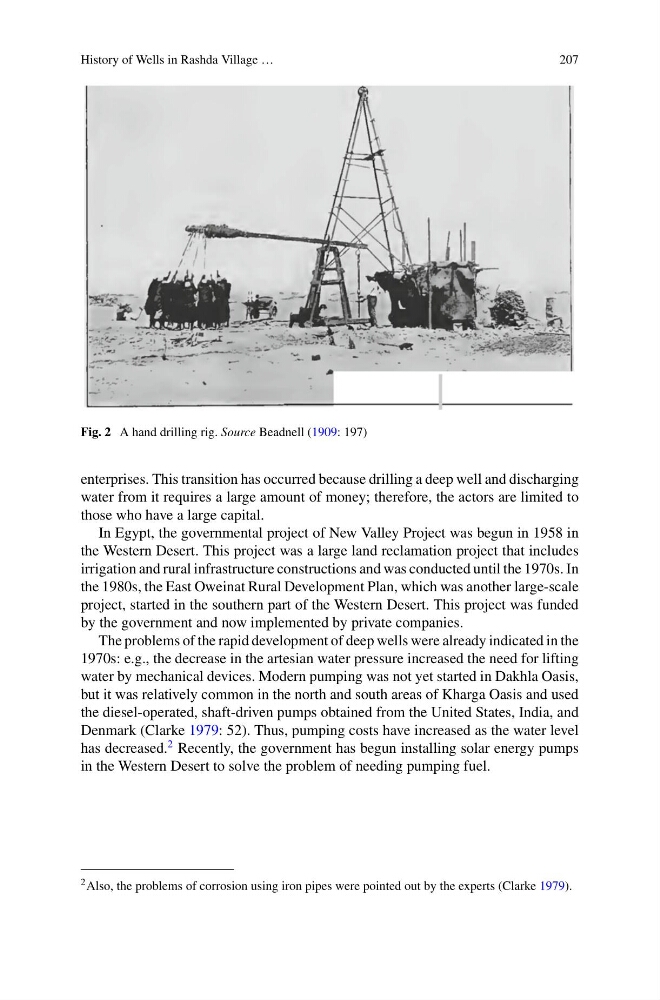
Fig. 2 A hand drilling rig. Source Beadnell (1909: 197)
enterprises. This transition has occurred because drilling a deep well and discharging
water from it requires a large amount of money; therefore, the actors are limited to
those who have a large capital.
In Egypt, the governmental project of New Valley Project was begun in 1958 in
the Western Desert. This project was a large land reclamation project that includes
irrigation and rural infrastructure constructions and was conducted until the 1970s. In
the 1980s, the East Oweinat Rural Development Plan, which was another large-scale
project, started in the southern part of the Western Desert. This project was funded
by the government and now implemented by private companies.
The problems of the rapid development of deep wells were already indicated in the
1970s: e.g., the decrease in the artesian water pressure increased the need for lifting
water by mechanical devices. Modern pumping was not yet started in Dakhla Oasis,
but it was relatively common in the north and south areas of Kharga Oasis and used
the diesel-operated, shaft-driven pumps obtained from the United States, India, and
Denmark (Clarke 1979: 52). Thus, pumping costs have increased as the water level
has decreased.
2 Recently, the government has begun installing solar energy pumps
in the Western Desert to solve the problem of needing pumping fuel.
2 Also, the problems of corrosion using iron pipes were pointed out by the experts (Clarke 1979).
207
Fig. 2 A hand drilling rig. Source Beadnell (1909: 197)
enterprises. This transition has occurred because drilling a deep well and discharging
water from it requires a large amount of money; therefore, the actors are limited to
those who have a large capital.
In Egypt, the governmental project of New Valley Project was begun in 1958 in
the Western Desert. This project was a large land reclamation project that includes
irrigation and rural infrastructure constructions and was conducted until the 1970s. In
the 1980s, the East Oweinat Rural Development Plan, which was another large-scale
project, started in the southern part of the Western Desert. This project was funded
by the government and now implemented by private companies.
The problems of the rapid development of deep wells were already indicated in the
1970s: e.g., the decrease in the artesian water pressure increased the need for lifting
water by mechanical devices. Modern pumping was not yet started in Dakhla Oasis,
but it was relatively common in the north and south areas of Kharga Oasis and used
the diesel-operated, shaft-driven pumps obtained from the United States, India, and
Denmark (Clarke 1979: 52). Thus, pumping costs have increased as the water level
has decreased.
2 Recently, the government has begun installing solar energy pumps
in the Western Desert to solve the problem of needing pumping fuel.
2 Also, the problems of corrosion using iron pipes were pointed out by the experts (Clarke 1979).