

Crop Diversification and Its Efficiency …
167
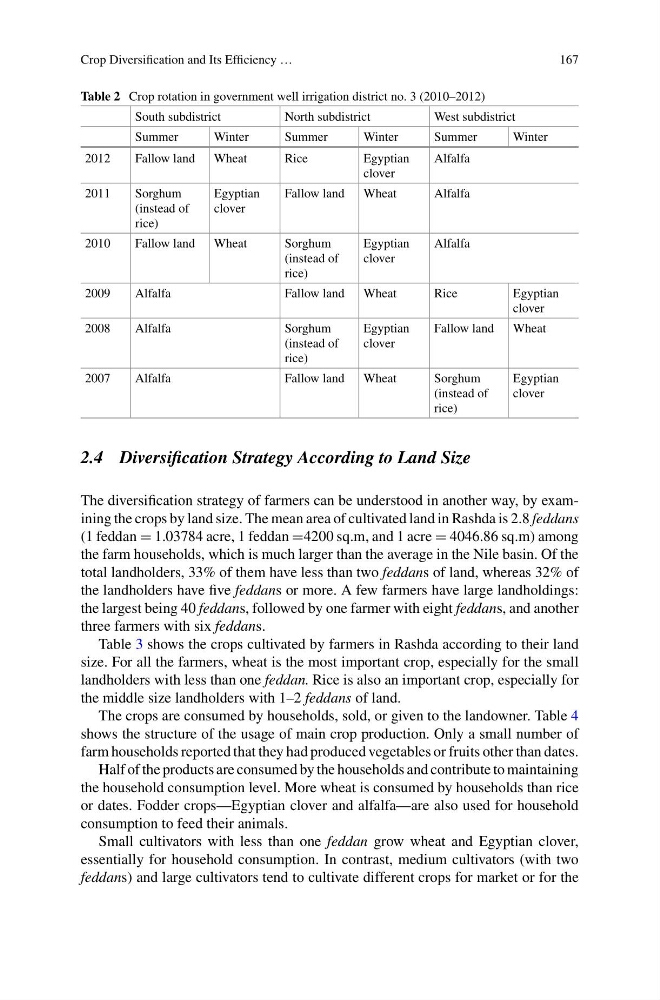
Table 2 Crop rotation in government well irrigation district no. 3 (2010–2012)
South subdistrict
North subdistrict
West subdistrict
Summer
Winter
Summer
Winter
Summer
Winter
2012
Fallow land Wheat
Rice
Egyptian
clover
Alfalfa
2011
Sorghum
(instead of
rice)
Egyptian
clover
Fallow land Wheat
Alfalfa
2010
Fallow land Wheat
Sorghum
(instead of
rice)
Egyptian
clover
Alfalfa
2009
Alfalfa
Fallow land Wheat
Rice
Egyptian
clover
2008
Alfalfa
Sorghum
(instead of
rice)
Egyptian
clover
Fallow land Wheat
2007
Alfalfa
Fallow land Wheat
Sorghum
(instead of
rice)
Egyptian
clover
2.4 Diversification Strategy According to Land Size
The diversification strategy of farmers can be understood in another way, by examining the crops by land size. The mean area of cultivated land in Rashda is 2.8 feddans
(1 feddan = 1.03784 acre, 1 feddan =4200 sq.m, and 1 acre = 4046.86 sq.m) among
the farm households, which is much larger than the average in the Nile basin. Of the
total landholders, 33% of them have less than two feddans of land, whereas 32% of
the landholders have five feddans or more. A few farmers have large landholdings:
the largest being 40 feddans, followed by one farmer with eight feddans, and another
three farmers with six feddans.
Table 3 shows the crops cultivated by farmers in Rashda according to their land
size. For all the farmers, wheat is the most important crop, especially for the small
landholders with less than one feddan. Rice is also an important crop, especially for
the middle size landholders with 1–2 feddans of land.
The crops are consumed by households, sold, or given to the landowner. Table 4
shows the structure of the usage of main crop production. Only a small number of
farm households reported that they had produced vegetables or fruits other than dates.
Half of the products are consumed by the households and contribute to maintaining
the household consumption level. More wheat is consumed by households than rice
or dates. Fodder crops—Egyptian clover and alfalfa—are also used for household
consumption to feed their animals.
Small cultivators with less than one feddan grow wheat and Egyptian clover,
essentially for household consumption. In contrast, medium cultivators (with two
feddans) and large cultivators tend to cultivate different crops for market or for the
167
Table 2 Crop rotation in government well irrigation district no. 3 (2010–2012)
South subdistrict
North subdistrict
West subdistrict
Summer
Winter
Summer
Winter
Summer
Winter
2012
Fallow land Wheat
Rice
Egyptian
clover
Alfalfa
2011
Sorghum
(instead of
rice)
Egyptian
clover
Fallow land Wheat
Alfalfa
2010
Fallow land Wheat
Sorghum
(instead of
rice)
Egyptian
clover
Alfalfa
2009
Alfalfa
Fallow land Wheat
Rice
Egyptian
clover
2008
Alfalfa
Sorghum
(instead of
rice)
Egyptian
clover
Fallow land Wheat
2007
Alfalfa
Fallow land Wheat
Sorghum
(instead of
rice)
Egyptian
clover
2.4 Diversification Strategy According to Land Size
The diversification strategy of farmers can be understood in another way, by examining the crops by land size. The mean area of cultivated land in Rashda is 2.8 feddans
(1 feddan = 1.03784 acre, 1 feddan =4200 sq.m, and 1 acre = 4046.86 sq.m) among
the farm households, which is much larger than the average in the Nile basin. Of the
total landholders, 33% of them have less than two feddans of land, whereas 32% of
the landholders have five feddans or more. A few farmers have large landholdings:
the largest being 40 feddans, followed by one farmer with eight feddans, and another
three farmers with six feddans.
Table 3 shows the crops cultivated by farmers in Rashda according to their land
size. For all the farmers, wheat is the most important crop, especially for the small
landholders with less than one feddan. Rice is also an important crop, especially for
the middle size landholders with 1–2 feddans of land.
The crops are consumed by households, sold, or given to the landowner. Table 4
shows the structure of the usage of main crop production. Only a small number of
farm households reported that they had produced vegetables or fruits other than dates.
Half of the products are consumed by the households and contribute to maintaining
the household consumption level. More wheat is consumed by households than rice
or dates. Fodder crops—Egyptian clover and alfalfa—are also used for household
consumption to feed their animals.
Small cultivators with less than one feddan grow wheat and Egyptian clover,
essentially for household consumption. In contrast, medium cultivators (with two
feddans) and large cultivators tend to cultivate different crops for market or for the