

3 Natural Attenuation of Pharmaceuticals in the Aquatic …
71
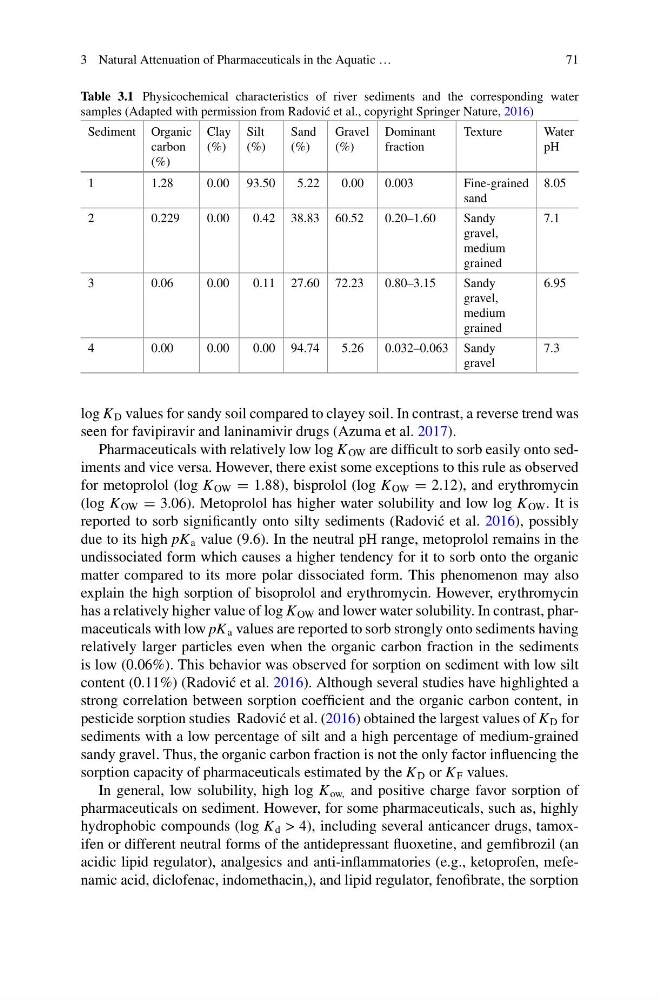
Table 3.1 Physicochemical characteristics of river sediments and the corresponding water
samples (Adapted with permission from Radovi´ c et al., copyright Springer Nature, 2016)
Sediment Organic
carbon
(%)
Clay
(%)
Silt
(%)
Sand
(%)
Gravel
(%)
Dominant
fraction
Texture
Water
pH
1
1.28
0.00 93.50
5.22
0.00
0.003
Fine-grained
sand
8.05
2
0.229
0.00
0.42 38.83 60.52
0.20–1.60
Sandy
gravel,
medium
grained
7.1
3
0.06
0.00
0.11 27.60 72.23
0.80–3.15
Sandy
gravel,
medium
grained
6.95
4
0.00
0.00
0.00 94.74
5.26
0.032–0.063 Sandy
gravel
7.3
log K D values for sandy soil compared to clayey soil. In contrast, a reverse trend was
seen for favipiravir and laninamivir drugs (Azuma et al. 2017).
Pharmaceuticals with relatively low log K OW are difficult to sorb easily onto sediments and vice versa. However, there exist some exceptions to this rule as observed
for metoprolol (log K OW = 1.88), bisprolol (log K OW = 2.12), and erythromycin
(log K OW = 3.06). Metoprolol has higher water solubility and low log K OW . It is
reported to sorb significantly onto silty sediments (Radovi´ c et al. 2016), possibly
due to its high pK a value (9.6). In the neutral pH range, metoprolol remains in the
undissociated form which causes a higher tendency for it to sorb onto the organic
matter compared to its more polar dissociated form. This phenomenon may also
explain the high sorption of bisoprolol and erythromycin. However, erythromycin
has a relatively higher value of log K OW and lower water solubility. In contrast, pharmaceuticals with low pK a values are reported to sorb strongly onto sediments having
relatively larger particles even when the organic carbon fraction in the sediments
is low (0.06%). This behavior was observed for sorption on sediment with low silt
content (0.11%) (Radovi´ c et al. 2016). Although several studies have highlighted a
strong correlation between sorption coefficient and the organic carbon content, in
pesticide sorption studies Radovi´ c et al. (2016) obtained the largest values of K D for
sediments with a low percentage of silt and a high percentage of medium-grained
sandy gravel. Thus, the organic carbon fraction is not the only factor influencing the
sorption capacity of pharmaceuticals estimated by the K D or K F values.
In general, low solubility, high log K ow, and positive charge favor sorption of
pharmaceuticals on sediment. However, for some pharmaceuticals, such as, highly
hydrophobic compounds (log K d > 4), including several anticancer drugs, tamoxifen or different neutral forms of the antidepressant fluoxetine, and gemfibrozil (an
acidic lipid regulator), analgesics and anti-inflammatories (e.g., ketoprofen, mefenamic acid, diclofenac, indomethacin,), and lipid regulator, fenofibrate, the sorption
71
Table 3.1 Physicochemical characteristics of river sediments and the corresponding water
samples (Adapted with permission from Radovi´ c et al., copyright Springer Nature, 2016)
Sediment Organic
carbon
(%)
Clay
(%)
Silt
(%)
Sand
(%)
Gravel
(%)
Dominant
fraction
Texture
Water
pH
1
1.28
0.00 93.50
5.22
0.00
0.003
Fine-grained
sand
8.05
2
0.229
0.00
0.42 38.83 60.52
0.20–1.60
Sandy
gravel,
medium
grained
7.1
3
0.06
0.00
0.11 27.60 72.23
0.80–3.15
Sandy
gravel,
medium
grained
6.95
4
0.00
0.00
0.00 94.74
5.26
0.032–0.063 Sandy
gravel
7.3
log K D values for sandy soil compared to clayey soil. In contrast, a reverse trend was
seen for favipiravir and laninamivir drugs (Azuma et al. 2017).
Pharmaceuticals with relatively low log K OW are difficult to sorb easily onto sediments and vice versa. However, there exist some exceptions to this rule as observed
for metoprolol (log K OW = 1.88), bisprolol (log K OW = 2.12), and erythromycin
(log K OW = 3.06). Metoprolol has higher water solubility and low log K OW . It is
reported to sorb significantly onto silty sediments (Radovi´ c et al. 2016), possibly
due to its high pK a value (9.6). In the neutral pH range, metoprolol remains in the
undissociated form which causes a higher tendency for it to sorb onto the organic
matter compared to its more polar dissociated form. This phenomenon may also
explain the high sorption of bisoprolol and erythromycin. However, erythromycin
has a relatively higher value of log K OW and lower water solubility. In contrast, pharmaceuticals with low pK a values are reported to sorb strongly onto sediments having
relatively larger particles even when the organic carbon fraction in the sediments
is low (0.06%). This behavior was observed for sorption on sediment with low silt
content (0.11%) (Radovi´ c et al. 2016). Although several studies have highlighted a
strong correlation between sorption coefficient and the organic carbon content, in
pesticide sorption studies Radovi´ c et al. (2016) obtained the largest values of K D for
sediments with a low percentage of silt and a high percentage of medium-grained
sandy gravel. Thus, the organic carbon fraction is not the only factor influencing the
sorption capacity of pharmaceuticals estimated by the K D or K F values.
In general, low solubility, high log K ow, and positive charge favor sorption of
pharmaceuticals on sediment. However, for some pharmaceuticals, such as, highly
hydrophobic compounds (log K d > 4), including several anticancer drugs, tamoxifen or different neutral forms of the antidepressant fluoxetine, and gemfibrozil (an
acidic lipid regulator), analgesics and anti-inflammatories (e.g., ketoprofen, mefenamic acid, diclofenac, indomethacin,), and lipid regulator, fenofibrate, the sorption