

11 Nanotechnology: An Efficient Technique of Contaminated …
253
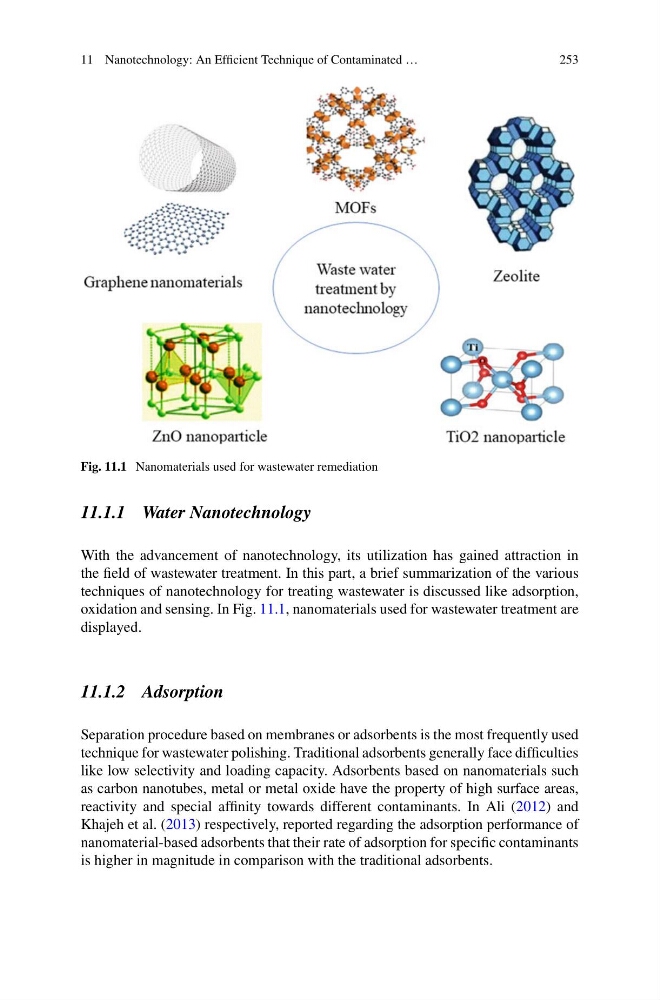
Fig. 11.1 Nanomaterials used for wastewater remediation
11.1.1 Water Nanotechnology
With the advancement of nanotechnology, its utilization has gained attraction in
the field of wastewater treatment. In this part, a brief summarization of the various
techniques of nanotechnology for treating wastewater is discussed like adsorption,
oxidation and sensing. In Fig. 11.1, nanomaterials used for wastewater treatment are
displayed.
11.1.2 Adsorption
Separation procedure based on membranes or adsorbents is the most frequently used
technique for wastewater polishing. Traditional adsorbents generally face difficulties
like low selectivity and loading capacity. Adsorbents based on nanomaterials such
as carbon nanotubes, metal or metal oxide have the property of high surface areas,
reactivity and special affinity towards different contaminants. In Ali (2012) and
Khajeh et al. (2013) respectively, reported regarding the adsorption performance of
nanomaterial-based adsorbents that their rate of adsorption for specific contaminants
is higher in magnitude in comparison with the traditional adsorbents.
253
Fig. 11.1 Nanomaterials used for wastewater remediation
11.1.1 Water Nanotechnology
With the advancement of nanotechnology, its utilization has gained attraction in
the field of wastewater treatment. In this part, a brief summarization of the various
techniques of nanotechnology for treating wastewater is discussed like adsorption,
oxidation and sensing. In Fig. 11.1, nanomaterials used for wastewater treatment are
displayed.
11.1.2 Adsorption
Separation procedure based on membranes or adsorbents is the most frequently used
technique for wastewater polishing. Traditional adsorbents generally face difficulties
like low selectivity and loading capacity. Adsorbents based on nanomaterials such
as carbon nanotubes, metal or metal oxide have the property of high surface areas,
reactivity and special affinity towards different contaminants. In Ali (2012) and
Khajeh et al. (2013) respectively, reported regarding the adsorption performance of
nanomaterial-based adsorbents that their rate of adsorption for specific contaminants
is higher in magnitude in comparison with the traditional adsorbents.