

236
S. Manna et al.
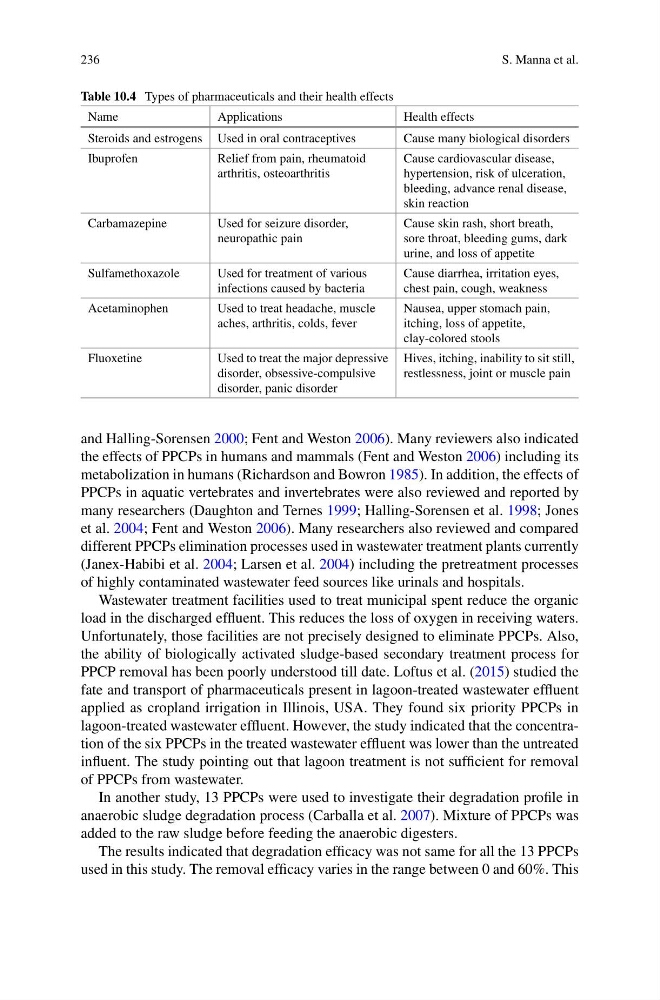
Table 10.4 Types of pharmaceuticals and their health effects
Name
Applications
Health effects
Steroids and estrogens Used in oral contraceptives
Cause many biological disorders
Ibuprofen
Relief from pain, rheumatoid
arthritis, osteoarthritis
Cause cardiovascular disease,
hypertension, risk of ulceration,
bleeding, advance renal disease,
skin reaction
Carbamazepine
Used for seizure disorder,
neuropathic pain
Cause skin rash, short breath,
sore throat, bleeding gums, dark
urine, and loss of appetite
Sulfamethoxazole
Used for treatment of various
infections caused by bacteria
Cause diarrhea, irritation eyes,
chest pain, cough, weakness
Acetaminophen
Used to treat headache, muscle
aches, arthritis, colds, fever
Nausea, upper stomach pain,
itching, loss of appetite,
clay-colored stools
Fluoxetine
Used to treat the major depressive
disorder, obsessive-compulsive
disorder, panic disorder
Hives, itching, inability to sit still,
restlessness, joint or muscle pain
and Halling-Sorensen 2000; Fent and Weston 2006). Many reviewers also indicated
the effects of PPCPs in humans and mammals (Fent and Weston 2006) including its
metabolization in humans (Richardson and Bowron 1985). In addition, the effects of
PPCPs in aquatic vertebrates and invertebrates were also reviewed and reported by
many researchers (Daughton and Ternes 1999; Halling-Sorensen et al. 1998; Jones
et al. 2004; Fent and Weston 2006). Many researchers also reviewed and compared
different PPCPs elimination processes used in wastewater treatment plants currently
(Janex-Habibi et al. 2004; Larsen et al. 2004) including the pretreatment processes
of highly contaminated wastewater feed sources like urinals and hospitals.
Wastewater treatment facilities used to treat municipal spent reduce the organic
load in the discharged effluent. This reduces the loss of oxygen in receiving waters.
Unfortunately, those facilities are not precisely designed to eliminate PPCPs. Also,
the ability of biologically activated sludge-based secondary treatment process for
PPCP removal has been poorly understood till date. Loftus et al. (2015) studied the
fate and transport of pharmaceuticals present in lagoon-treated wastewater effluent
applied as cropland irrigation in Illinois, USA. They found six priority PPCPs in
lagoon-treated wastewater effluent. However, the study indicated that the concentration of the six PPCPs in the treated wastewater effluent was lower than the untreated
influent. The study pointing out that lagoon treatment is not sufficient for removal
of PPCPs from wastewater.
In another study, 13 PPCPs were used to investigate their degradation profile in
anaerobic sludge degradation process (Carballa et al. 2007). Mixture of PPCPs was
added to the raw sludge before feeding the anaerobic digesters.
The results indicated that degradation efficacy was not same for all the 13 PPCPs
used in this study. The removal efficacy varies in the range between 0 and 60%. This
S. Manna et al.
Table 10.4 Types of pharmaceuticals and their health effects
Name
Applications
Health effects
Steroids and estrogens Used in oral contraceptives
Cause many biological disorders
Ibuprofen
Relief from pain, rheumatoid
arthritis, osteoarthritis
Cause cardiovascular disease,
hypertension, risk of ulceration,
bleeding, advance renal disease,
skin reaction
Carbamazepine
Used for seizure disorder,
neuropathic pain
Cause skin rash, short breath,
sore throat, bleeding gums, dark
urine, and loss of appetite
Sulfamethoxazole
Used for treatment of various
infections caused by bacteria
Cause diarrhea, irritation eyes,
chest pain, cough, weakness
Acetaminophen
Used to treat headache, muscle
aches, arthritis, colds, fever
Nausea, upper stomach pain,
itching, loss of appetite,
clay-colored stools
Fluoxetine
Used to treat the major depressive
disorder, obsessive-compulsive
disorder, panic disorder
Hives, itching, inability to sit still,
restlessness, joint or muscle pain
and Halling-Sorensen 2000; Fent and Weston 2006). Many reviewers also indicated
the effects of PPCPs in humans and mammals (Fent and Weston 2006) including its
metabolization in humans (Richardson and Bowron 1985). In addition, the effects of
PPCPs in aquatic vertebrates and invertebrates were also reviewed and reported by
many researchers (Daughton and Ternes 1999; Halling-Sorensen et al. 1998; Jones
et al. 2004; Fent and Weston 2006). Many researchers also reviewed and compared
different PPCPs elimination processes used in wastewater treatment plants currently
(Janex-Habibi et al. 2004; Larsen et al. 2004) including the pretreatment processes
of highly contaminated wastewater feed sources like urinals and hospitals.
Wastewater treatment facilities used to treat municipal spent reduce the organic
load in the discharged effluent. This reduces the loss of oxygen in receiving waters.
Unfortunately, those facilities are not precisely designed to eliminate PPCPs. Also,
the ability of biologically activated sludge-based secondary treatment process for
PPCP removal has been poorly understood till date. Loftus et al. (2015) studied the
fate and transport of pharmaceuticals present in lagoon-treated wastewater effluent
applied as cropland irrigation in Illinois, USA. They found six priority PPCPs in
lagoon-treated wastewater effluent. However, the study indicated that the concentration of the six PPCPs in the treated wastewater effluent was lower than the untreated
influent. The study pointing out that lagoon treatment is not sufficient for removal
of PPCPs from wastewater.
In another study, 13 PPCPs were used to investigate their degradation profile in
anaerobic sludge degradation process (Carballa et al. 2007). Mixture of PPCPs was
added to the raw sludge before feeding the anaerobic digesters.
The results indicated that degradation efficacy was not same for all the 13 PPCPs
used in this study. The removal efficacy varies in the range between 0 and 60%. This