

218
A. Naz et al.
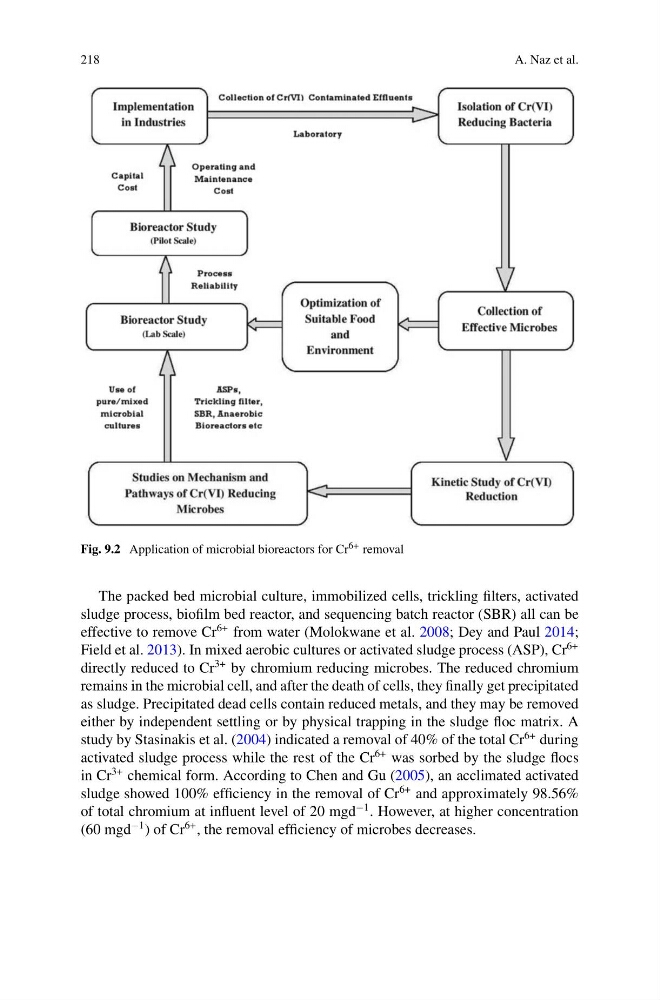
Fig. 9.2 Application of microbial bioreactors for Cr 6+ removal
The packed bed microbial culture, immobilized cells, trickling filters, activated
sludge process, biofilm bed reactor, and sequencing batch reactor (SBR) all can be
effective to remove Cr
6+ from water (Molokwane et al. 2008; Dey and Paul 2014;
Field et al. 2013). In mixed aerobic cultures or activated sludge process (ASP), Cr
6+
directly reduced to Cr
3+ by chromium reducing microbes. The reduced chromium
remains in the microbial cell, and after the death of cells, they finally get precipitated
as sludge. Precipitated dead cells contain reduced metals, and they may be removed
either by independent settling or by physical trapping in the sludge floc matrix. A
study by Stasinakis et al. (2004) indicated a removal of 40% of the total Cr
6+ during
activated sludge process while the rest of the Cr
6+ was sorbed by the sludge flocs
in Cr
3+ chemical form. According to Chen and Gu (2005), an acclimated activated
sludge showed 100% efficiency in the removal of Cr
6+ and approximately 98.56%
of total chromium at influent level of 20 mgd
−1 . However, at higher concentration
(60 mgd
−1 ) of Cr
6+ , the removal efficiency of microbes decreases.
A. Naz et al.
Fig. 9.2 Application of microbial bioreactors for Cr 6+ removal
The packed bed microbial culture, immobilized cells, trickling filters, activated
sludge process, biofilm bed reactor, and sequencing batch reactor (SBR) all can be
effective to remove Cr
6+ from water (Molokwane et al. 2008; Dey and Paul 2014;
Field et al. 2013). In mixed aerobic cultures or activated sludge process (ASP), Cr
6+
directly reduced to Cr
3+ by chromium reducing microbes. The reduced chromium
remains in the microbial cell, and after the death of cells, they finally get precipitated
as sludge. Precipitated dead cells contain reduced metals, and they may be removed
either by independent settling or by physical trapping in the sludge floc matrix. A
study by Stasinakis et al. (2004) indicated a removal of 40% of the total Cr
6+ during
activated sludge process while the rest of the Cr
6+ was sorbed by the sludge flocs
in Cr
3+ chemical form. According to Chen and Gu (2005), an acclimated activated
sludge showed 100% efficiency in the removal of Cr
6+ and approximately 98.56%
of total chromium at influent level of 20 mgd
−1 . However, at higher concentration
(60 mgd
−1 ) of Cr
6+ , the removal efficiency of microbes decreases.