

180
A. K. Thakur and M. Kumar
SEPTIC
TANK
CONTAMINANTED PLUME
GROUNWATER
TABLE
PLUME 2
PLUME 1
SEPTIC
TANK
CONTAMINANTED PLUME
GROUNWATER
TABLE
PLUME 2
PLUME 1
TREATED
GROUNDWATER
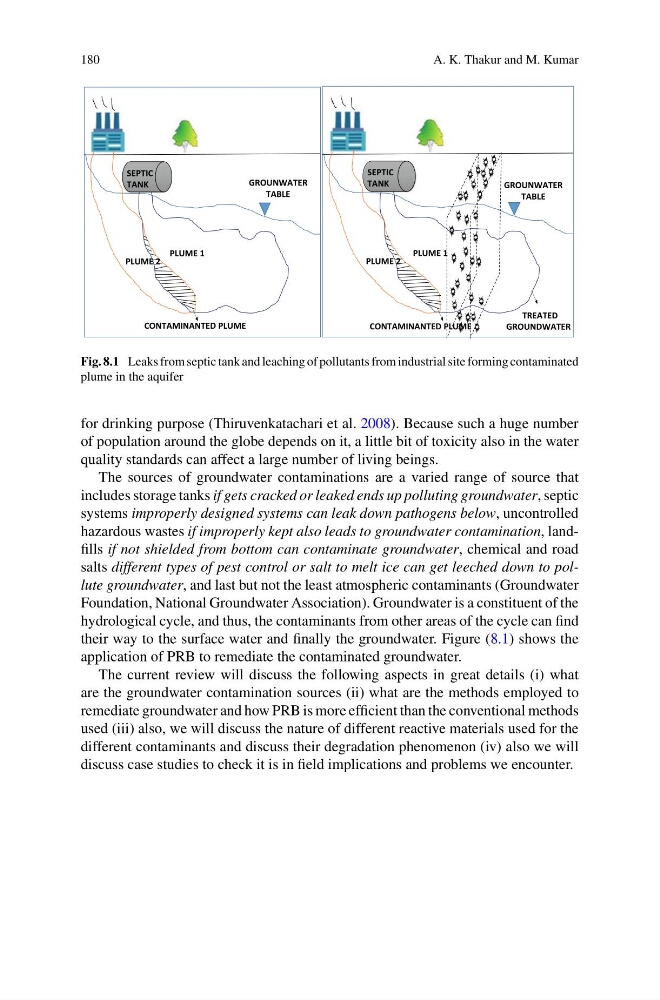
Fig. 8.1 Leaks from septic tank and leaching of pollutants from industrial site forming contaminated
plume in the aquifer
for drinking purpose (Thiruvenkatachari et al. 2008). Because such a huge number
of population around the globe depends on it, a little bit of toxicity also in the water
quality standards can affect a large number of living beings.
The sources of groundwater contaminations are a varied range of source that
includes storage tanks if gets cracked or leaked ends up polluting groundwater, septic
systems improperly designed systems can leak down pathogens below, uncontrolled
hazardous wastes if improperly kept also leads to groundwater contamination, landfills if not shielded from bottom can contaminate groundwater, chemical and road
salts different types of pest control or salt to melt ice can get leeched down to pollute groundwater, and last but not the least atmospheric contaminants (Groundwater
Foundation, National Groundwater Association). Groundwater is a constituent of the
hydrological cycle, and thus, the contaminants from other areas of the cycle can find
their way to the surface water and finally the groundwater. Figure (8.1) shows the
application of PRB to remediate the contaminated groundwater.
The current review will discuss the following aspects in great details (i) what
are the groundwater contamination sources (ii) what are the methods employed to
remediate groundwater and how PRB is more efficient than the conventional methods
used (iii) also, we will discuss the nature of different reactive materials used for the
different contaminants and discuss their degradation phenomenon (iv) also we will
discuss case studies to check it is in field implications and problems we encounter.
A. K. Thakur and M. Kumar
SEPTIC
TANK
CONTAMINANTED PLUME
GROUNWATER
TABLE
PLUME 2
PLUME 1
SEPTIC
TANK
CONTAMINANTED PLUME
GROUNWATER
TABLE
PLUME 2
PLUME 1
TREATED
GROUNDWATER
Fig. 8.1 Leaks from septic tank and leaching of pollutants from industrial site forming contaminated
plume in the aquifer
for drinking purpose (Thiruvenkatachari et al. 2008). Because such a huge number
of population around the globe depends on it, a little bit of toxicity also in the water
quality standards can affect a large number of living beings.
The sources of groundwater contaminations are a varied range of source that
includes storage tanks if gets cracked or leaked ends up polluting groundwater, septic
systems improperly designed systems can leak down pathogens below, uncontrolled
hazardous wastes if improperly kept also leads to groundwater contamination, landfills if not shielded from bottom can contaminate groundwater, chemical and road
salts different types of pest control or salt to melt ice can get leeched down to pollute groundwater, and last but not the least atmospheric contaminants (Groundwater
Foundation, National Groundwater Association). Groundwater is a constituent of the
hydrological cycle, and thus, the contaminants from other areas of the cycle can find
their way to the surface water and finally the groundwater. Figure (8.1) shows the
application of PRB to remediate the contaminated groundwater.
The current review will discuss the following aspects in great details (i) what
are the groundwater contamination sources (ii) what are the methods employed to
remediate groundwater and how PRB is more efficient than the conventional methods
used (iii) also, we will discuss the nature of different reactive materials used for the
different contaminants and discuss their degradation phenomenon (iv) also we will
discuss case studies to check it is in field implications and problems we encounter.