

148
P. Sahu
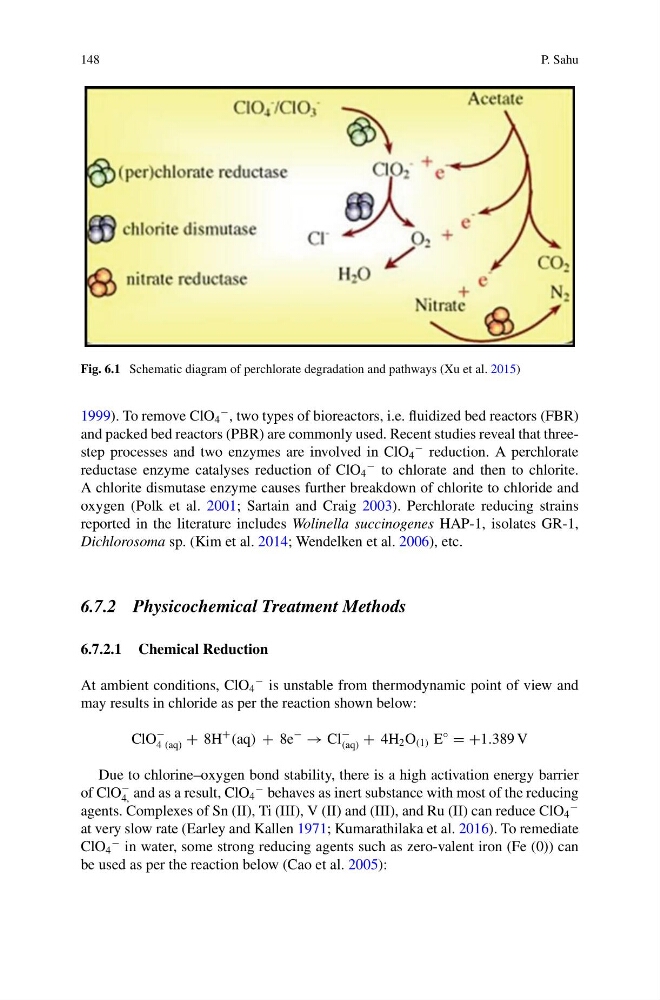
Fig. 6.1 Schematic diagram of perchlorate degradation and pathways (Xu et al. 2015)
1999). To remove ClO 4
− , two types of bioreactors, i.e. fluidized bed reactors (FBR)
and packed bed reactors (PBR) are commonly used. Recent studies reveal that threestep processes and two enzymes are involved in ClO 4
− reduction. A perchlorate
reductase enzyme catalyses reduction of ClO 4
− to chlorate and then to chlorite.
A chlorite dismutase enzyme causes further breakdown of chlorite to chloride and
oxygen (Polk et al. 2001; Sartain and Craig 2003). Perchlorate reducing strains
reported in the literature includes Wolinella succinogenes HAP-1, isolates GR-1,
Dichlorosoma sp. (Kim et al. 2014; Wendelken et al. 2006), etc.
6.7.2 Physicochemical Treatment Methods
6.7.2.1 Chemical Reduction
At ambient conditions, ClO 4
− is unstable from thermodynamic point of view and
may results in chloride as per the reaction shown below:
ClO
−
4 (aq) + 8H
+
(aq) + 8e
−
→ Cl
−
(aq) + 4H 2 O (1) E
◦
= +1.389 V
Due to chlorine–oxygen bond stability, there is a high activation energy barrier
of ClO
−
4, and as a result, ClO 4
− behaves as inert substance with most of the reducing
agents. Complexes of Sn (II), Ti (III), V (II) and (III), and Ru (II) can reduce ClO 4
−
at very slow rate (Earley and Kallen 1971; Kumarathilaka et al. 2016). To remediate
ClO 4
− in water, some strong reducing agents such as zero-valent iron (Fe (0)) can
be used as per the reaction below (Cao et al. 2005):
P. Sahu
Fig. 6.1 Schematic diagram of perchlorate degradation and pathways (Xu et al. 2015)
1999). To remove ClO 4
− , two types of bioreactors, i.e. fluidized bed reactors (FBR)
and packed bed reactors (PBR) are commonly used. Recent studies reveal that threestep processes and two enzymes are involved in ClO 4
− reduction. A perchlorate
reductase enzyme catalyses reduction of ClO 4
− to chlorate and then to chlorite.
A chlorite dismutase enzyme causes further breakdown of chlorite to chloride and
oxygen (Polk et al. 2001; Sartain and Craig 2003). Perchlorate reducing strains
reported in the literature includes Wolinella succinogenes HAP-1, isolates GR-1,
Dichlorosoma sp. (Kim et al. 2014; Wendelken et al. 2006), etc.
6.7.2 Physicochemical Treatment Methods
6.7.2.1 Chemical Reduction
At ambient conditions, ClO 4
− is unstable from thermodynamic point of view and
may results in chloride as per the reaction shown below:
ClO
−
4 (aq) + 8H
+
(aq) + 8e
−
→ Cl
−
(aq) + 4H 2 O (1) E
◦
= +1.389 V
Due to chlorine–oxygen bond stability, there is a high activation energy barrier
of ClO
−
4, and as a result, ClO 4
− behaves as inert substance with most of the reducing
agents. Complexes of Sn (II), Ti (III), V (II) and (III), and Ru (II) can reduce ClO 4
−
at very slow rate (Earley and Kallen 1971; Kumarathilaka et al. 2016). To remediate
ClO 4
− in water, some strong reducing agents such as zero-valent iron (Fe (0)) can
be used as per the reaction below (Cao et al. 2005):