

272
P. Heck
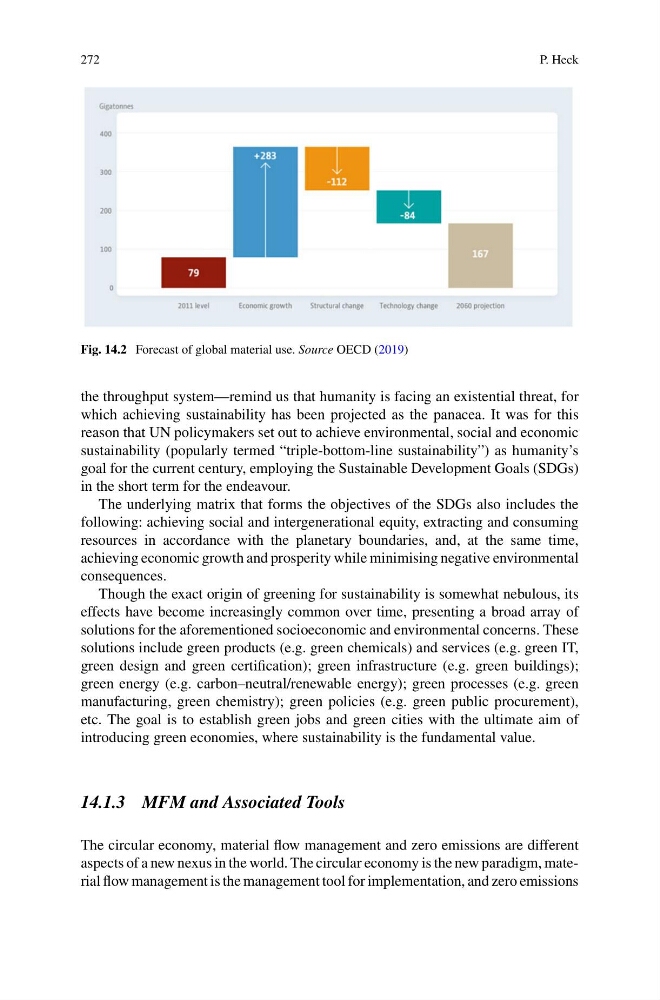
Fig. 14.2 Forecast of global material use. Source OECD (2019)
the throughput system—remind us that humanity is facing an existential threat, for
which achieving sustainability has been projected as the panacea. It was for this
reason that UN policymakers set out to achieve environmental, social and economic
sustainability (popularly termed “triple-bottom-line sustainability”) as humanity’s
goal for the current century, employing the Sustainable Development Goals (SDGs)
in the short term for the endeavour.
The underlying matrix that forms the objectives of the SDGs also includes the
following: achieving social and intergenerational equity, extracting and consuming
resources in accordance with the planetary boundaries, and, at the same time,
achieving economic growth and prosperity while minimising negative environmental
consequences.
Though the exact origin of greening for sustainability is somewhat nebulous, its
effects have become increasingly common over time, presenting a broad array of
solutions for the aforementioned socioeconomic and environmental concerns. These
solutions include green products (e.g. green chemicals) and services (e.g. green IT,
green design and green certification); green infrastructure (e.g. green buildings);
green energy (e.g. carbon–neutral/renewable energy); green processes (e.g. green
manufacturing, green chemistry); green policies (e.g. green public procurement),
etc. The goal is to establish green jobs and green cities with the ultimate aim of
introducing green economies, where sustainability is the fundamental value.
14.1.3 MFM and Associated Tools
The circular economy, material flow management and zero emissions are different
aspects of a new nexus in the world. The circular economy is the new paradigm, material flow management is the management tool for implementation, and zero emissions
P. Heck
Fig. 14.2 Forecast of global material use. Source OECD (2019)
the throughput system—remind us that humanity is facing an existential threat, for
which achieving sustainability has been projected as the panacea. It was for this
reason that UN policymakers set out to achieve environmental, social and economic
sustainability (popularly termed “triple-bottom-line sustainability”) as humanity’s
goal for the current century, employing the Sustainable Development Goals (SDGs)
in the short term for the endeavour.
The underlying matrix that forms the objectives of the SDGs also includes the
following: achieving social and intergenerational equity, extracting and consuming
resources in accordance with the planetary boundaries, and, at the same time,
achieving economic growth and prosperity while minimising negative environmental
consequences.
Though the exact origin of greening for sustainability is somewhat nebulous, its
effects have become increasingly common over time, presenting a broad array of
solutions for the aforementioned socioeconomic and environmental concerns. These
solutions include green products (e.g. green chemicals) and services (e.g. green IT,
green design and green certification); green infrastructure (e.g. green buildings);
green energy (e.g. carbon–neutral/renewable energy); green processes (e.g. green
manufacturing, green chemistry); green policies (e.g. green public procurement),
etc. The goal is to establish green jobs and green cities with the ultimate aim of
introducing green economies, where sustainability is the fundamental value.
14.1.3 MFM and Associated Tools
The circular economy, material flow management and zero emissions are different
aspects of a new nexus in the world. The circular economy is the new paradigm, material flow management is the management tool for implementation, and zero emissions