

198
J. Maaß
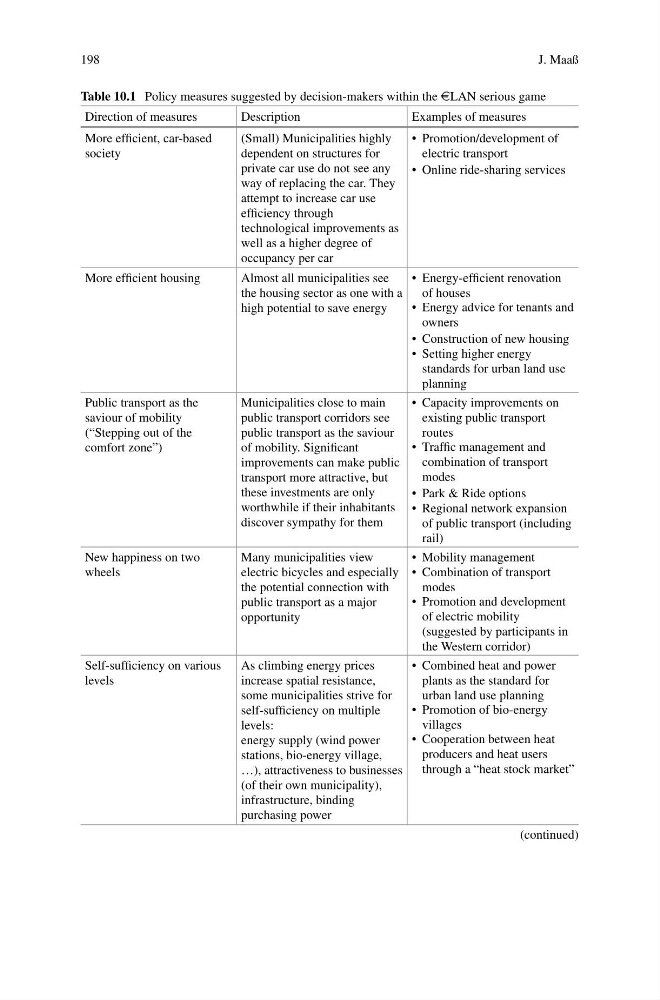
Table 10.1 Policy measures suggested by decision-makers within the eLAN serious game
Direction of measures
Description
Examples of measures
More efficient, car-based
society
(Small) Municipalities highly
dependent on structures for
private car use do not see any
way of replacing the car. They
attempt to increase car use
efficiency through
technological improvements as
well as a higher degree of
occupancy per car
• Promotion/development of
electric transport
• Online ride-sharing services
More efficient housing
Almost all municipalities see
the housing sector as one with a
high potential to save energy
• Energy-efficient renovation
of houses
• Energy advice for tenants and
owners
• Construction of new housing
• Setting higher energy
standards for urban land use
planning
Public transport as the
saviour of mobility
(“Stepping out of the
comfort zone”)
Municipalities close to main
public transport corridors see
public transport as the saviour
of mobility. Significant
improvements can make public
transport more attractive, but
these investments are only
worthwhile if their inhabitants
discover sympathy for them
• Capacity improvements on
existing public transport
routes
• Traffic management and
combination of transport
modes
• Park & Ride options
• Regional network expansion
of public transport (including
rail)
New happiness on two
wheels
Many municipalities view
electric bicycles and especially
the potential connection with
public transport as a major
opportunity
• Mobility management
• Combination of transport
modes
• Promotion and development
of electric mobility
(suggested by participants in
the Western corridor)
Self-sufficiency on various
levels
As climbing energy prices
increase spatial resistance,
some municipalities strive for
self-sufficiency on multiple
levels:
energy supply (wind power
stations, bio-energy village,
…), attractiveness to businesses
(of their own municipality),
infrastructure, binding
purchasing power
• Combined heat and power
plants as the standard for
urban land use planning
• Promotion of bio-energy
villages
• Cooperation between heat
producers and heat users
through a “heat stock market”
(continued)
J. Maaß
Table 10.1 Policy measures suggested by decision-makers within the eLAN serious game
Direction of measures
Description
Examples of measures
More efficient, car-based
society
(Small) Municipalities highly
dependent on structures for
private car use do not see any
way of replacing the car. They
attempt to increase car use
efficiency through
technological improvements as
well as a higher degree of
occupancy per car
• Promotion/development of
electric transport
• Online ride-sharing services
More efficient housing
Almost all municipalities see
the housing sector as one with a
high potential to save energy
• Energy-efficient renovation
of houses
• Energy advice for tenants and
owners
• Construction of new housing
• Setting higher energy
standards for urban land use
planning
Public transport as the
saviour of mobility
(“Stepping out of the
comfort zone”)
Municipalities close to main
public transport corridors see
public transport as the saviour
of mobility. Significant
improvements can make public
transport more attractive, but
these investments are only
worthwhile if their inhabitants
discover sympathy for them
• Capacity improvements on
existing public transport
routes
• Traffic management and
combination of transport
modes
• Park & Ride options
• Regional network expansion
of public transport (including
rail)
New happiness on two
wheels
Many municipalities view
electric bicycles and especially
the potential connection with
public transport as a major
opportunity
• Mobility management
• Combination of transport
modes
• Promotion and development
of electric mobility
(suggested by participants in
the Western corridor)
Self-sufficiency on various
levels
As climbing energy prices
increase spatial resistance,
some municipalities strive for
self-sufficiency on multiple
levels:
energy supply (wind power
stations, bio-energy village,
…), attractiveness to businesses
(of their own municipality),
infrastructure, binding
purchasing power
• Combined heat and power
plants as the standard for
urban land use planning
• Promotion of bio-energy
villages
• Cooperation between heat
producers and heat users
through a “heat stock market”
(continued)