

8 Innovations for Sustainable Land Management …
159
Environmental
conventions and treaties
Participatory watershed
management
Social organisation
Inter-househ old
collaboration
Agricultural calender
Environmental and
economic agreements
Extension systems
Community
land use plans
Market development
National land use plans
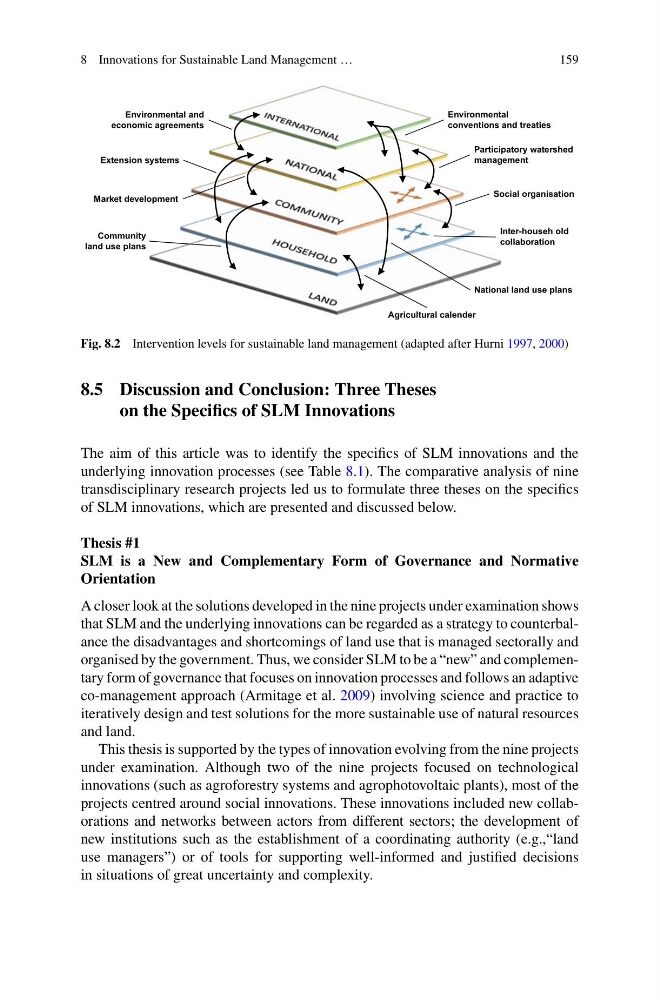
Fig. 8.2 Intervention levels for sustainable land management (adapted after Hurni 1997, 2000)
8.5 Discussion and Conclusion: Three Theses
on the Specifics of SLM Innovations
The aim of this article was to identify the specifics of SLM innovations and the
underlying innovation processes (see Table 8.1). The comparative analysis of nine
transdisciplinary research projects led us to formulate three theses on the specifics
of SLM innovations, which are presented and discussed below.
Thesis #1
SLM is a New and Complementary Form of Governance and Normative
Orientation
A closer look at the solutions developed in the nine projects under examination shows
that SLM and the underlying innovations can be regarded as a strategy to counterbalance the disadvantages and shortcomings of land use that is managed sectorally and
organised by the government. Thus, we consider SLM to be a “new” and complementary form of governance that focuses on innovation processes and follows an adaptive
co-management approach (Armitage et al. 2009) involving science and practice to
iteratively design and test solutions for the more sustainable use of natural resources
and land.
This thesis is supported by the types of innovation evolving from the nine projects
under examination. Although two of the nine projects focused on technological
innovations (such as agroforestry systems and agrophotovoltaic plants), most of the
projects centred around social innovations. These innovations included new collaborations and networks between actors from different sectors; the development of
new institutions such as the establishment of a coordinating authority (e.g.,“land
use managers”) or of tools for supporting well-informed and justified decisions
in situations of great uncertainty and complexity.
159
Environmental
conventions and treaties
Participatory watershed
management
Social organisation
Inter-househ old
collaboration
Agricultural calender
Environmental and
economic agreements
Extension systems
Community
land use plans
Market development
National land use plans
Fig. 8.2 Intervention levels for sustainable land management (adapted after Hurni 1997, 2000)
8.5 Discussion and Conclusion: Three Theses
on the Specifics of SLM Innovations
The aim of this article was to identify the specifics of SLM innovations and the
underlying innovation processes (see Table 8.1). The comparative analysis of nine
transdisciplinary research projects led us to formulate three theses on the specifics
of SLM innovations, which are presented and discussed below.
Thesis #1
SLM is a New and Complementary Form of Governance and Normative
Orientation
A closer look at the solutions developed in the nine projects under examination shows
that SLM and the underlying innovations can be regarded as a strategy to counterbalance the disadvantages and shortcomings of land use that is managed sectorally and
organised by the government. Thus, we consider SLM to be a “new” and complementary form of governance that focuses on innovation processes and follows an adaptive
co-management approach (Armitage et al. 2009) involving science and practice to
iteratively design and test solutions for the more sustainable use of natural resources
and land.
This thesis is supported by the types of innovation evolving from the nine projects
under examination. Although two of the nine projects focused on technological
innovations (such as agroforestry systems and agrophotovoltaic plants), most of the
projects centred around social innovations. These innovations included new collaborations and networks between actors from different sectors; the development of
new institutions such as the establishment of a coordinating authority (e.g.,“land
use managers”) or of tools for supporting well-informed and justified decisions
in situations of great uncertainty and complexity.